Published : 09 Aug 2023, 02:21 AM
Updated : 09 Aug 2023, 02:20 AM


The Bangladeshi law that drew the most domestic and international scrutiny in the past few years is the Digital Security Act, yet the government did not publish a draft text of its amendment, through which it is being transformed into the Cyber Security Act.
After the Awami League came to power with the promise to carry out a digital revolution, the government ministries and departments have been publishing draft laws, policies and guidelines on their websites before passage by parliament.
Although the government is not legally bound to publish the drafts, the aim to post them on websites was to get citizen opinions and expert views, as well as to ensure transparency.
That was, however, not the case in the amendment of the Digital Security Act.
Before the Cyber Security Act, the government did not publish the draft of the law to form the Election Commission, which was also discussed much in the country’s politics.
Iftekharuzzaman, executive director of Transparency International, Bangladesh, said the Awami League government launched a “positive practice” by starting to publish the drafts, but it would not be a good move to hold the publications back.
Barrister Shafique Ahmed, a former law minister of the Awami League government, says the publication of drafts creates the opportunity to improve and remove controversies surrounding laws.
The ICT Division placed the draft cyber security law at the cabinet and it was passed on Monday before being forwarded to the law ministry for vetting. It will be later passed in parliament.
The draft was not available on the ICT Division’s website until Tuesday.
bdnews24.com tried to contact State Minister for ICT Zunaid Ahmed Palak for his comments, but an official of the division took the call and said the state minister was busy.
The official also said Palak would call back, which he did not.
The Cabinet Division formed an eight-member committee, headed by the additional cabinet secretary (law) on May 14, 2017 to examine and give opinion on draft laws before they are presented in the council of ministers.
A Cabinet Division official said the Cyber Security Act was placed in the cabinet bypassing the committee.
The ministers who attended the meeting got copies of the draft four days earlier and no one else was allowed to see the draft, said the official, who requested anonymity because he was not authorised to talk to the media.
Shafique said he saw no problem, but benefits in publishing drafts. “I don’t understand what’s the reason behind not publishing the drafts.”
The Cabinet Division official said the government holds back the draft of some “sensitive” laws from publication because it may delay the passage.
Very few drafts remained unpublished after the Awami League started the practice, he said.
“Our observation is that the laws, of which the drafts were not published, created most controversies,” he said.
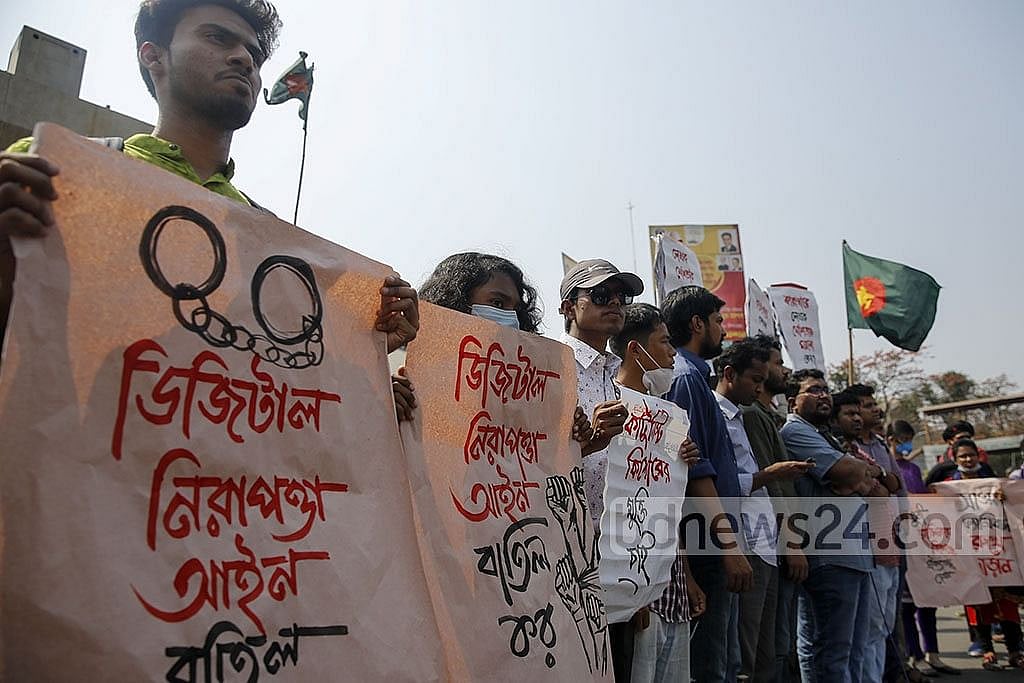
Journalists protested against the Digital Security Act during and after its passage, alleging that it would be abused to curb the freedom of media.
Now the Dhaka Reporters Unity has questioned the decision to keep the draft of the changed law from publication.
In a statement on Tuesday, the organisation said journalists are in the dark about the changes to the act because they were not consulted before the draft was passed.
“And journalists don’t even know what provisions have been kept for them in the proposed Cyber Security Act.”
Shafique said the issues being pointed out now could have been settled before the passage of the draft if it was published.
Law Minister Anisul Huq defended the decision not to publish the draft for public opinion, saying it would have taken more time to make the changes had the draft been published.
“We’ve discussed the law many times. We got a technical note from the UN’s human rights office. We also have a report from a consultant of the European Union.”
“How long will we keep discussing? If we continue discussing the matter, we’ll never get out of talks.”
TIB’s Iftekharuzzaman said the civil society and experts should have been consulted before passing the draft to ensure the transformed law does not reflect the old one.