Published : 30 Sep 2026, 01:47 AM
Updated : 30 Sep 2026, 01:55 AM


Even now, at 70, Mukim Bala startles at the sound of a procession after dark.
Fourteen years ago, on a night filled with the same sound of chanting crowds, he watched his own home burn before his eyes.
He had committed no crime. Yet flames engulfed the place where his family had lived.
Mukim and his family fled their homestead that night with little more than what they were wearing. They survived by taking shelter in the home of a Muslim neighbour.
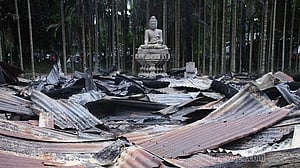
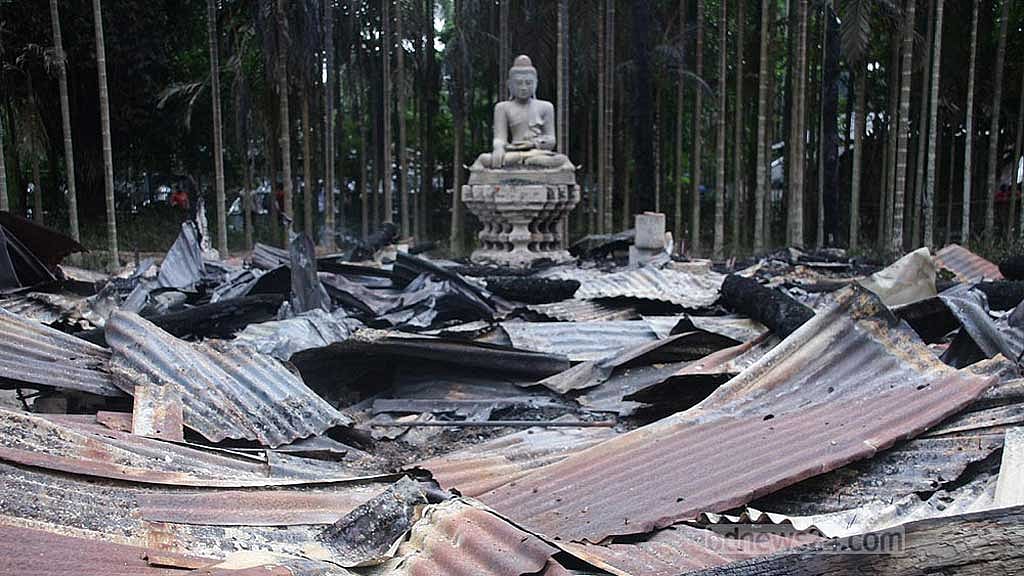
Homes burned. Buddhist temples went up in flames. Families lost savings accumulated over years.
But for many Buddhists in Cox’s Bazar district’s Buddhist-majority Ramu Upazila, the deepest damage was not to buildings.
It was to trust.
Mukim’s son, lawyer and activist Sumath Barua, put it simply: “With money, perhaps you can rebuild a burned temple or replace a broken Buddha statue. But how do you restore the trust that has disappeared from people’s minds?”
Fourteen years have passed since the night of Sept 29, 2012.
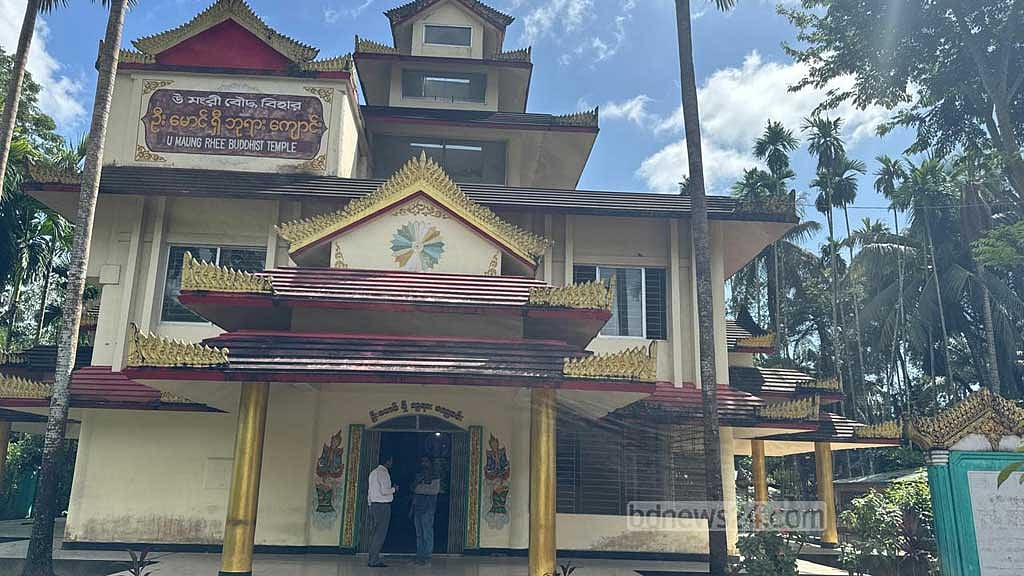
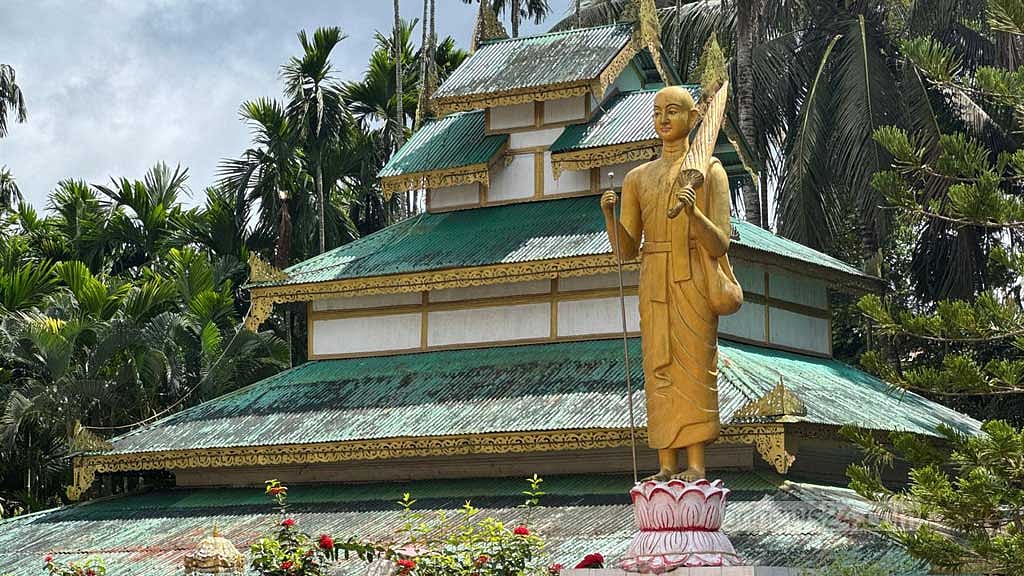
Buildings destroyed in the violence have been reconstructed. Everyday life has largely returned to normal. The government subsequently rebuilt or repaired Buddhist temples and monasteries damaged in Ramu and Ukhiya in southwestern Bangladesh.
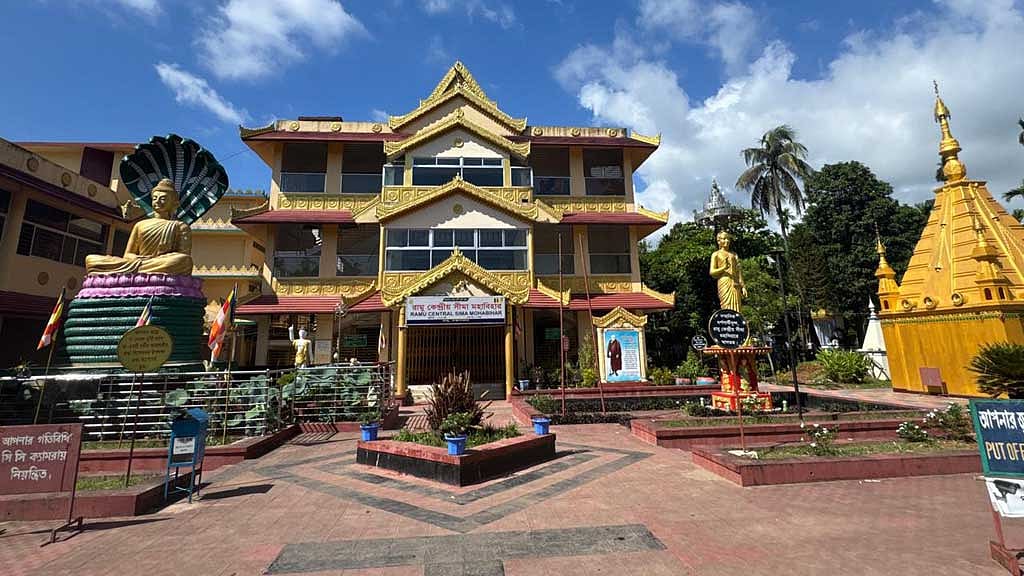
But among those who lived through the attacks, fear over security, frustration over the lack of justice and what they describe as lost faith in the state remain.
‘We Fled with Only the Clothes on Our Backs’
Sumath believes the fear created by the Ramu violence did not end with that night.
“If the state could not protect us, how are people supposed to feel safe?” he said.
In the past, he said, one member of a family might go abroad to establish themselves financially and send money home.
Now, he says, security concerns are prompting some families to think about leaving Bangladesh permanently as a family.
Remembering Sept 29, Sumath said the number of processions and slogans suddenly began to increase that night.
“As the situation became terrifying, we fled our home with only the clothes we were wearing and took shelter in the homes of Muslim neighbours to save our lives,” he said.
“We watched our homes and temples burn for hours before our eyes. But there was no situation in which we could go close enough to put out the fires, and there was no security.”
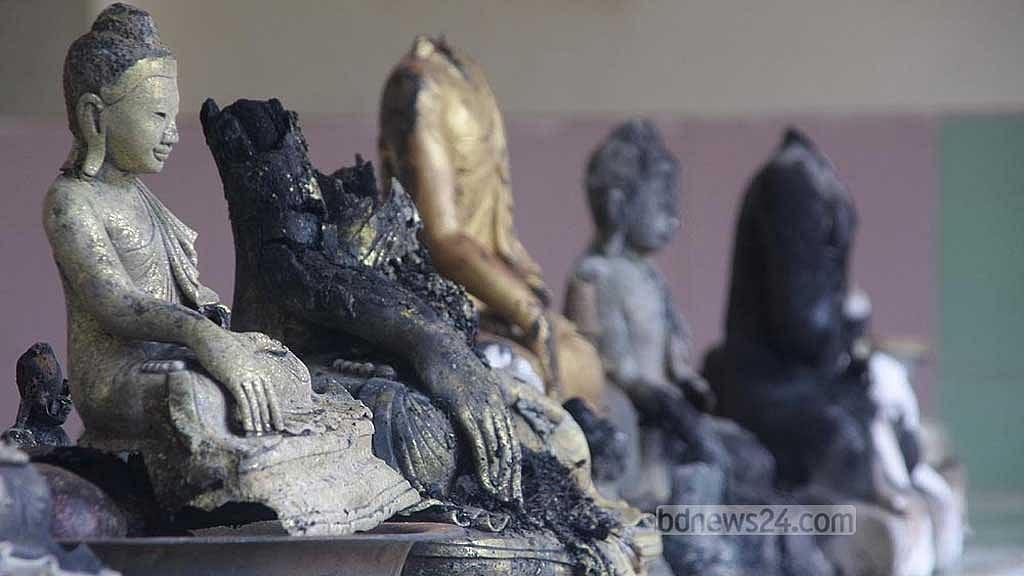
Accounts from the time describe mobs attacking Buddhist neighbourhoods in Ramu late that night, setting fire to temples and homes amid allegations that an image insulting the Quran had appeared on Facebook.
Another name remains inseparable from the events of that night. It is Uttam Barua.
At the time, allegations surrounding a Facebook post linked to Uttam were presented as the trigger for the violence.
Local residents say Uttam now lives in France. His parents remain in Ramu.
His father Sadatta Barua said he was in Chattogram on the day of the attack.
When news reached him about the violence in Ramu and the attack on his family, he was terrified.
The sense of insecurity that began then has never fully disappeared, he said. The family still lives with fear.
Sadatta, who is unwell, did not want to speak at length about the events.
Neighbours Protected Neighbours
Another witness to that night is Bipul Barua, a member of Ward 7 of Fatekharkul Union Parishad and an organiser of the Ramu Central Buddhist Youth Council.
He says people were incited by false allegations and rumours that the Quran had been desecrated.
According to Bipul, processions began arriving from different directions around 10pm to 10:30pm.
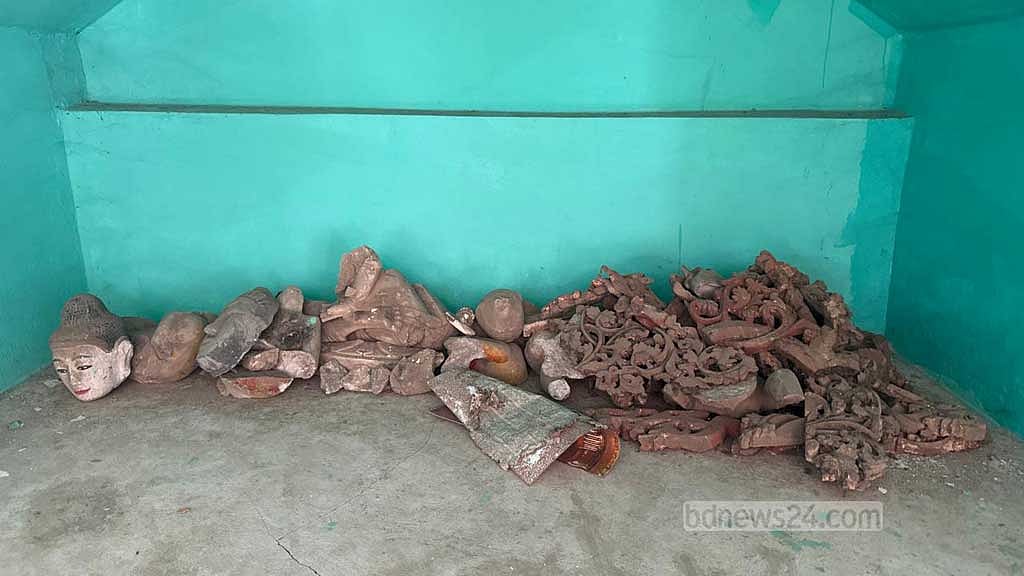
The violence then spread after a wooden Buddhist temple was set on fire.
Bipul believes the aim was to fracture Ramu’s longstanding tradition of communal harmony.
But he also remembers another side of that night.
“Some people from the local Muslim community came forward to protect temples and monasteries,” he said.
“They stood in front of the attackers and tried to save some of the buildings.”
So the story of that night is not only one of communal violence. It is also one of people from one community standing beside another at a moment of danger.
But that solidarity did not completely heal the damage to trust.
According to Bipul, at least 12 of Ramu’s 19 Buddhist monasteries and temples were attacked, vandalised, looted or set on fire.
Ordinary people’s homes were also targeted.
Extensive arson, looting, and destruction of Buddhist homes and religious sites took place in Ramu, with the violence later spreading to other areas.
‘Mind Has No Caste or Creed’
For Buddhist religious leader Pragyananda Bhikkhu of Cox’s Bazar, the deepest scar left by Ramu is not physical.
It is psychological.
“The human mind has no caste or creed,” he said. “When trauma enters the mind, it can remain for a lifetime.”
Pragyananda said the fear and distrust created among people in Ramu in 2012 have left traces that remain today.
When religious shrines are attacked elsewhere in Bangladesh now, he said, similar trauma is created among those communities.
A religious building can be reconstructed. Removing the sense of insecurity planted in people’s minds is much harder.
“A community believes this country is theirs,” he said. “Then suddenly, through an attack, they are made to feel that they are not safe here.”
Justice Still Undelivered
Victims and local residents are still questioning what became of the legal process.
Pragyananda says prolonged delays create despair among victims.
They can also send a dangerous message to offenders: that it is possible to commit a crime and escape punishment.
“Twelve to 14 years have passed, but not a single incident has reached a proper resolution or justice,” he said.
The cases stemming from the attacks have indeed dragged on for years, with repeated delays and difficulties in securing witness testimony.
Cox’s Bazar Public Prosecutor Md Yunus said four of the cases filed over the violence had been withdrawn or dropped by notification on political grounds under the current government.
He said another 10 cases remained pending, with witness testimony continuing.
Yunus argued that cases had been filed in haste at the time for political purposes and that political activists had been made defendants instead of the actual attackers.
Sumath and Bipul dispute the quality of the investigations from another direction.
They allege that genuine victims and witnesses were not properly included as witnesses.
Some residents say people who were not even in Ramu when the attacks took place were listed as witnesses.
Concrete Could Be Rebuilt, Trust Could Not
For Sumath, important questions were never properly answered.
Who was behind the violence? Who used religious sentiment to inflame the crowds?
And what exactly did the administration do as the attacks unfolded?
Those questions, he believes, required an independent investigation.
If one individual had committed an offence, Sumath argues, that person should have faced justice.
“But why should ordinary people’s homes and temples be burned for that person’s alleged offence?” he asked.
An independent commission capable of identifying and prosecuting those genuinely responsible could have helped restore public faith in the state, he said.
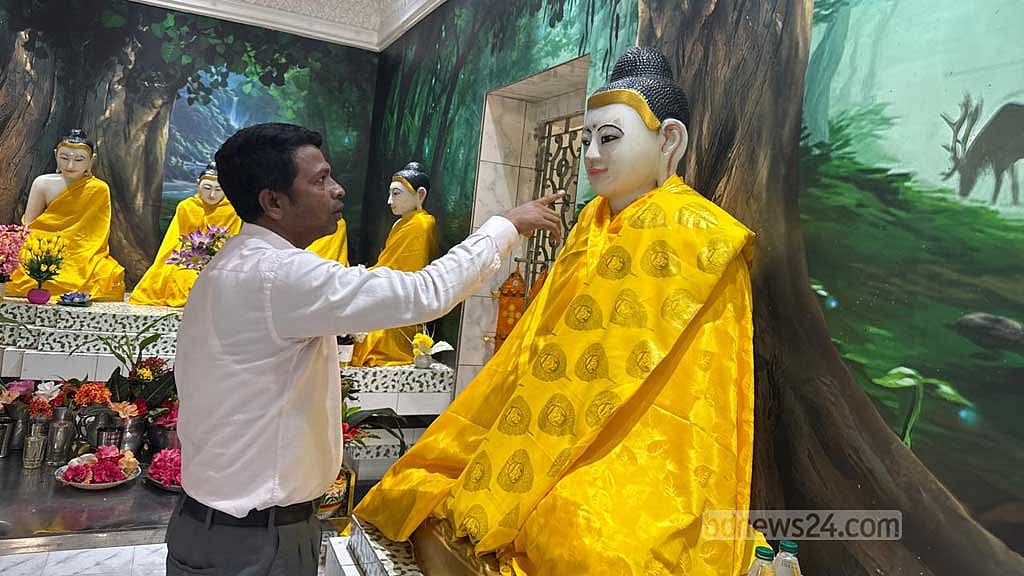
Pragyananda makes a similar point.
A few interfaith harmony meetings after an incident are not enough, he argues, to remove fear that has taken root inside a community.
Countering rumours requires year-round public awareness. Schools need counselling and education. Religious leaders, too, need to act responsibly.
Buildings can be rebuilt but those who lived through the flames say rebuilding trust has proved much more difficult.