


Published : 10 Nov 2013, 10:03 AM
Updated : 09 Aug 2022, 11:18 AM


The decline achieved in infant and child mortality rates since the early 1990s, for example, is among the fastest in the developing world.
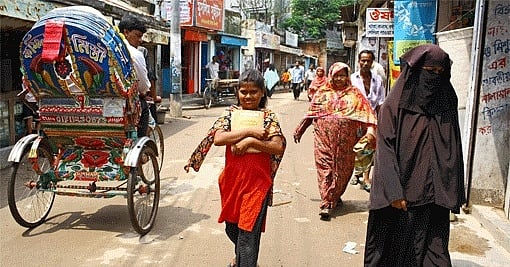
The research report says: “Bangladesh has already eliminated gender disparity in primary and secondary school enrolment and is near to achieving universal basic education. Its success in reducing the population growth rate through the adoption of birth-control methods is also unique among countries with similar income levels."
Within south Asia, Bangladesh has forged ahead of India and the rest of the region as a whole, in a number of these indicators, an article, based on the LSE research , published in the Economic & Political Weekly (EPW)’s latest issue said.
The research was carried out by three prominent economists, Wahiduddin Mahmud, M Niaz Asadullah, Antonio Savoia.
Wahiduddin Mahmud recently retired as a professor of economics at the University of Dhaka and is currently a member of the United Nations Committee for Development Policy. M Niaz Asadullah teaches economics at the University of Reading, United Kingdom and Antonio Savoia teaches at the Institute for Development Policy and Management, University of Manchester, United Kingdom.
Their cross-country comparisons showed that in relation to per capita income, Bangladesh has transformed itself “from being a laggard to a clear leader”.
They said, Bangladesh’s achievements in areas like health, education and gender might appear as a “development puzzle”, given the country’s desperate initial conditions, continued widespread poverty and poor record in governance -- all that adversely affects the quality of public service delivery.
Significantly, the achievements were made despite the fact that Bangladesh’s public spending on both health and education as a proportion of gross domestic product (GDP) has remained lower than what is expected even at comparable low levels of per capita income.
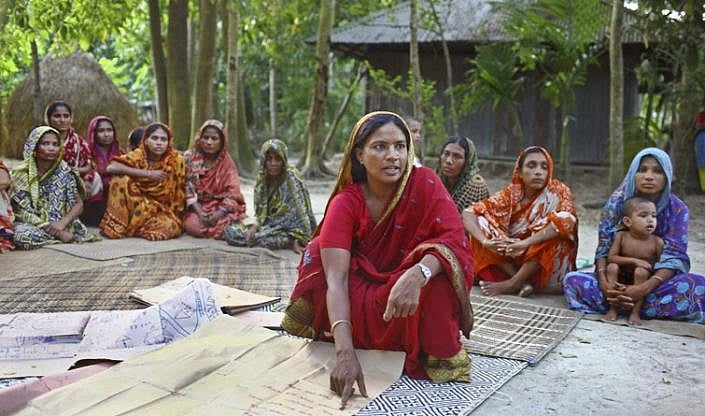
They observed that social mobilisation has played an important role to make this progress possible.
“Much of it seems to have been due to the adoption of low-cost solutions like the use of oral rehydration saline (ORS) for diarrhoea treatment leading to a decrease in child mortality, and due to increased awareness created by effective social mobilisation campaigns such as for immunisation or contraceptive use or for sending girls to schools,” the EPW article said.
“The scaling up of programmes through the spread of new ideas is helped in Bangladesh by a strong presence of non-governmental organisations (NGOs) and also by the density of settlements and declining remoteness made possible by an extensive network of rural roads,” the study says.
But as the gains of Bangladesh from low-cost solutions are reaped, the study warns that further progress may increasingly depend on higher public social spending and an improvement in service delivery systems.
Future reductions in child and maternal mortality would require more expensive interventions and the provision of relatively costly health services, the EPW article said.
While remarkable progress has been made in school enrolment, especially for girls, there were serious concerns now about the quality of education, the article pointed out.
The concluding summary of the research -- much has been achieved in Bangladesh despite huge adversity but future progress will depend on better governance and higher public spending.












