


Published : 09 Jul 2022, 01:27 PM
Updated : 25 Oct 2022, 09:55 AM


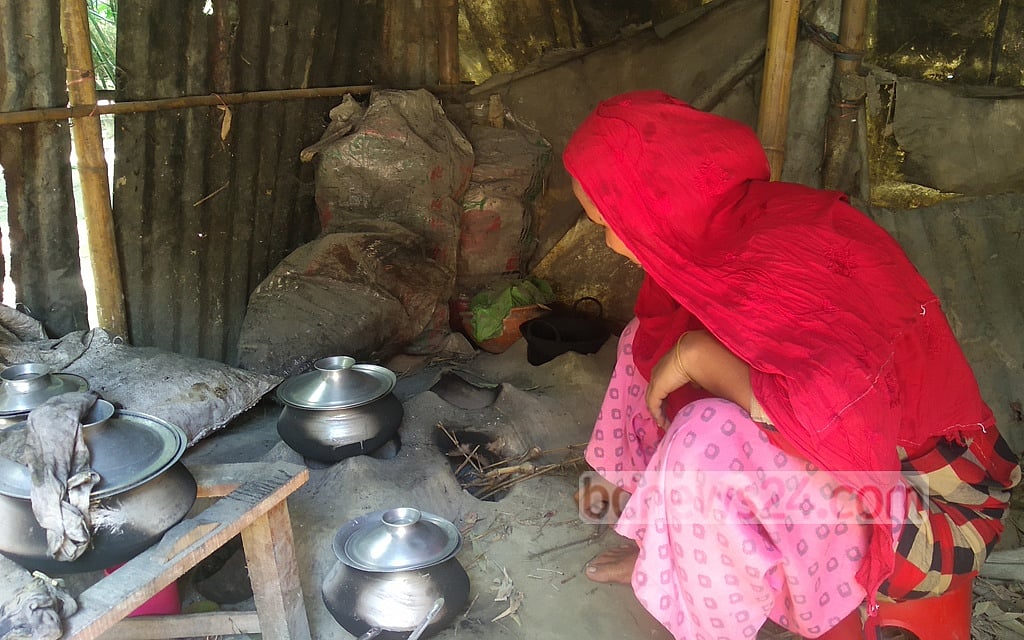
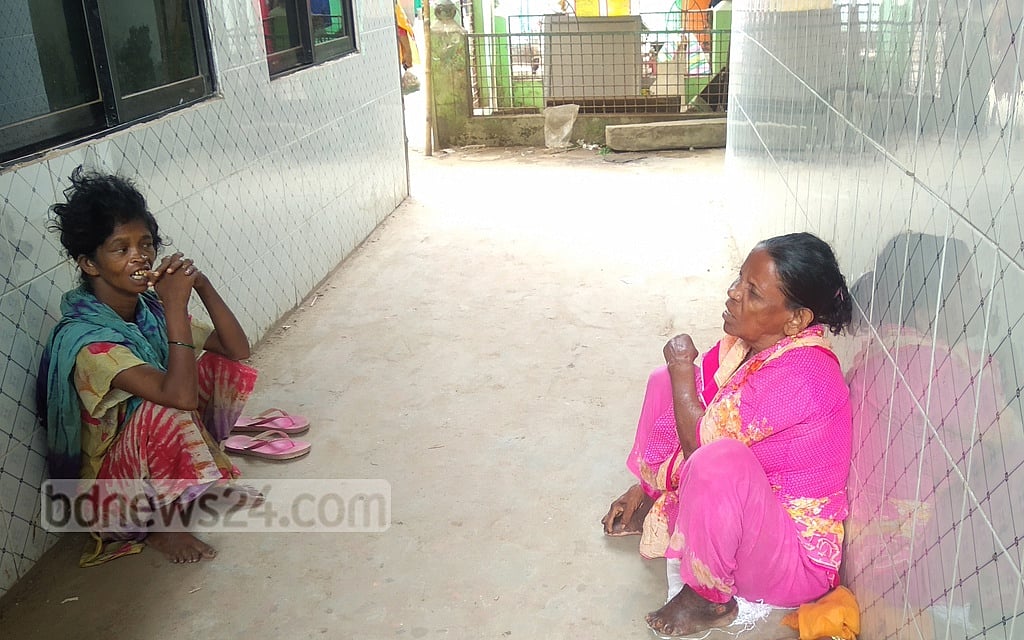
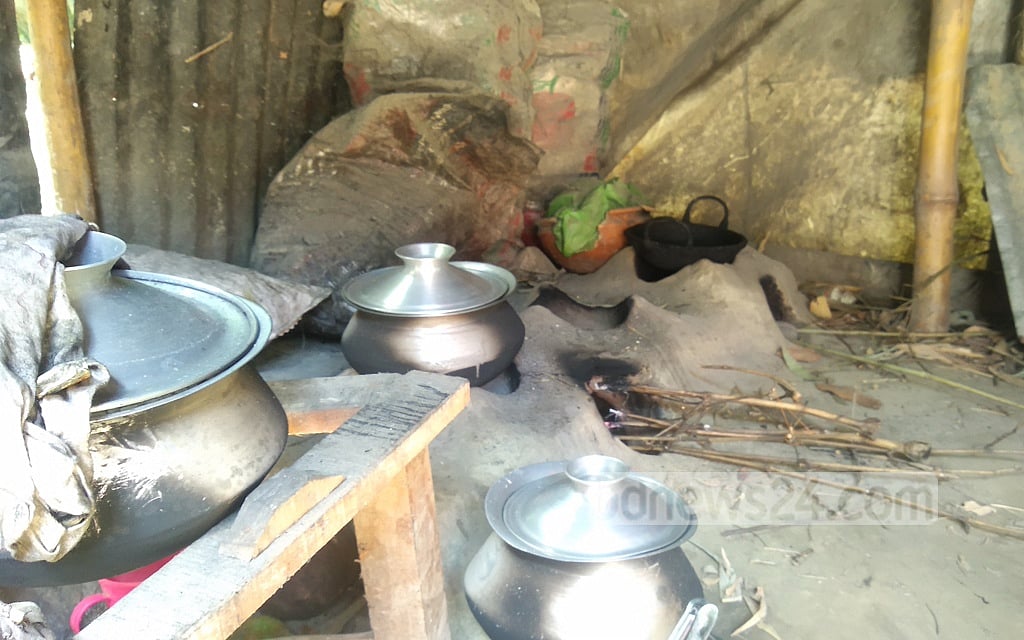
The two were playing with a brick stove and putting leaves on it in front of a gate of Jagannath University.
They spend their days in the alleys of Old Dhaka.
“We didn’t need to worry about our food when mother was alive. We had enough to eat. Now we have to depend on the charity of others for food or gather it from the street," Tahmina said.
Bayezid does not understand what Eid is. “And what is Eid for us? We still spend the day on the street in torn clothes. People treat us very badly," she said.
Sadhna Akter from Narsingdi works as a domestic aide in the city. Eid is an ordinary day for her four-year-old son Junayed. She has no special preparations to celebrate Eid.
She hasn't been able to buy her son new clothes for Eid either.
“What is Eid for the poor?” she asked.
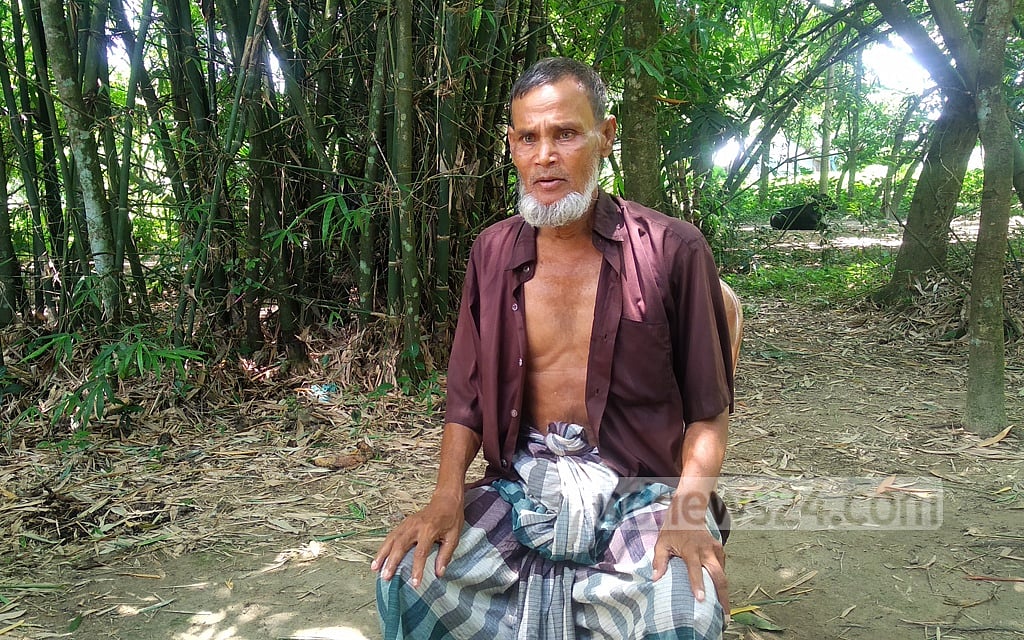
Haris Bhuiyan is a Narsingdi native who has been suffering from asthma and diabetes for five years and spends his days at home.
“I am not in a condition to do any work," he said. "I live on the kindness of others. I struggle to breathe when trying to do anything. I am a burden to the family."
Haris said his children are married and have their own families and his wife works as he cannot.
“To us, Eid is not a special day. When we were young, we had lots of fun. We made the ritual sacrifice. But now we aren't in a position to celebrate,” he said.
“The little support we get from others is spent on medicine and day-to-day costs. There is no way to buy new clothes or better food for Eid.”
He said, “My son doesn’t look after me, my daughters got married and left. There is no one to care for me."
Every year Eid adds more burdens to the family of three, including a three-month-old son.
He said his earnings increase a little in January and February as bag production work is in full swing then.
“For the rest of the year, work is uncertain. Currently, there is no income. As the price of daily necessities rises we are barely able to survive. We will be bound to borrow.”
“We never have a good time,” Deen added.
He said, “I can't even treat my son who is ill, what else can I do on Eid?”
Meher Banu, a labourer in the same area, lost her husband four years ago. Although she has a son, she is currently living alone.
“There is no way to celebrate Eid,” she said, saddened that she couldn't even afford some of the more inexpensive traditional food for the festival.
She said, “He gave me some money during Eid-ul-Fitr as he had some money at the time. However, this time he couldn’t earn anything. He is struggling to feed his children - how would he give me any?”
“I don’t find much work. When I have work, I can eat. Otherwise, I starve. Today I got some rice.”
Shufola lives with her husband and their two children. Like Meher, she is also struggling to make ends meet.
Once a labourer, Shufola, can't work anymore as she is sick.
"I can't get my daughter an education due to a lack of money. I can't even afford my treatment. We seldom eat. The last time we bought fish was twenty days ago. We haven't had anything like that since then,” she said.
Shufola’s husband Masud Mia drives an electric three-wheeler, known locally as an "easy bike". They bought it in installments.
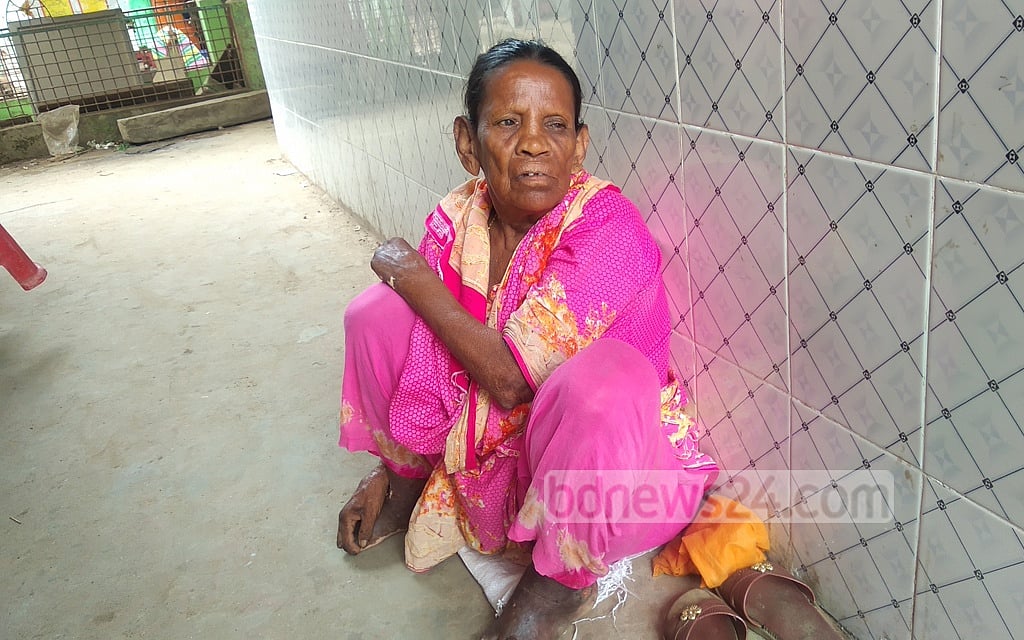
In front of the Kalshi slum in Dhaka sits 70-year-old Maryam who says she lost her parents at an early age. Her brothers married her off and moved to Pakistan when she was a teenager. Her husband died two decades ago and she has no children.
"I eat whatever people give me. Some give if they want, and some don’t. I have no contact with my brothers."
"I have no one, no one to look after me," Maryam lamented.
After her husband's death, Maryam worked at a garment factory and sometimes as a household aide. But five years ago, a fire burnt her hands and feet and she had to stay in hospital for four months. When she was released, she found her house had been burgled and all her belongings stolen.
Since then she has been wandering the streets.
“I don't have a home or people I can call my own. What does Eid matter to me?”












