


Published : 27 Feb 2019, 08:39 PM
Updated : 17 Oct 2022, 11:35 AM



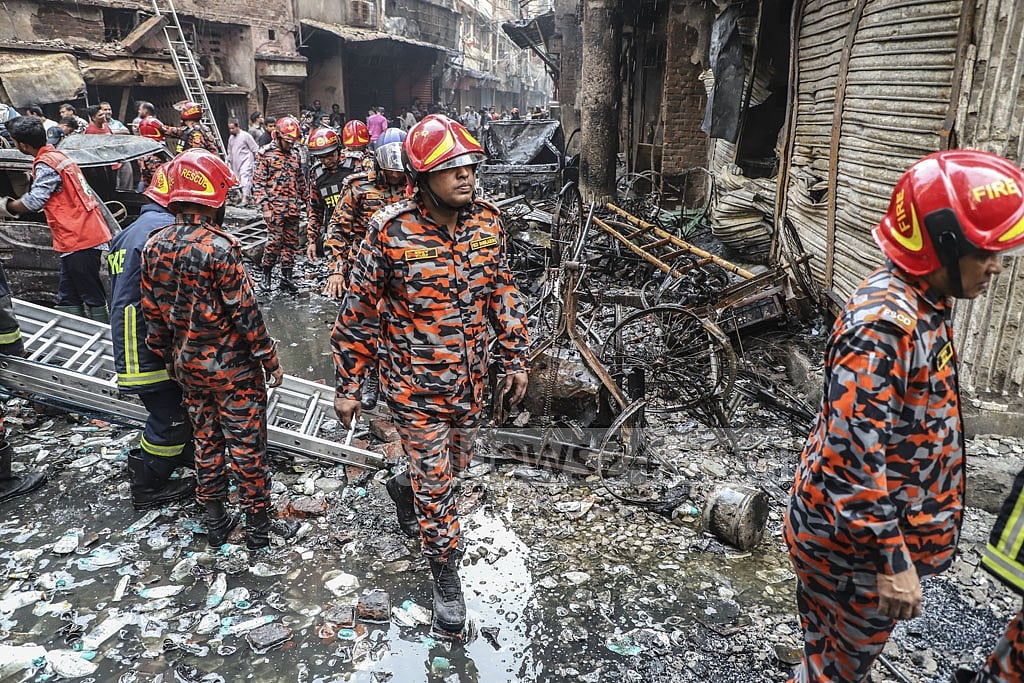
Within a few minutes, he reached the Ajgar Ali Lane. But he was in a dilemma about which road to take because of the narrowness of the streets.
"People were escaping. Someone suggested taking the Haider Box Lane and someone suggested the Ajgar Ali Lane. The blaze stemming from the Churihaata mosque could be seen from the north end of Ajgar Ali Lane. Then I drove into the Ajgar Ali Lane," the fire-fighter told bdnews24.com.
Abul Bashar, a resident of Haider Box Lane, who was a witness to the deadly Feb 20 fire, said, "The first vehicle came from Lalbagh as soon as the blaze erupted. Many of us were still dialling 999 [emergency telephone number.]”
"What was the use of coming early? The driver had to struggle through the narrow streets with the vehicle carrying almost 4,500 litres of water,” he said.
"The driver told us that it was not possible to drive the vehicle through the Ajgar Ali Lane. However, we encouraged the driver to take that road. If the vehicle was not driven through that lane, the fire would have spread further north. "
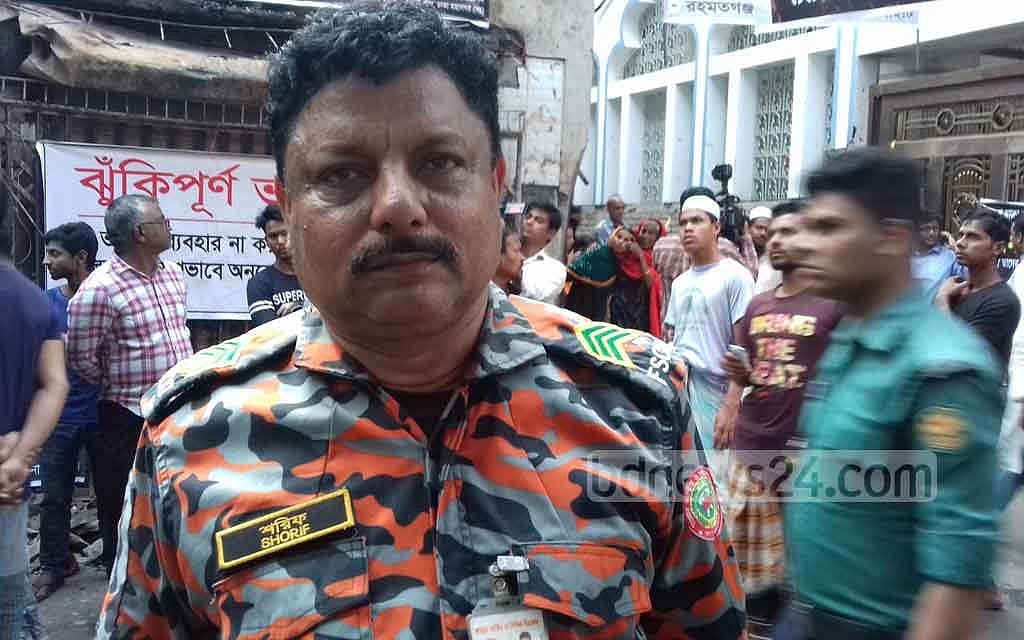
"It took three minutes and 52 seconds to reach the spot from Lalbagh Fire Station even though there was traffic jam on the road," said fire-fighter Sharif.
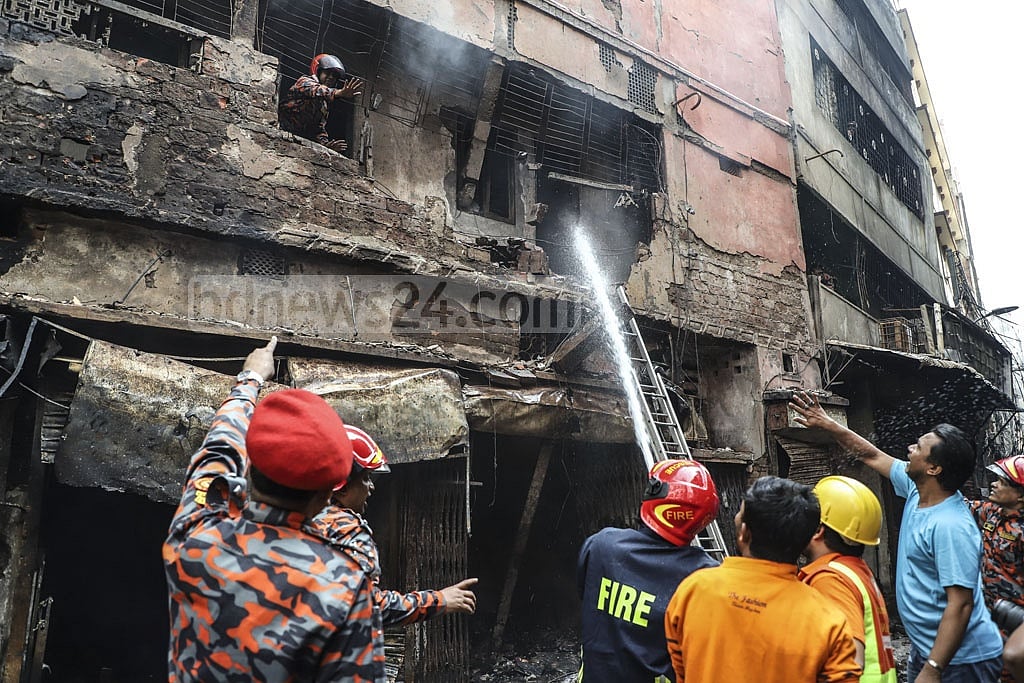
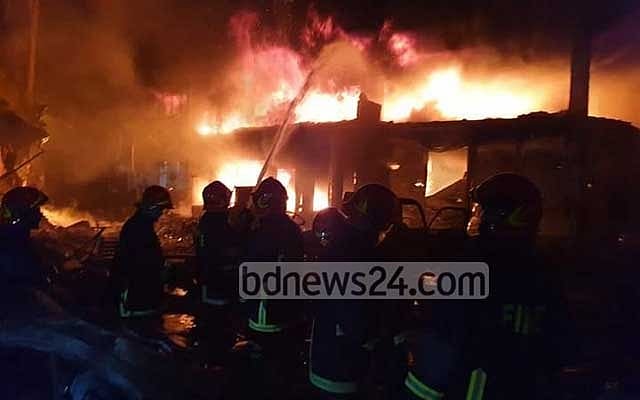
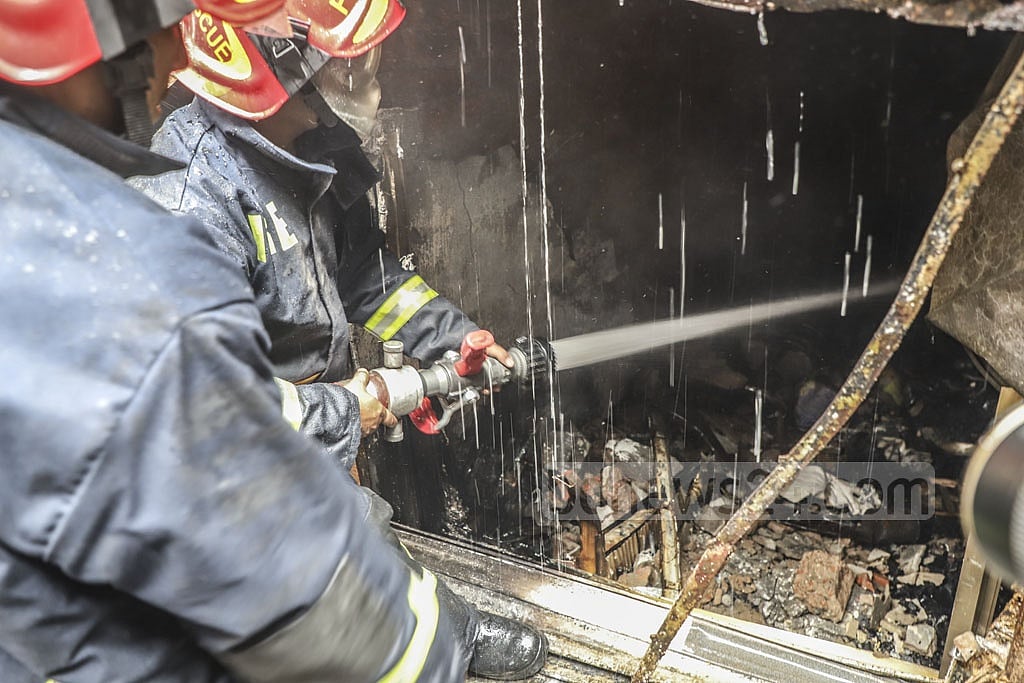
As soon as the vehicle reached the spot, fire-fighter Shahjalal R Dipul pulled down the water pipe and started to spray the water. After witnessing the intensity of the blaze, he phoned the control room for reinforcement.
The vehicles of Polashi Fire Station reached the scene after the vehicles of Lalbagh Fire Station, which was positioned more than a kilometre away from the spot. Thirty-five more units joined in later to put out the fire.
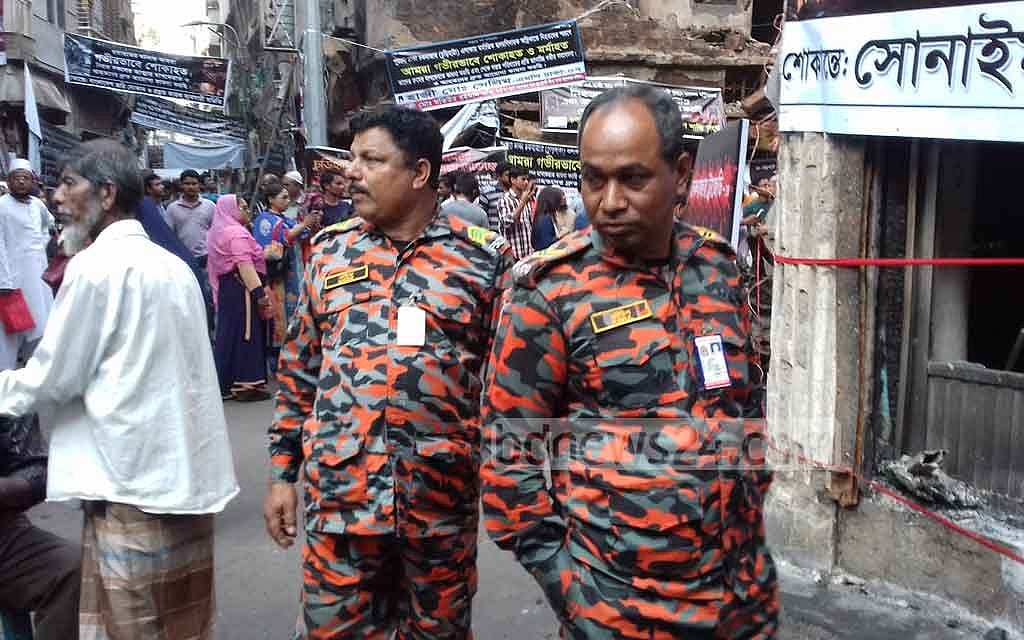
Debashish Bardhan, a deputy director of the Fire Service and Civil Defence, told bdnews24.com, "The streets were too narrow to allow in the vehicles used for dousing fire in high-rise buildings. If those vehicles could enter, the flames could have been extinguished faster."
It is always difficult to carry out the fire extinguishing work at Old Dhaka in case of any fire incidents - a problem mentioned by the High Court in response to a writ petition on the Churihatta fire incident filed on Monday.
Traffic congestion and the gathering crowd also disrupted their work, said Debashish. "Crowds swarmed the spot during the fire incident and the roads were also narrow. Still, we were able to work with the help of law-enforcing agencies."
Five buildings were damaged in the fire. So far, 69 people have died.
WHERE IS WATER?
Fire-fighters have complained about water shortage during the incident.
Driver of the second vehicle from the Polashi Fire Station, Raihan, told bdnews24.com, "As soon as we reached the spot, Mofazzal went down to the streets with water pipe and Jewel with a ladder. My first duty was to drive the vehicle and the second task was to handle the pump. So, I started looking for a water source with the pump.”
"We set up the pump in seven houses to take water, but water kept running out as their reservoirs were too small. Only the water sources at the prison pond, WASA and Churihatta mosque were good enough to supply us for a long time."
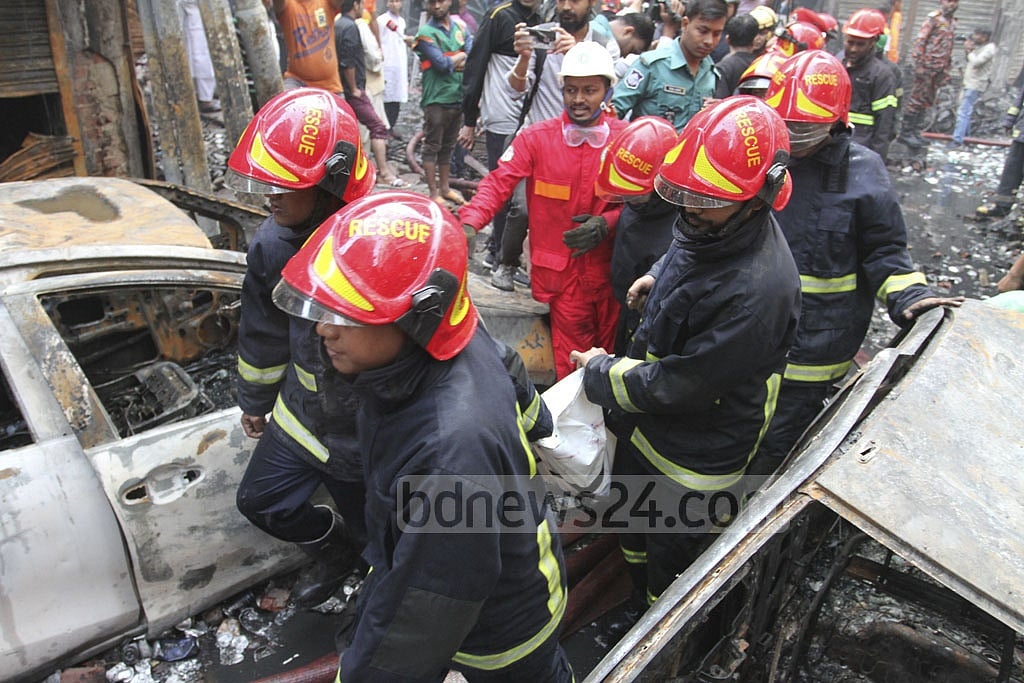
A dead body is recovered from the ruins of a massive fire at Churihatta of Old Dhaka’s Chawkbazar area on Thursday. Photo: Asif Mahmud Ove
Deputy Director (Operations and Maintenance) of Fire Service and Civil Defence Headquarters Dilip Kumar Ghosh said, "The water ran out in two minutes after linked a pump manually to a house reservoir. Then we manually moved the pump and set it to another building, which was time-consuming. If there was enough water in the reservoirs, it would have taken less time to put out the fire. "
"There were no water lines for the fire-fighters in any of the buildings in Old Dhaka."
Although the lane was narrow, the fire could not spread out much because the fire service vehicles had entered from four directions to spray water. "Otherwise, if water was splashed from one side, it would have spread to the other side," he said.
"We had some recommendations after the Nimtali fire, but those recommendations were not implemented," said the fire-fighter with anger.
DELAY BECAUSE OF CHEMICALS?
Chemical and combustible substances that were the catalysts for fanning the fire also delayed efforts to tame the blaze.
Debashish said, "Chemical tender was used to extinguish the fire. Foam was also used, but it did not work due to the presence of chemical.
"There were a lot of chemical-related items in Wahed Mansion. That’s why the foam did not work. But the chemical tender worked."
There were stores carrying raw materials for producing perfumes and plastics on the second floor of Wahed Mansion, which was the most affected by the fire. The building’s basement also had a chemical warehouse, but the fire did not reach it.
After the Nimtali fire in 2010, where more than a hundred people lost their lives, the inquiry committee recommended the removal of all the warehouses carrying chemicals and combustible materials from Old Dhaka.
But the recommendations were not implemented and the High Court also resented it on Monday.
Fire Service Deputy Director Dilip Kumar blamed the crowd for the disruption of the fire-extinguishing work.
"People tried to snatch the water pipes to put out the fire in their own shops. It disrupted our efforts."
TIRELESS TOILING
Fire-fighters received appreciation from the general people for their efforts in fire-related incidents or boat-capsizing incidents in Bangladesh in the past. There was also no exception to that in Chawkbazar.
They worked at a stretch from 10:30pm on Wednesday until the next day.
About 300 fire-fighters and volunteers worked for 15 hours to douse the deadly fire, according to Debashish.
"Thirty seven of our units have worked to put out the fire. Everyone in the Dhaka division was involved. The reserved fire-men also worked."
Raihan, a fire-fighter of Palashi Fire Station, said, "I had never worked so many hours in my three-year career."
"But there was no fatigue until the fire was doused. After extinguishing the fire, I was exhausted."
Debashish has the experience of working even longer hours for extinguishing fires.
It usually takes five to six days to put out the fire at jute mills and for spinning mills, it takes one-and-half to two days, he said.
A firefighter named 'Sanowar' said, "We drank water in between work. And the following morning, a lot of fire-fighters had some snacks. But I only drank water until noon next day."
Debashish, who was pleased with the efforts of his colleagues, said, "The fire could not spread because of our capability."
Rustam said, "The traffic jams were intense on that night. Yet the fire service came in due time overcoming all the adversity."
Bashar said, "We also worked with the fire-fighters and provided them with food in the morning."
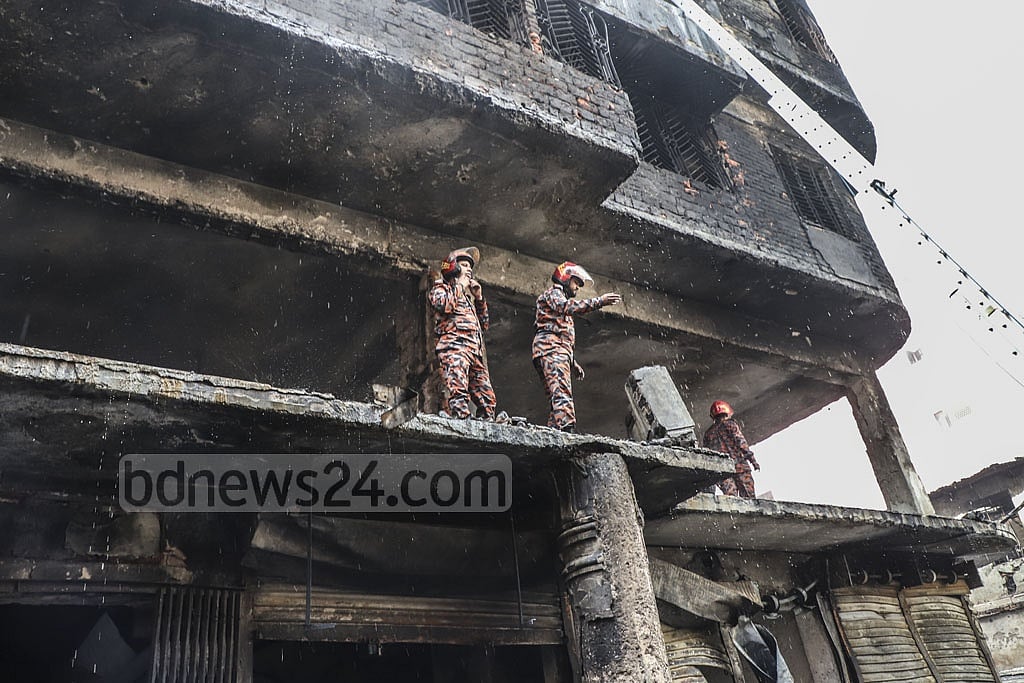
The fire-fighters were not done even after extinguishing the fire. Four days after the fire incident, some of them were spotted in the damaged building.
When asked why they were still there, one of them said, "The buildings pose risks. The cables are burnt. Different organisations are working here. We are still here in case anything goes wrong.”












