Published : 02 Mar 2017, 11:25 PM
Updated : 19 Oct 2022, 03:29 PM


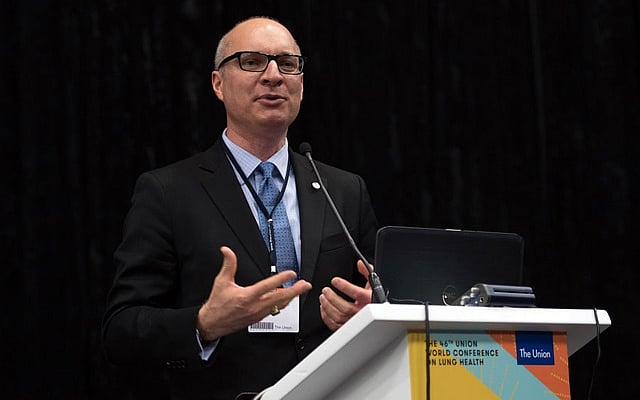
In a statement, the International Union Against Tuberculosis and Lung Disease termed this “unacceptable” and demanded that TB be included in the WHO list of bacteria for which new antibiotics are urgently needed.
Executive Director José Luis Castro also wrote a letter to WHO Director General Dr Margaret Chan protesting against this exclusion from the list released on Feb 27.
The Union said the WHO must revise the list to include TB – the world’s leading infectious disease killer – with immediate effect.
It also called upon the international community to support demands that TB be included in the catalogue of bacteria posing the greatest threat to human health – and for which new antibiotics are urgently needed.
The bacteria that causes TB kill more people than any other infectious pathogen. Latest WHO figures state that in 2015 alone, 1.8 million people died, including 210,000 children.
An estimated 580,000 people were reported to have drug resistant versions of TB – both multidrug-resistant TB (MDR-TB) and extensively drug-resistant TB (XDR-TB) – while actual numbers affected could be even higher.
The only way of treating TB is with antibiotics. Current treatments for resistant forms of TB are arduous and are accompanied by side effects that include deafness and psychosis, as well as practical difficulties for families, communities, health systems and livelihoods.
TB research and development has been systematically underfunded during the previous decade. The current spending of $620 million on all TB R&D (vaccines, diagnostics and treatment) is only one third of the $2 billion annual funding target outlined in the 2011–2015 WHO Global Plan.
This is counter to the global aim of accelerating progress against TB in order to reach the ‘End TB Strategy’ by 2030, The Union said.
“It is outrageous to sideline TB from global antimicrobial resistance (AMR) efforts. The Union strongly urges WHO to include TB on its list of priority pathogens. Among the group of antimicrobial-resistant diseases, drug-resistant TB is a leading cause of sickness and death,” Castro, the executive director, said.
“Failing to include TB on its list was a dramatic departure from the data, and it undermines efforts to find the new and better treatments that patients desperately need. This is particularly critical for those countries where drug-resistant TB is epidemic,” he added.
As G20 leaders are set to meet and discuss an agenda for tackling antimicrobial resistance, The Union has strongly urged them to follow the data.
“They should include TB in any G20 initiatives aimed at increasing R&D investments and piloting models to deliver new medicines used to treat antimicrobial-resistant disease,” President of The Union Dr Jeremiah Chakaya Muhwa said in the statement.