


Published : 05 Mar 2016, 03:49 PM
Updated : 19 Oct 2022, 05:09 PM


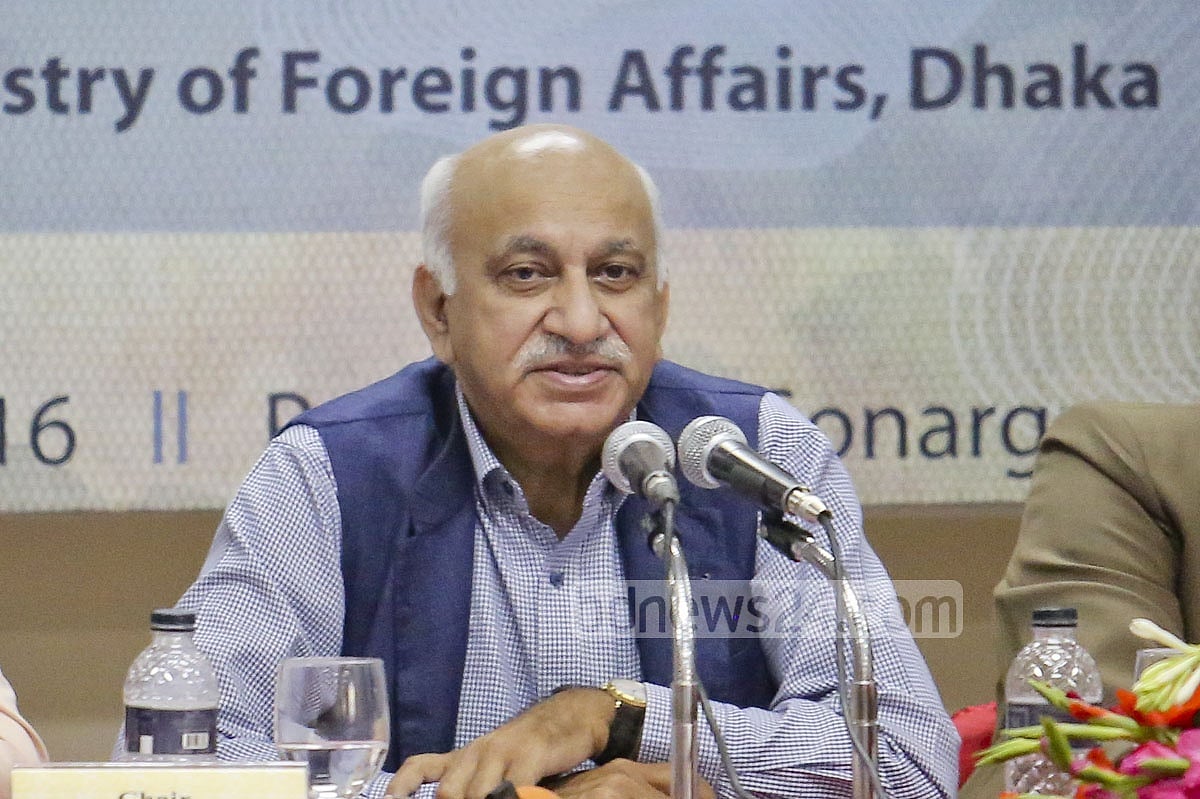
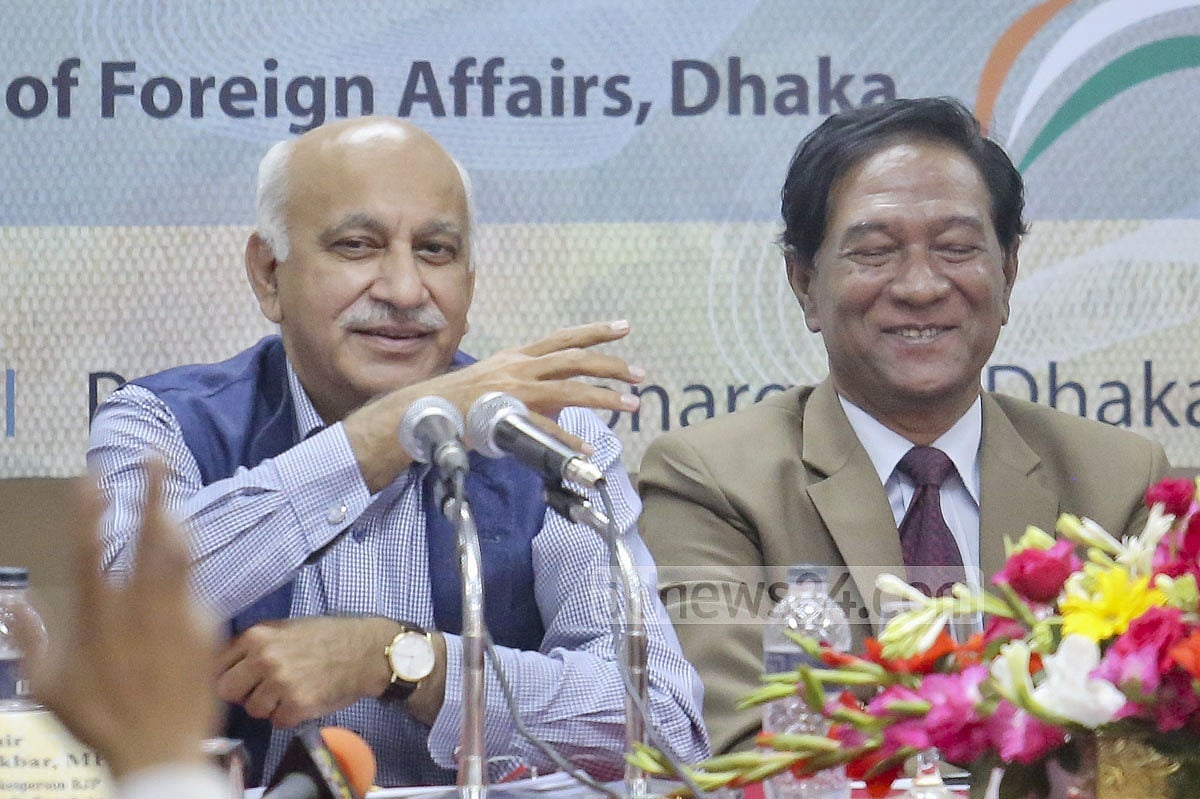
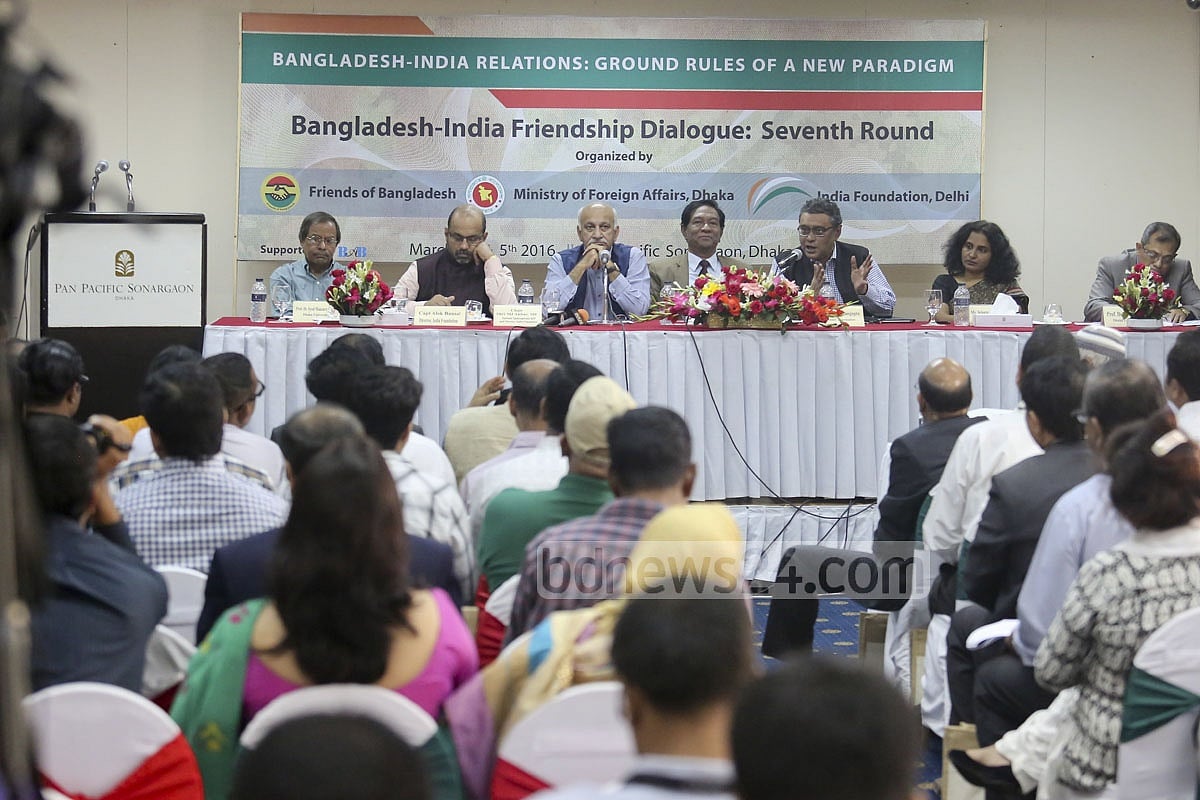
“A mountain can be made out of a molehill. Anything has the potential to become a big issue,” MJ Akbar said at a dialogue on India and Bangladesh relations on Saturday.
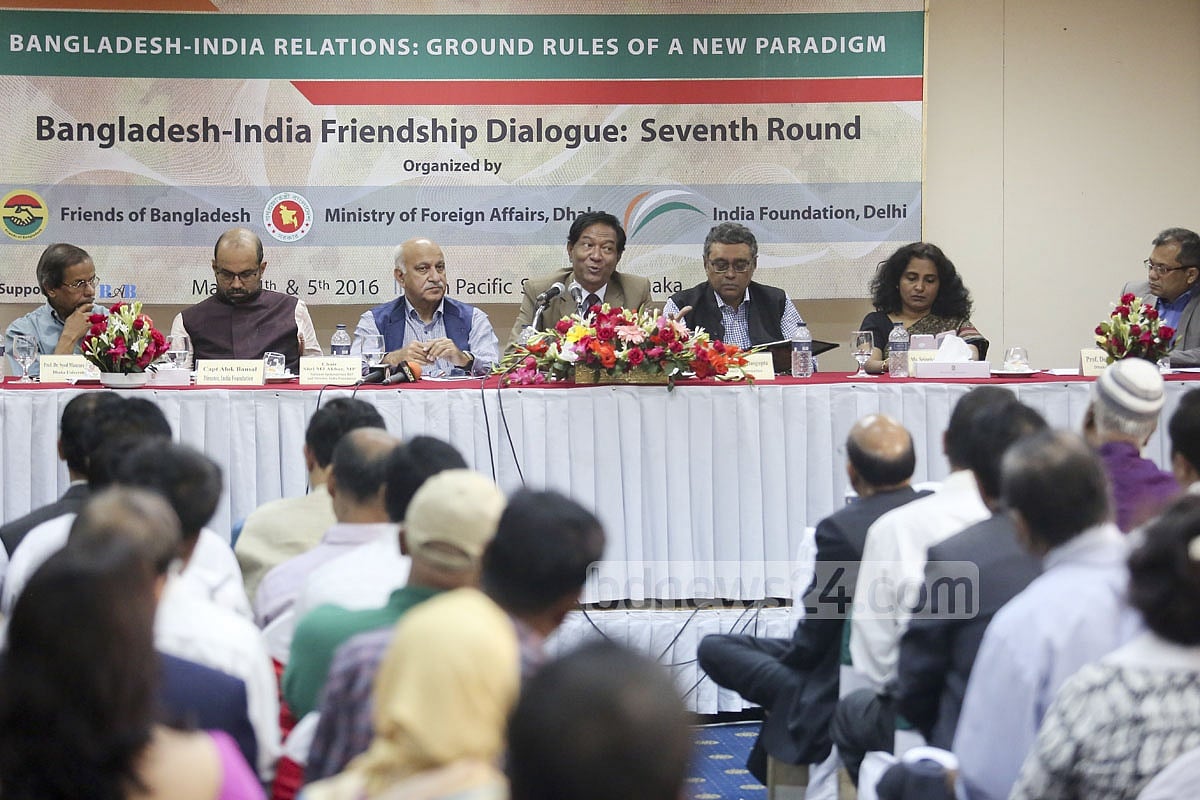
He was chairing a panel on security cooperation on the last day of the two-day dialogue, the seventh of its kind, organised by the ‘Friends of Bangladesh’ with the support of the foreign ministry in Dhaka.
Politicians, including the BJP general secretary, as well as academics, think-tanks, former diplomats, and senior journalists of both sides are attending the dialogue that comes on the heels of Prime Minister Narendra Modi’s Dhaka visit last year.
India-Bangladesh relations are currently billed as being ‘at their best’, though there are prevailing issues in the water sharing and border management sectors.
Akbar, who was a journalist and also served as a Congress member of the Lok Sabha during the late Indian premier Rajiv Gandhi’s time before joining the BJP, said, “Security only comes when there is confidence.”
“There is a problem of psychological insecurity between India and Bangladesh,” he said.
“But new opportunities come. Nowadays that which once was unthinkable is becoming possible. It’s happening now,” he said, referring to the decades-old land boundary issue which was resolved within a year of Modi assuming office.
Foreign Secretary Md Shahidul Haque, speaking at the session, said both sides should think “out of the box” on bilateral relations.
He suggested bringing about “innovative and pioneering initiatives” to the traditional approach to bilateral relations.
He also proposed new areas of cooperation that both countries can embark upon for enhancing their relations.
Blue economy and cooperation in the Bay of Bengal, cooperation in renewable and nuclear energy and space and satellite sector were some of the areas he highlighted.
Haque said both India and Bangladesh could work together under the framework of the new development goals (SDGs).
Taking the cue from the foreign secretary, Prof Mustafizur Rahman, executive director of the Dhaka-based think-tank Centre for Policy Dialogue (CPD), emphasised basin-wise water management.
“People will migrate from a water-scarce country to one where water is available,” he warned.
Swapan Dasgupta, a senior Indian journalist, said a big opportunity was now there to enhance Indo-Bangla relations.
“We have to seize this chance. Big opportunities come rarely in history,” he said, pointing to the issue of water sharing.
He, however, advised New Delhi not to see sovereign Bangladesh through the prism of West Bengal. Chances of a Teesta water sharing accord were scuttled in 2011 due to the resistance of Chief Minister Mamata Banerjee.
“Perception and psychology play a role. India is a very big geography and today its economy is growing and the perception is that India will play a big brother role.”
Alok Bansal, director of the Indian think-tank India Foundation, said a terrorist attack in one country had a direct impact on a neighbour.
“We have to target the minds of terrorists. We need to come up with de-radicalisation activities and we have to find out whatmotivates young people to join the terrorist forces,” he said.
He also suggested managing Islamic Zakat funds from Middle Eastern countries ‘centrally’ in the way that Malaysia was doing so that those funds did not pass into the wrong hands and ended up financing terrorism.
Major General (ret) Abdur Rashid from Bangladesh suggested forming a regional taskforce with the wider participation of all people, including religious clerics, as had been suggested earlier by Prime Minister Sheikh Hasina.
Academics from Dhaka University, notably Prof. Syed Manzoorul Islam and Prof. Delwar Hossain, also spoke at the panel discussion.
The dialogue will end with a ‘Dhaka Declaration’.












