It means Bangladesh does not “fully meet” the minimum standards for the elimination of trafficking, but is making “significant efforts” to do so.
The report released on Friday is the US government’s principal diplomatic tool to engage foreign governments on human trafficking.
The report enjoys the Congress' mandate and it looks at what the governments are doing to combat human trafficking (modern day slavery) through the lens of what the US describes as the 3P paradigm -- “prevention, protection, and prosecution”.
It ranks countries in its four-tier ranking system.
Bangladesh has been ranked as tier-2 country meaning it has failed to meet the minimum standards of combating human trafficking, but is striving to do so.
It also means that the country shows that “it is doing a decent job, but could definitely improve”.
“And those minimum standards are set out in our trafficking law of 2000, but they really track the international standards and best practices that we see around the world,” according to the report.
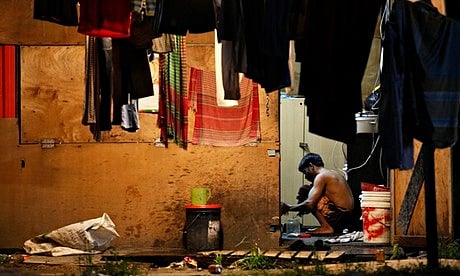
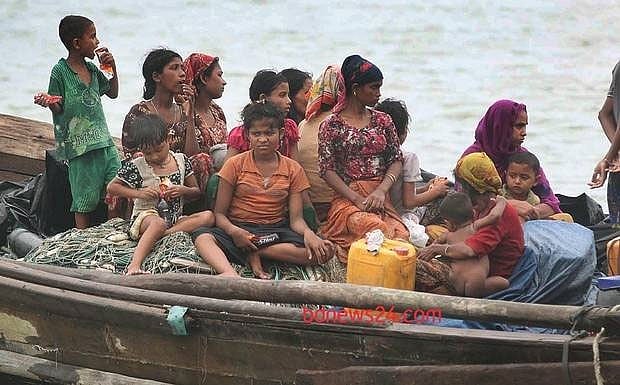
File Photo
It said Bangladesh authorities investigated and prosecuted more cases under the 2012 Prevention and Suppression of Human Trafficking Act (PSHTA), but managed to convict only a small number of traffickers.
“Bangladesh lacked a formal referral mechanism and authorities did not adequately train police and other public officials on identifying and assisting victims,” the report observed.
“While the government implemented stricter criteria in granting licenses to recruitment agents, it continued to allow extremely high and legal recruitment fees”.
Tier 1 is the highest ranking that the US puts itself in with many other western countries, but according to the report it does not mean that a country has no human trafficking problem.
It mostly indicates that a government has acknowledged the existence of human trafficking, and made efforts to address the problem.
Secretary of State John Kerry in his foreword reminded everyone’s responsibility to make “this horrific and all-too-common crime a lot less common”.
He said this year’s report offers a guide to the road ahead as “we confront the scourge of trafficking”.
“Whether a concerned citizen, a board member, a government official, or a survivor of trafficking, we each have a responsibility to spot human trafficking, engage our communities, and commit to take action,” he said.
According to the report, Bangladesh is primarily a source, and, to a lesser extent, a destination country for men, women, and children subjected to forced labour and sex trafficking.
Some of the Bangladeshi men and women who migrate willingly to the Persian Gulf, Iraq, Iran, Lebanon, Maldives, Malaysia, Singapore, Thailand, Brunei, Sudan, Mauritius, the United States, and Europe for work subsequently face conditions of forced labour.
Before their departure, many migrant workers incur debt to pay high recruitment fees, imposed legally by recruitment agencies belonging to the Bangladesh Association of International Recruiting Agencies (BAIRA) and illegally by unlicensed sub-agents.
“….this places some migrant workers in a condition that could be viewed as human bondage caused by high debt."
Some recruitment agencies and agents also commit recruitment fraud, including contract switching, in which they promise one type of job and conditions, but then change the job, employer, conditions, or salary after the worker arrives.
Domestic workers are predominantly women and particularly vulnerable to abuse.
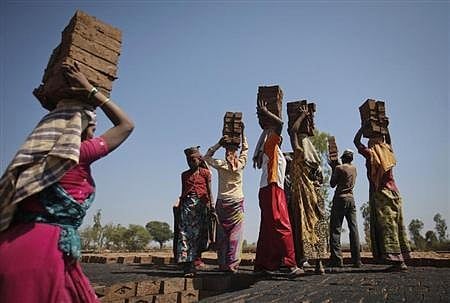
Photo: Reuters
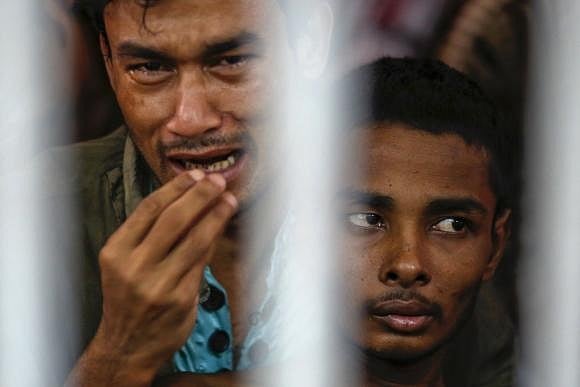
Some women and children from Bangladesh are transported to India and Pakistan, where they are subjected to commercial sexual exploitation and forced labour, according to the report.
The Rohingya community in Bangladesh is especially vulnerable to human trafficking.
The report said within the country, some Bangladeshi children and adults are subjected to sex trafficking.
Some, predominately in rural areas, are subjected to domestic servitude and forced and bonded labour, in which traffickers exploit an initial debt assumed by a worker as part of the terms of employment.
Some street children are coerced into criminality or forced to beg. Begging ringmasters sometimes maim children as a means to generate public sympathy and earn more money.
In some cases, children are sold into a form of bondage by their parents, while others are induced into labor through fraud and physical coercion, including in the domestic fish processing industry, or exploited in prostitution.
Citing an international expert’s comment on debt bondage, some Bangladeshi families and Indian migrant workers are subjected to bonded labour in Bangladesh’s brick kilns.
The report said some kiln owners sell bonded females into prostitution purportedly to further recoup family debts.
That expert also reported that some Bangladeshi families are subjected to debt bondage in the shrimp farming industry in southeastern Bangladesh and that some ethnic Indian families are forced to work in the tea industry in the northeastern part of the country.
Photo: Reuters
In some instances, girls and boys as young as 8 are subjected to forced prostitution within the country, living in slave-like conditions in secluded environments.
The report acknowledged that the government has prosecuted and investigated more cases under the 2012 law, PSHTA, but said such “limited efforts” to protect victims and prevent trafficking was not enough.
Prosecution
The alleged complicity of some Bangladeshi government officials and police officers in human trafficking remained a problem, according to the report.
“Corrupt politicians, police, and border security forces on both sides of the India-Bangladesh border reportedly recognised a token used by human traffickers to evade arrest if caught at the border,” it said.
“The government of Bangladesh reported that it continued prosecuting government officials suspected of complicity in trafficking, although there was no further development.
“The government provided some anti-trafficking training at the police training academy.
“Observers reported that information about the 2012 law had not been circulated widely among officials at the district and local government levels”.
Bangladesh passed anti-trafficking law in 2012, PSHTA, which generally prohibits and punishes all forms of human trafficking.
The report, however, said it prohibits the fraudulent recruitment of labour migrants only if the recruiter knows that the recruited worker will be subjected to forced labour.
The penalties for labour trafficking offenses are five to 12 years’ imprisonment and a fine of not less than the equivalent of approximately $600, and penalties for sex trafficking offenses range from five years’ imprisonment to the death sentence.
“These penalties are sufficiently stringent, and commensurate with those prescribed for other serious crimes, such as rape”.
Photo: Reuters
Protection
But it said the government made “limited efforts” to protect victims of trafficking.
The police registered 377 cases involving individual or groups of victims in 2013, compared to 602 in 2012.
The report said the government lacked a formal mechanism for authorities to refer identified victims to care, and officials’ ability to refer victims depended on their awareness of the 2012 law, PSHTA.
Bangladeshi officials collaborated with Indian authorities on the repatriation of Bangladeshi children trafficked through a shared standard operating procedure.
The government did not fund shelters or other services specifically designed for trafficking victims.
But according to the report, trafficking victims could access “non-specialised” support services for vulnerable people through nine shelter homes, drop-in centers, and safe homes administered by the Ministry of Social Welfare.
Adult victims could leave the shelters on their own without supervision.
The government continued to operate shelters in its embassy in Riyadh and consulate in Jeddah for female Bangladeshi workers fleeing abusive employers.
But the diplomatic corps lacked the resources in destination countries to adequately assist Bangladeshi labor trafficking victims.
Prevention
The report also said that the government made “limited efforts” to prevent trafficking in 2013.
It said the government “sustained policies that permitted the forced labour of Bangladeshi migrant workers abroad to continue”.
“In particular, the government continued to allow BAIRA to set extremely high and legal recruitment fees and did not exercise adequate oversight to ensure BAIRA’s licensing and certification practices did not cause debt bondage for Bangladeshi workers abroad”.
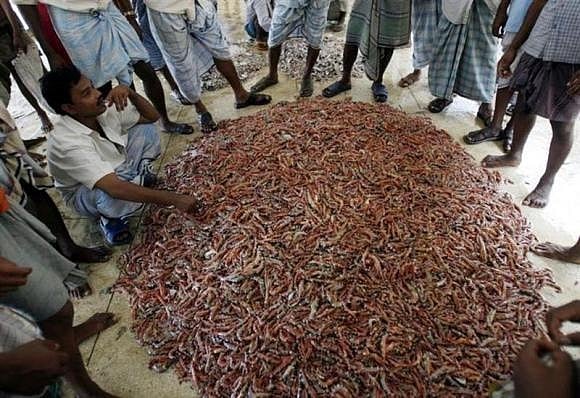
Photo: Reuters
Authorities canceled licenses for four recruitment agencies in 2013 for labour trafficking, compared to 65 agencies for engaging in a variety of illegal practices in the previous reporting period.
It said the government did not demonstrate efforts to reduce the demand for commercial sex and also pointed that Bangladesh is not a party to the 2000 UN Trafficking in Persons Protocol.
Recommendations
The report recommended the government to finalise, adopt, and disseminate the implementing rules for the 2012 law, PSHTA, and train stakeholders including government officials for its implementation.
It also asked for steps to sharply reduce all recruitment fees charged by licensed labour recruiters, and enforce violations with criminal sanctions.
The report also recommended intensifying efforts to prosecute trafficking cases and convict trafficking offenders, particularly labour trafficking offenders, while strictly respecting due process.
It also called upon the government to expand the support services available to trafficking victims, particularly adult male and forced labour victims.
Implementation of the 2000 UN Trafficking in Persons Protocol was one of the many other recommendations the US made to the government to overcome the challenge.