



Published : 25 Jul 2025, 08:34 AM
Updated : 28 Aug 2026, 01:23 AM


Confused by a primetime TV report, septuagenarian Jahanara Begum confronted her journalist son at the dinner table, full of questions.
Why did a well-spoken girl from an English-medium school in Mohammadpur file a case against her parents? Did they truly abuse her? She seemed cheerful on TV. The court asked for a family resolution -- but how would that work?
Her son tried to explain. After hearing it all, Jahanara simply said, “Times have really changed.”
A child of this changed time, the 19-year-old girl in question is the only daughter of two working parents. They raised her in a privileged environment, sparing no expense to educate her at one of Dhaka’s top institutions.
Despite what appeared to be a life of provision, she took her parents to court with allegations of “physical and psychological abuse.”
The court dismissed the charges and advised a family reconciliation. But the case, amplified by news media and social platforms, sparked a much wider conversation.
What drives a child in Bangladesh to bring legal charges against her parents? How did it escalate to court? And what does this incident tell us about the social fabric of modern families?
The young woman appeared in front of media cameras herself, telling reporters of her longing for a “beautiful life” and expressing frustration while asking for her story to be heard and shared.
Her parents, stunned and silent, declined direct media contact. Speaking through their lawyer, they simply said: “We wish her well.”
While acknowledging any adult’s right to bring complaints to court, psychologists flagged the deeper issue -- poor parenting.
A stronger parent-child relationship, they argued, might have prevented the legal showdown.
Sociologists echoed this, stressing the importance of family education and the need for parents to bridge the generational gap by spending more meaningful time with their children.
The parents’ lawyer admitted there was a disconnect. Both parents were professionals, he said, and their daughter lacked the close attention she needed growing up. “That proper care, especially in her formative years, was missing,” he said.
On Jun 22, the young woman filed a complaint under the Domestic Violence (Prevention and Protection) Act 2010, seeking protection and financial support from her parents in the court of Dhaka Metropolitan Magistrate MA Azharul Islam. The court summoned her parents to appear on Jul 10.
They complied. So did the daughter.

In court, she told the judge: “It’s not my fault that I was born through them. I’m not their puppet. Why do they abuse me? I can’t eat, I can’t sleep. They admitted me to a mental hospital -- Brain and Mind Hospital -- and kept me there for two years. I was mistreated, both mentally and physically. I want to know why I was placed there.”
“I wanted a beautiful life,” she continued. “But I’m not getting it. I want protection. I want justice.”
Her lawyer, Isfaqur Rahman Galib, told the court his client had been subjected to “neglect and mental abuse” since adolescence. He requested a protection order and financial support under the domestic violence law.
Her parents’ lawyer, Abul Hossain, countered that the girl was their “only hope, their only emotional anchor”. They, too, wanted the court to ensure her protection and were willing to support her higher education abroad within their means.
After the hearing, the judge scheduled a ruling for Jul 24. On Thursday, he dismissed the daughter’s complaint and instructed the family to resolve the matter privately.
Commenting on the case, psychiatrist Helal Uddin Ahmed told bdnews24.com: “She may have mental health challenges. If she doesn’t, and she’s been wronged, she certainly has the right to seek legal remedy. But this could have been resolved within the family or community. Resorting to court should not have been the first step.”
He added, “This incident will likely force the parents to reflect on how much quality time they gave their child and how well they understood her needs.”
He believes that in matters as emotionally sensitive as this, it’s far healthier for society to encourage resolution through familial or social mechanisms rather than legal confrontations.
WHAT TRIGGERED THE COMPLAINT?
Just as in court, the young woman chose to speak mostly in English before the media. While demanding justice, she laid out a series of allegations against her parents.
bdnews24.com made multiple attempts to get her parents’ side of the story linked to her claims of “physical and mental abuse”, but they repeatedly declined to speak publicly.
A reporter later approached their home and briefly met the father. Without hearing the questions, he excused himself for prayers. When approached again after finishing, he said: “I’m a retired person. I’m already in the middle of this trouble. I don’t want to say anything.”
Subsequent requests made through their lawyer also failed to draw a direct comment.
However, in conversation with the lawyer, the parents admitted that their demanding jobs may have left little room for the kind of attentive care their only daughter needed. That void, they believe, might have caused pain they failed to recognise.
According to the lawyer, the girl had “certain mental and physical complications”, which had led to her hospitalisation. She remains under psychiatric supervision.
While her symptoms were less pronounced in childhood, they intensified during the COVID-19 pandemic. As the situation became more complex, the parents chose to stay mostly silent.
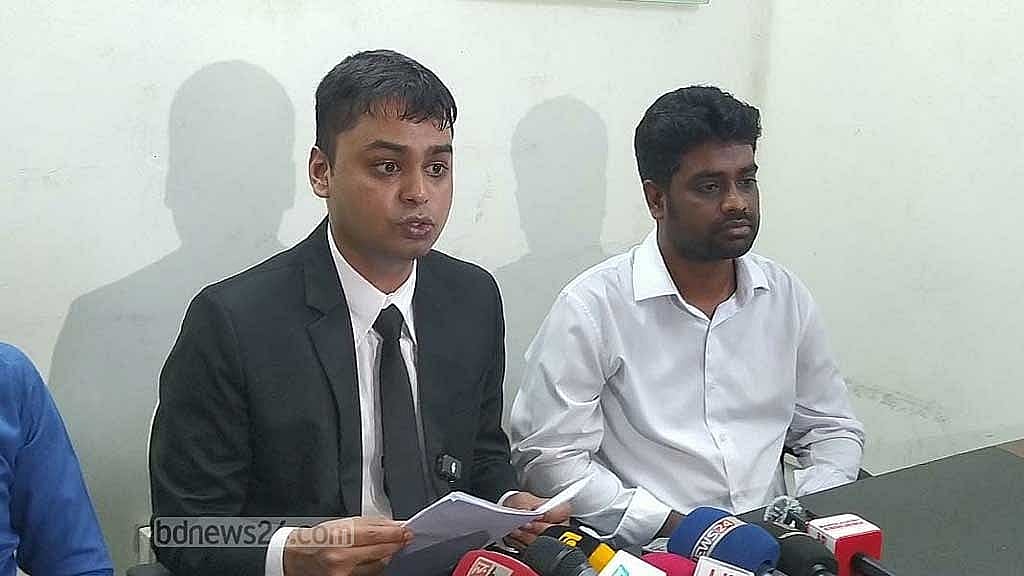
The lawyer pointed out that in Bangladesh, scolding children is generally accepted, but that is not the case in Western societies.
With today’s open flow of information, the girl learned about international rights for children and dug into local laws as well, he said.
“She felt such practices shouldn’t be acceptable in Bangladesh, which is why she approached the court.”
Lawyer Abul Hossain, representing the parents, said working parents often face some level of conflict with their children. “No matter how busy you are, parents must prioritise their children,” he said.
“Parenting doesn’t stop at giving birth. Every aspect of a child’s physical and mental development needs to be taken seriously. Otherwise, it can backfire. Values rooted in family and faith must be instilled early. These are relevant to the case -- and carry an important message for society.”
He added, “Another issue is emotional isolation. Loneliness creates problems.”
According to the lawyer, the parents remain focused on their daughter’s well-being and intend to comply fully with the court’s directions.
PARENTS APPEAL AGAINST CYBERBULLYING
After the case went public, the young woman became a target of bullying on social media. Her parents issued an open appeal, urging people to stop attacking her online so she could return to a healthy life. They also sent a letter to her lawyer.
Referring to that letter at a media briefing, the daughter’s lawyer Isfaqur said: “She is mentally distressed by the bullying. Her parents have appealed that people stop this, so she can have a brighter future. They want to reconnect with her through counselling, together, as a family, if needed.”
He added, “She lives in the same apartment in Mohammadpur as her parents. They eat at the same table. They ride in the same car. But the girl hasn’t spoken to them in five or six years. They only communicate via mobile messages. There’s no physical distance; the distance is emotional. Both sides want to bridge that gap.”

In their letter to the lawyer, the parents wrote: “Our only daughter has long suffered from both physical and psychological stress. Due to various factors, a mental gap has grown between her and us, as well as with other family members. This isolation has filled her with deep resentment and anger.
“We believe this emotional rupture led her to file the complaint. As parents, we want her to be well and to retain trust and respect for the country’s legal system.”
Galib said at the briefing, “This is a cautionary tale. Working parents must give their children enough time. They need to be conscious about how they treat them, what the children need.
“Yes, children need discipline, but it must be constructive. At the same time, children also have responsibilities toward their parents. That must be honoured too.”
ALLEGATIONS AGAINST PARENTS
In her statement, the young woman alleged that on the evening of May 25, her parents physically assaulted her and verbally abused her using obscene language at their home on Iqbal Road in Dhaka’s Mohammadpur.
She claimed she sustained injuries from the assault.
Despite being an adult, she said her parents continued to “interfere with her personal freedom, subjecting her to insult and abuse”.
They allegedly restricted her access to common household items and denied her rightful use of familial resources.
“They are depriving me of my legitimate rights, obstructing access to familial assets and support, and subjecting me to verbal abuse, humiliation, disregard, intimidation, and vulgar language, all of which have caused severe psychological harm. The physical violence inflicted amounts to abuse and has resulted in injury,” she said in her complaint.
Questions have also arisen over whether she acted independently in seeking legal recourse or was assisted by someone.
Her lawyer Isfaqur told bdnews24.com, “She has been coming to me for four months for help. I rejected her multiple times. Later, hearing her story, I agreed to represent her from a professional standpoint.
“From what I’ve seen, she is quite brilliant. If guided properly, she could excel in any field.”
WHAT THE LAW SAYS
Under Section 3 of the Domestic Violence (Prevention and Protection) Act, 2010, “domestic violence” includes physical, psychological, sexual, or financial abuse inflicted by one family member upon another woman or child in the household.
“Physical abuse” is defined as any act or conduct that threatens or causes harm to a person’s life, health, safety, or body, including coercion, provocation, or use of force leading to criminal compulsion.

“Psychological abuse” encompasses verbal assault, humiliation, contempt, intimidation, or any statement that mentally harms the victim, causes harassment, or interferes with their freedom -- such as restriction on movement, communication, or expression.
Although offences under this Act are considered “cognisable, bailable, and compoundable”, Section 30 outlines the punishment for violation of a protection order: imprisonment for up to six months, a fine of up to Tk 10,000, or both.
Repeat offences carry penalties of up to two years in prison, a Tk 100,000 fine, or both.
EXPERT VIEWS
Psychiatrist Helal noted that any adult has the right to file a legal complaint when “aggrieved”.
He, however, stressed that this incident could have been handled differently.
“This is an opportunity to strengthen parenting and familial bonds. If disagreements arise within a family, they should ideally be resolved internally without turning to courts or the law,” he said.
Helal also criticised the media coverage of the case, calling for “more sensitivity” in reporting.
“Greater empathy was needed in presenting the issue. In today’s world, where anyone can post anything online, such disclosures or interviews can be harmful for society at large.”
Muhammad Mahbub Quaiser, associate professor of sociology at Dhaka University, said traditional authority within Bangladeshi families often silences the voices of younger members.
“Fathers may insist on their stance even if wrong, while children feel compelled to comply. But now, with greater education, awareness of rights, and freedom of choice, space to speak up is growing.”
He also pointed out that today’s youth, once aware of their rights, feel empowered to act. “Before, neither the knowledge of rights nor the courage to assert them existed. This social change is ongoing.”

Referring to the changing nature of parent–child relationships, he said: “There was a time when children would submit to their parents’ will. But now, influenced by global cultural exposure, that dynamic is shifting -- sometimes correctly, sometimes not.”
Mahbub added that children may lose emotional connection when faced with “authoritarian parenting”.
“She may have thought: ‘This man may be my biological father, but I see him only as a man’. In that moment, she might have believed it was valid to speak out.”
“When children start asserting themselves and stop obeying blindly, parents often withdraw from communication, thinking ‘We raised this child with love, and now they challenge us!’ But that reaction can push the child further away.”
Instead of emotional withdrawal, the professor encouraged ongoing dialogue. “Even if there are differences in understanding due to age gaps, parents must keep trying -- without pressure, but with love.
“Watch a TV show your child likes, share meals, go out together. These efforts bridge the generational divide,” he said.
WHAT HAPPENS NEXT?
The girl’s parents’ lawyer Abul described the matter as “a family issue”.
“The girl has her own worldview,” he said. “She’s now an adult. She’s thinking from a global legal and societal perspective, without considering whether our culture aligns with that.
“Matters we consider petty, she views as major family issues. She feels she is being denied autonomy in education, healthcare, and personal freedom.”
He added, “She still lives in the same house with her parents. They cover her expenses. There’s no lack of safety. She hasn’t claimed she feels unsafe.
“But the complaint itself sends a negative message to society. Her parents don’t want that to impact the community. They just want what’s best for their daughter -- her well-being, both mental and physical.”

On the other hand, lawyer Isfaqur offered context about the daughter’s past. “She was in the care of a caregiver from age two or three. Her mental development was affected. She was bullied at school and had few friends.
“Her parents, both working professionals, were absent most of the day. They couldn’t raise her properly. This is an alarming message for all working parents.”
“Some people are criticising her for her posture and expressions in the media,” he added. “But we must understand -- she has committed no crime. She has sought protection through the legal system.
“This issue is not new -- it’s been developing over 15-16 years. The matter had become complex. We’ve spoken with everyone involved. We want a happy ending. That’s why everyone needs to step in. Everyone needs counselling.”
When asked about the way forward following the court’s directive for a family resolution, lawyer Somaiad Shaharia Fida said: “On the 21st of July, all parties reached an understanding. I facilitated that mediation. We will sit again on Saturday.
“Our discussion will focus on ensuring the girl’s protection and preventing any repeat of the physical or emotional abuse she has alleged. We’re hopeful for a positive resolution,” she added.
Finally, lawyer Galib urged all parents: “Spend time with your children. Teach them according to your faith. From teachers to the state, everyone needs to think about this. Parents must learn parenting skills. Otherwise, the next generation is at risk.”
[Writing in English by Syed Mahmud Onindo and Sheikh Fariha Bristy]







