


Published : 05 Mar 2016, 11:49 PM
Updated : 19 Oct 2022, 05:09 PM


Also Read:
BJP leader MJ Akbar cautions against ‘underestimating’ any small problem in Indo-Bangla relationsAlso Read:
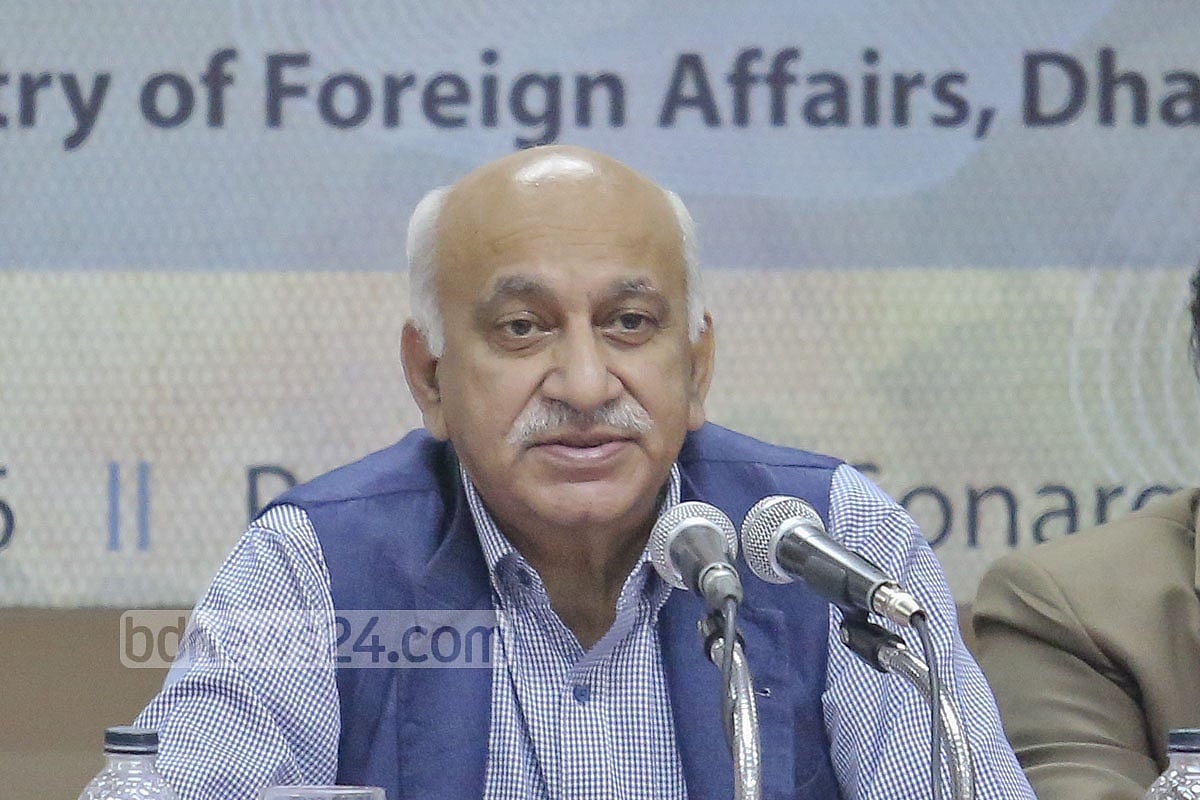
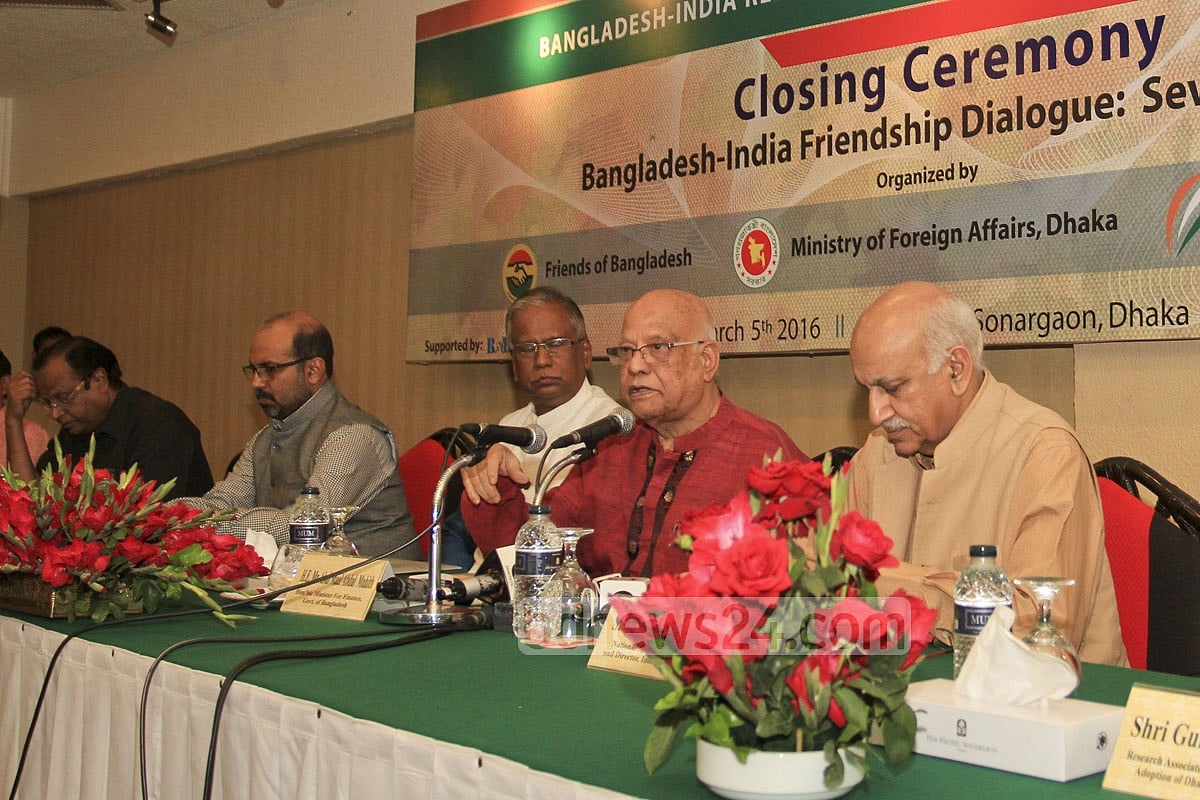
BJP fully supports Awami League, lauds Hasina’s way of safeguarding democracy in BangladeshIt began with the killing of Bangladesh’s founding father Sheikh Mujibur Rahman in 1975, Akbar said in Dhaka at the conclusion ceremony of the seventh episode of the India-Bangladesh friendship dialogue on Saturday.
The dialogue, a track 1.5 initiative that both government and civil society groups including think-tanks, academia, former diplomats and politicians convene together, ended with a Dhaka Declaration where all vowed to combat “anti-progress” manifestations in the two countries.
“The gap between the two countries increased because of anti-democratic forces that took control and deliberately used the worst of venom drop by drop,” Akbar said.
He said: “After 1971, we thought a new era had come. We also made mistakes. We defeated the occupant forces. But old establishments we could not defeat.
“They crept out of the good work and took revenge and the father of the nation (Sheikh Mujibur Rahman) paid the heaviest price for that.”
The journalist turned politician, however, said the challenge now is to look ahead rather than repeat the past.
“Both nations have realised that they are standing at the cusp of something important and something historic.”
He said he had seen there were some elements who want to see the empty half of the glass.
“No countries could solve all the problems. We could not solve our own problems.”
The daylong dialogue discussed all aspects of India-Bangladesh relations with a focus on security, economic cooperation and connectivity.
The Indian side vowed to stand by Bangladesh as a partner, not be the big brother as perceived by many.
They also suggested finding new areas of bilateral cooperation and more sub-regional cooperation which would ultimately help the two neighbours.
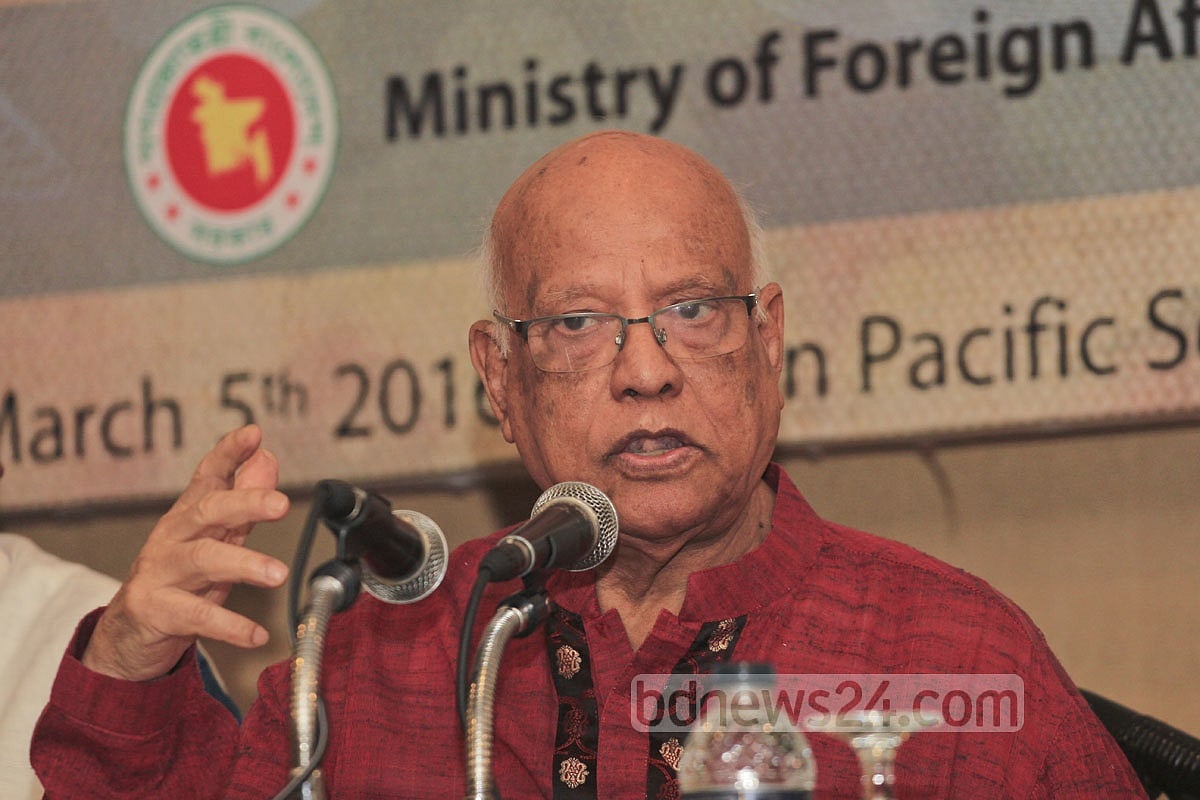
Finance Minister AMA Muhith addresses a dialogue on India-Bangladesh relationship in Dhaka on Saturday.
He, however, said the ‘bipartisan’ consensus was now prevailing in Bangladesh with the opposition BNP, which used to resort to anti-India rhetoric, now accepting issues such as transit and connectivity that they once resisted.
The BJP spokesperson said a modern nation was not possible today without a democracy.
“You cannot have democracy and violence. Those who believe in violence inherently do not accept the rules of democracy,” he said, insisting that both India and Bangladesh are secular in nature with the idea of giving equal space to all faiths.
“A Bangladesh citizen is a Bangladesh citizen irrespective of his religion. This is also true for India. I am proud to be a Muslim in India,” he said.
The issue of ‘trust’ also came up strongly by the speakers during the daylong discussions.
But there had been a feeling of being suppressed by big brother. Old doubts continued to prevail after the liberation,” he said.
“The era of strengthening relations began in 1996 when the Awami League came to power after the assassination of Bangabandhu in 1975”.
He said both countries now must work together to build South Asia as “a model of peace”.
The Dhaka Declaration noted that “the old order of status quo is slowly giving way to a very new and vibrant evolution of both countries into a paradigm of trust, growth and shared prosperity”.
The next round of the dialogue would be held in New Delhi towards the end of this year or early next year, the declaration read.













