Published :
12 Nov 2013, 07:40 PM
Updated :
09 Aug 2022, 11:18 AM
"My article only sought to place the different and often conflicting positions on Bangladesh taken by US and India, specially in the recent months," said Bhaumik, a Senior Editor based in Kolkata.
He said the real focus of his article was to examine the 'regional politics' and the way it was evolving in which Indian diplomats were finding their position closer to China rather than US.
This is despite US diplomats were quoted as saying they were on the 'same page' with India on Bangladesh, which the Indians denied.

"Only at the end of the piece was there a historical reference to 1971 and how India and US were in rival camps at that time.
“I sought to explain the context of India's intervention at that time, rather than suggest that India should intervene now," says Bhaumik.
"Any other impression conveyed by that is truly unfortunate. As a Bengali, I am proud of all the great achievements of Bangladesh, about which I have extensively written and I would never like anyone to undermine the sovereignty of this great country," Bhaumik adds.
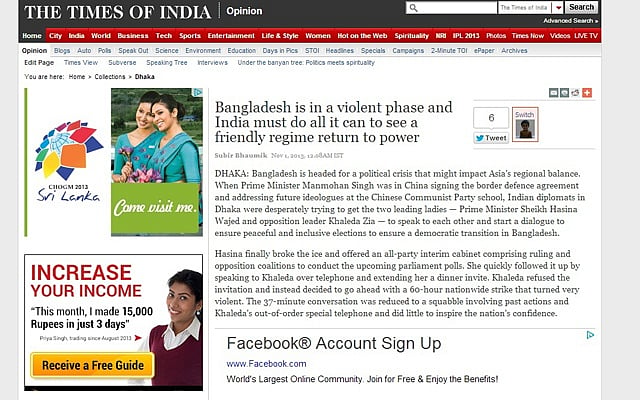
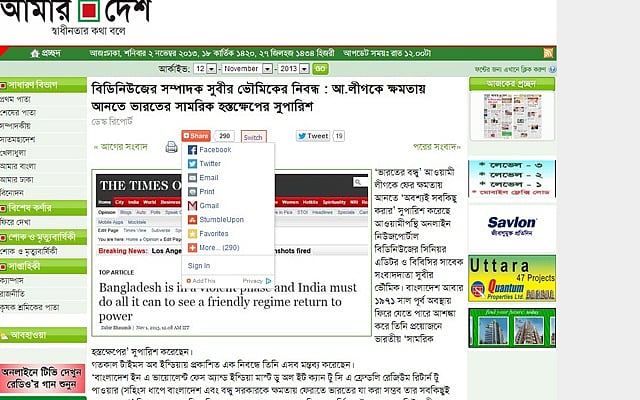
His response followed the controversy over his recent article in the Times of India, which he says has been 'totally distorted' by some.
Following some news reports on his article, BNP MP Shammi Akter on Tuesday even demanded Bhaumik's arrest.
Subir Bhaumik is a veteran journalist, academic researcher and author, with 32 years of journalism—17 in BBC World Service—behind him.
He is the author of Insurgent Crossfire that details proxy wars in post-colonial South Asia and of Troubled Periphery which looks at the crisis of India’s troubled Northeast.
He has edited two other volumes — Counter-Gaze: Media, Migrants, Minorities and Living on the Edge: Bangladesh’s Chittagong Hill Tracts.
As a commentator, he writes extensively for major news outlets in India, the UK, China, and contributes to BBC and Al Jazeera among the top global outfits.