Published : 05 Jan 2023, 01:08 PM
Updated : 05 Jan 2023, 01:19 PM


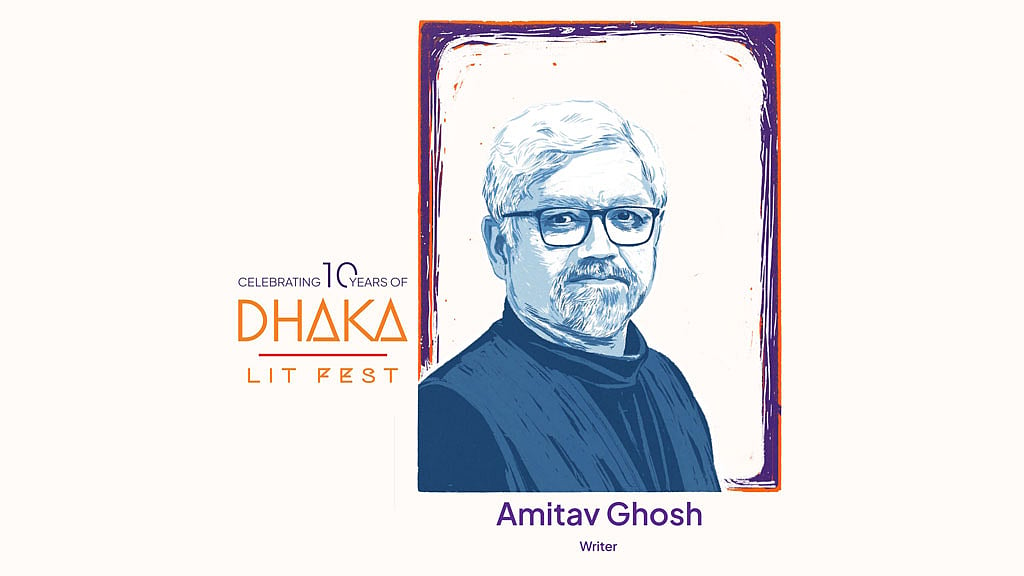
Indian writer Amitav Ghosh says his connections to his parents’ homeland of Bangladesh have been restored through experiences in Venice and New York, and his attendance at the Dhaka Lit Fest feels like the culmination of that journey.
He recalled that his family is from Gopalganj on his mother’s side and Bikrampur from his father’s side during the inaugural ceremony of the Lit Fest on Thursday.
Though his father’s village was washed away by the Padma River long ago, his mother’s home village of Ulpur is still here and the renowned author said he plans to visit it during this trip.
“I grew up hearing stories about Bangladesh,” he said. “We talked about Bangladesh all the time. My grandmother was from Madaripur district and all her life, she had her Madaripuri accent. And so, it was an amazing thing for me, you know, growing up hearing this wonderful dialect, this wonderful language. For all these reasons, growing up in India, Bangladesh was a kind of absence in my life. I think only those of us who have the experience of that separation can really understand what this absence means.”
But, over the years, Bangladesh, its language and its people have become more intertwined with his life through experiences in places like Venice and New York.
“My last book, ‘Gun Island’, is set in Venice and it really began when I began to notice that the entire working class of Venice is actually Bangladeshi and not only Bangladeshi, you know, they're from two or three areas – Madaripur, Shariatpur. And it was such a moving experience for me that in Venice, I would hear the sounds of my grandmother's dialect. It all came back to me and it was just so moving.”
Ghosh said he also spent several months travelling to the Italian migrant camps interviewing Bangladeshi and Pakistani migrants and refugees who crossed the Mediterranean to get into Europe.
“And that again, was such a sort of interesting and moving experience talking to these - really, they’re children, so many of them are teenagers, the oldest are maybe in their twenties and they risked their lives to cross over. These are amazing stories that they have to tell - how they go by foot across Iran, across Turkey, being shot at by the police, you know, holding onto the bottom of trucks as they go across. I found myself completely astonished by these stories.”
The author also said that New York had very much become a ‘Bengali city’.
“Everywhere I go, especially in Brooklyn, I just sit by my window and I hear people speaking Bangla on the streets. It's kind of such an astonishing thing, you know, and so, so marvellous and miraculous,” he said.
These moments have helped him feel even closer to the country where his parents came from, according to Ghosh.
“In all these ways, I feel that my connections have been restored with Bangladesh and [it is] especially exciting that what we see today is a resurgent Bangladesh. A new Bangladesh, a Bangladesh that has become a global leader on climate change, a Bangladesh that is now a regional leader with the highest per capita GDP, and so, on all the social indicators, Bangladesh is the regional leader.”
“So really, I think there's a lot to celebrate and to congratulate you for. But most of all, I'm so grateful, grateful to you for inviting me to be here.”
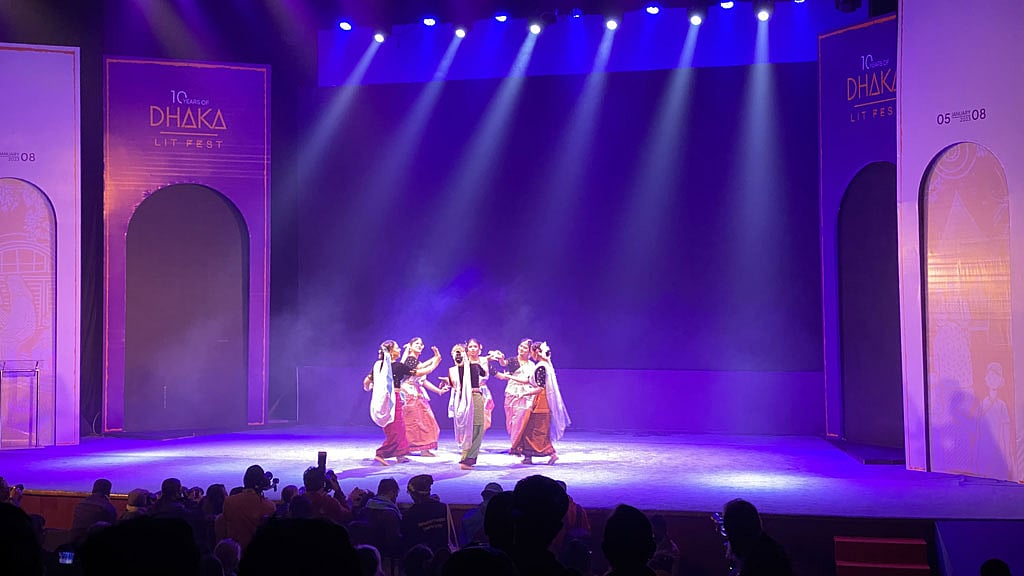
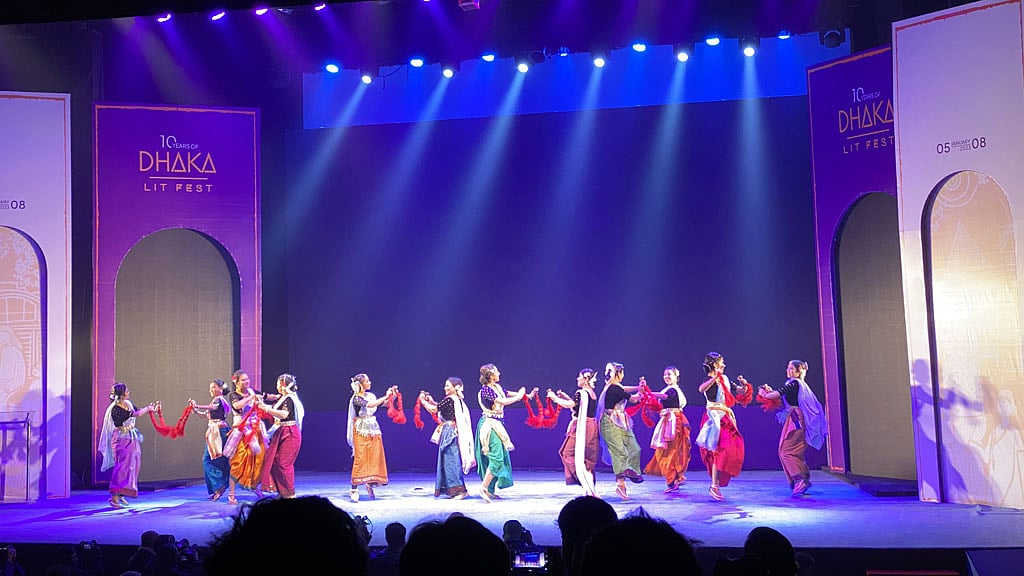
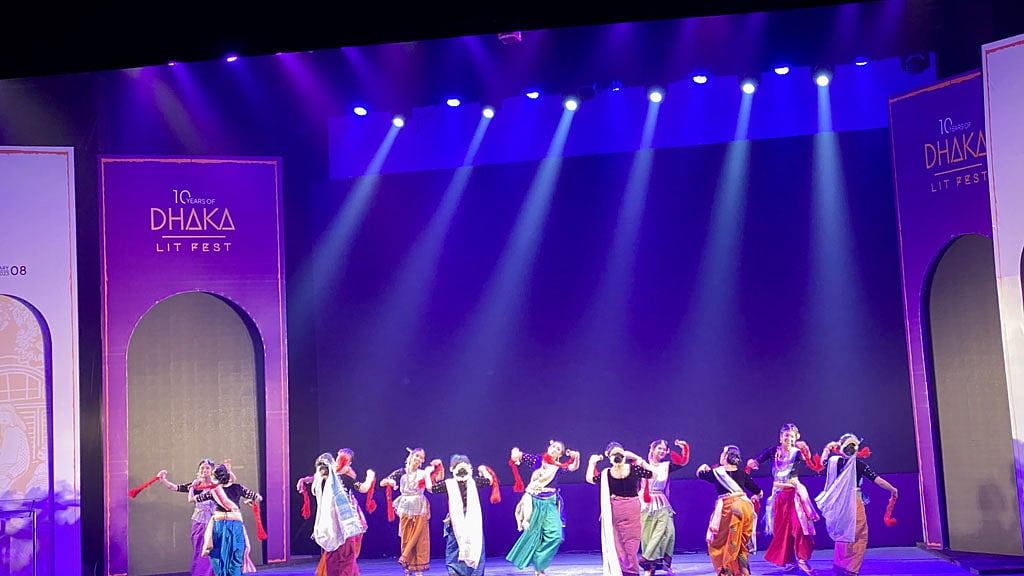
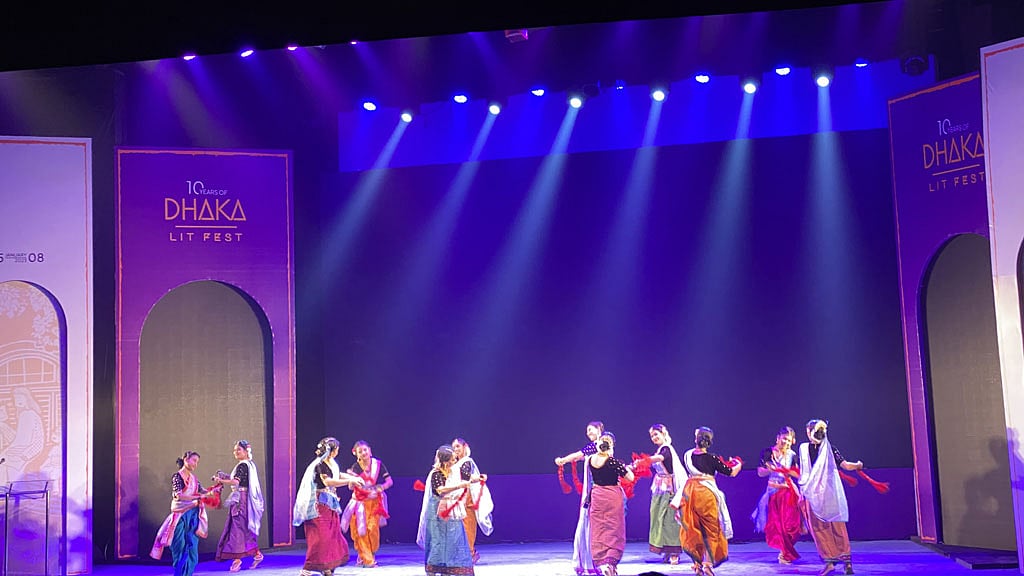
Ghosh also admired the Manipuri dance performance that preceded his speech, calling it "electrifying".
“It was just so moving for me to see the celebration of the pluralistic traditions of the subcontinent, you know, just inaugurating this festival.”
“It was really a thrilling moment and I hope there are many more.”
EXPECTING ALL KINDS OF REVELATIONS: GURNAH
Tanzanian-born British writer Abdulrazak Gurnah, winner of the 2021 Nobel Prize in Literature, also spoke at the event, saying that he was delighted with the opportunity to explore this part of Asia.
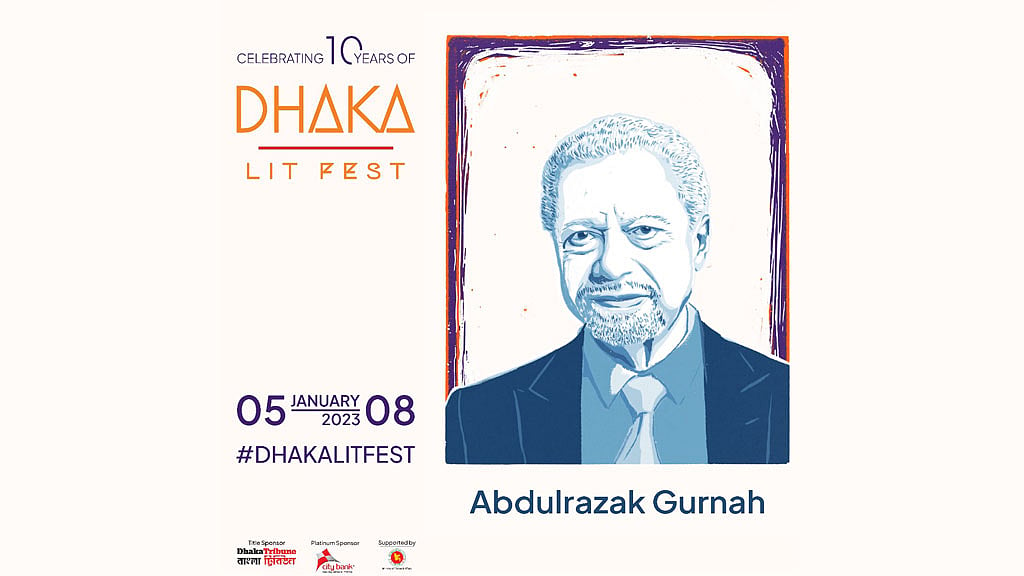
“Unlike Amitav Ghosh, I can’t tell the story of how I began here and how I belong here because, for me, this is the first time coming to Dhaka and Bangladesh, or indeed, this whole side of the subcontinent,” he said.
“So I’m expecting all kinds of revelations, events to happen that I have not seen before. And I’ve already got a bit of a taste from the performances earlier, the dance – the very beautiful dances – the lovely costumes, the music, and then that incredibly energetic performance by the drummers.”
He joked that he would have to get more of the cultural context to fully understand everything he saw.
“But I’m going to have to find out why [the drummers] threw their hats away at the end there. I thought they looked rather nice with the hats on. But they threw them away, so there must be a meaning or interpretation that will come later on. “
“Anyway, really just to say I’m really glad to be here and it’s a tremendous start and I look forward to the rest of it.”
The Dhaka Lit Fest 2023 will be held from Jan 5–8 and aims to promote Dhaka and Bangladeshi literature and culture to the world.
Though focused primarily on literature, it includes general discussions on an array of topics such as fiction and literary non-fiction, history, politics and society, poetry and translations, science and mathematics, philosophy and religion. The event also features sessions on film, theatre, music and cultural presentations
More than 500 dignitaries, including internationally acclaimed writers and speakers, will attend the event, which is being held after three years because of the pandemic.
Nuruddin Farah, Hanif Kureishi, Tilda Swinton, Jon Lee Anderson, Geetanjali Shree and Daisy Rockwell are among the participants.