Published : 09 Oct 2026, 07:23 PM
Updated : 09 Oct 2026, 07:23 PM


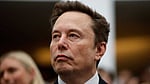
India's telecom minister said on Friday the country does not allow monopolies in any sector, pushing back after Elon Musk suggested billionaire Mukesh Ambani was using political influence to block Starlink's launch in the country.
"India does not allow a monopoly in any sector," telecom minister Jyotiraditya Scindia said at a media briefing on Friday, addressing Musk's remarks.
Musk's SpaceX unit is seeking entry into a telecom market with more than a billion internet users, currently dominated by the mobile networks of Ambani's Reliance Jio and Sunil Mittal's Bharti Airtel.
"Is Ambani the real boss of India?", Musk wrote on X on Thursday, questioning why Starlink still lacked a license despite what he said were years of compliance with Indian requirements. He provided no evidence against Ambani.
Ambani's Reliance Jio did not respond to a request for comments on Musk's remarks.
A four-year wait to launch Starlink's satellite internet services in India has sparked heated exchanges online over business influence and regulatory delays, with Musk targeting Ambani and the political opposition joining the row.
While Starlink has already secured a licence to operate in India, a commercial launch still requires it to meet security compliance conditions and receive a spectrum assignment.
The government said on Thursday that all three licensed satellite operators, including Starlink, were at broadly the same regulatory stage, calling suggestions of an unfair or discriminatory process "baseless and misconceived".