Published : 08 May 2015, 05:18 PM
Updated : 08 Aug 2022, 04:48 PM


With Prime Minister Cameron continuing without any coalition partner, the United Kingdom would face a referendum on whether to remain a part of the European Union by the end of 2017 if he would make good on his promise.
And time will tell whether his second five-year stint will trigger a second referendum on Scotland’s independence with the Scottish National Party (SNP) flexing its muscle at Westminster as the third largest group in parliament.
Knives were already out for the heavily-vilified Labour leader Ed Miliband, who failed to fight what a columnist for The Guardian, the only paper of some standing backing the politician, called a “ferocious press onslaught” in the run-up to the vote.
Cameron’s emphasis on economy might also have worked to his advantage, as his party defied all pre-election polls winning an outright majority.
On the campaign trail, he claimed government success in putting the recession-ridden country on the path to recovery and promised he would create more jobs, reduce taxes for tens of millions and lower budget deficit.
Cameron had also argued that his party was better poised to provide a stable and strong government, crucial for businesses.
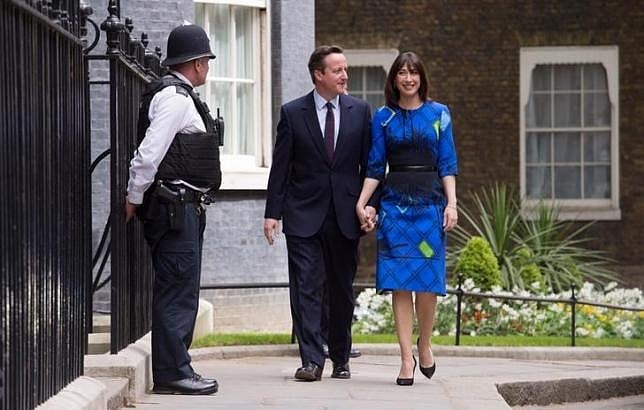
Britain's Prime Minister David Cameron waves as he leaves the Conservative Party headquarters in London, Britain May 8. Reuters
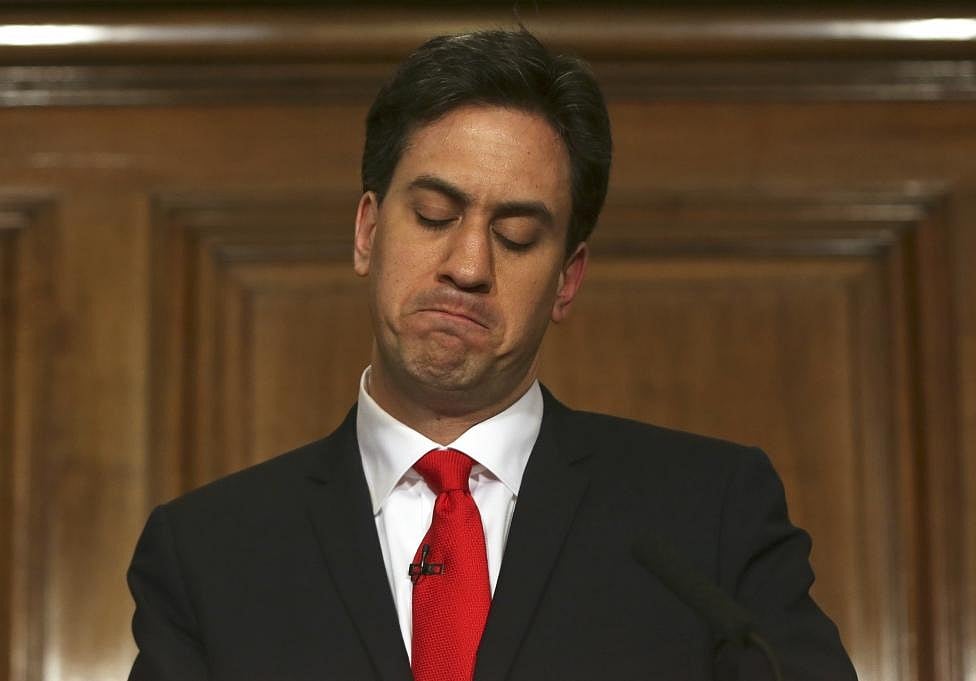
Labour Party leader Ed Miliband announces his resignation as leader at a news conference in London, Britain May 8. Reuters
Opinion polls had predicted no clear winner with both major parties headed for coalition negotiations with likely smaller partners.
The surveys showed late swing towards Labour and a much better prospect for the party in capital London with a 13-point lead.
But minutes after the polls closed, the exit polls put the Conservatives clearly in the lead, with 316 seats – just 10 short of an outright majority. A BBC exit poll gave better numbers for the Tories, prompting some leading figures in the media and politics to doubt its credibility.
But they eventually backtracked.
Pre-election pollsters were however in big trouble, with their predictions gone horribly wrong.
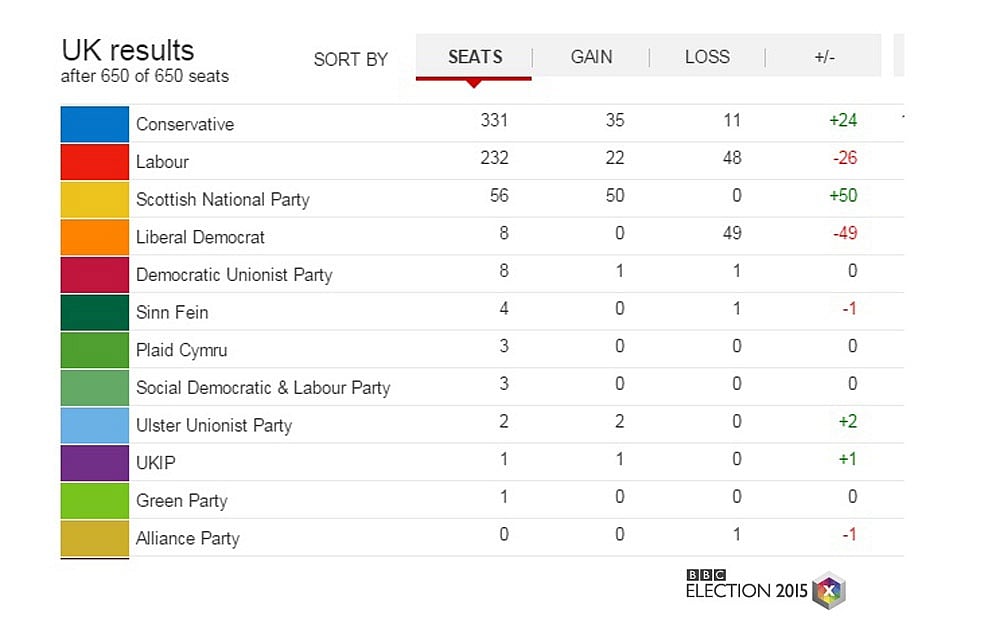
Labour did gain a number of key marginals in capital London but lost many more overall.
The party’s hopes were dented most by the Scottish nationalists who wiped out Miliband’s party in that nation, winning almost all seats at stake.
Taxing the rich and saving the cash-strapped National Health Service were the key elements of the Labour campaign, but the voters remained far from convinced.
Among the top figures who fell included shadow chancellor Ed Balls, losing by just over 400 votes, and shadow foreign secretary Douglas Alexander who became a victim of the Scotland rout.
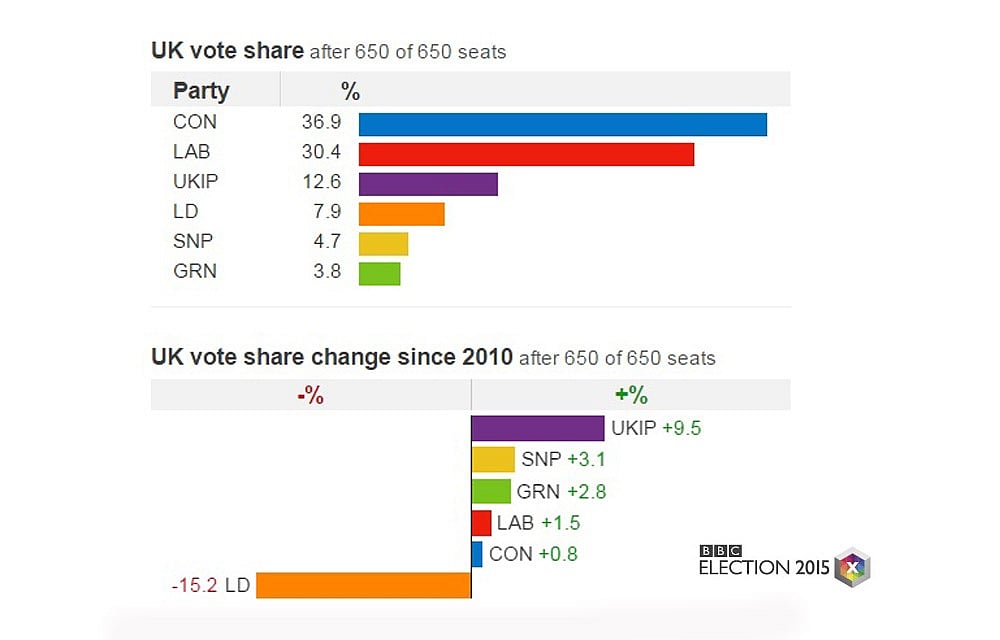
Anti-EU UK Independence Party (UKIP) was predicted to snatch votes from the two big parties but more from the Tories causing the latter more damage to their prospects. That simply didn’t happen.
In Britain’s first-past-the-post system, their popular votes – 12.6 percent which is third largest -- did not translate into seats. UKIP bagged just one.
For the 45-year-old Labour leader, described as “Red Ed” by London’s right-wing press, the stunning career is all but over. Party sources say he will have to stand down.
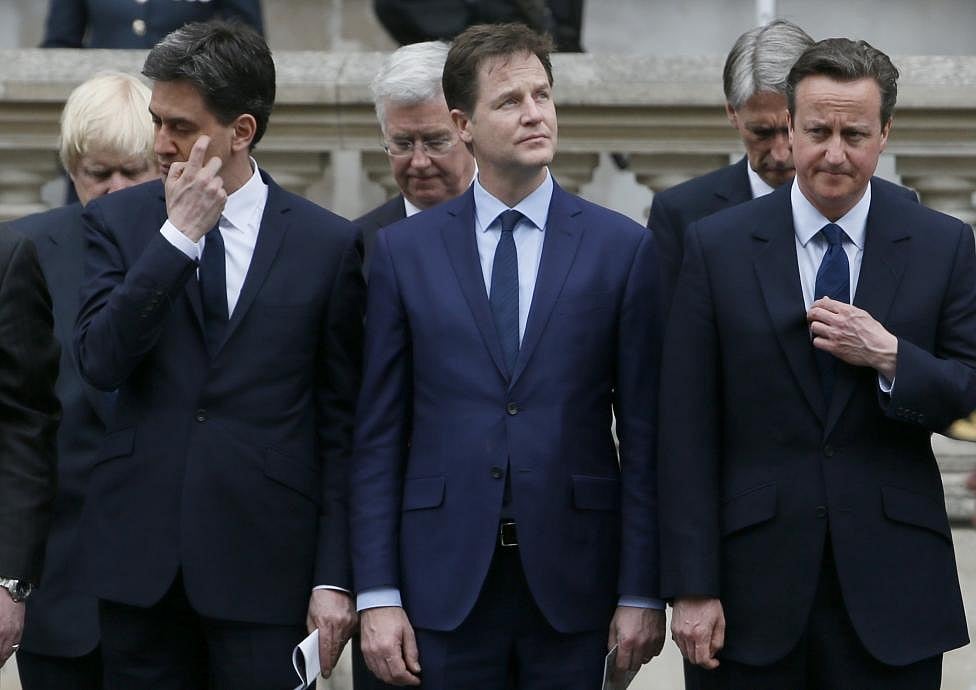
Former Labour Party leader Ed Miliband, former Liberal Democrat leader Nick Clegg, and Britain's Prime Minister David Cameron (front L-R) attend a Victory in Europe (VE) day ceremony at the Cenotaph in central London May 8. Reuters
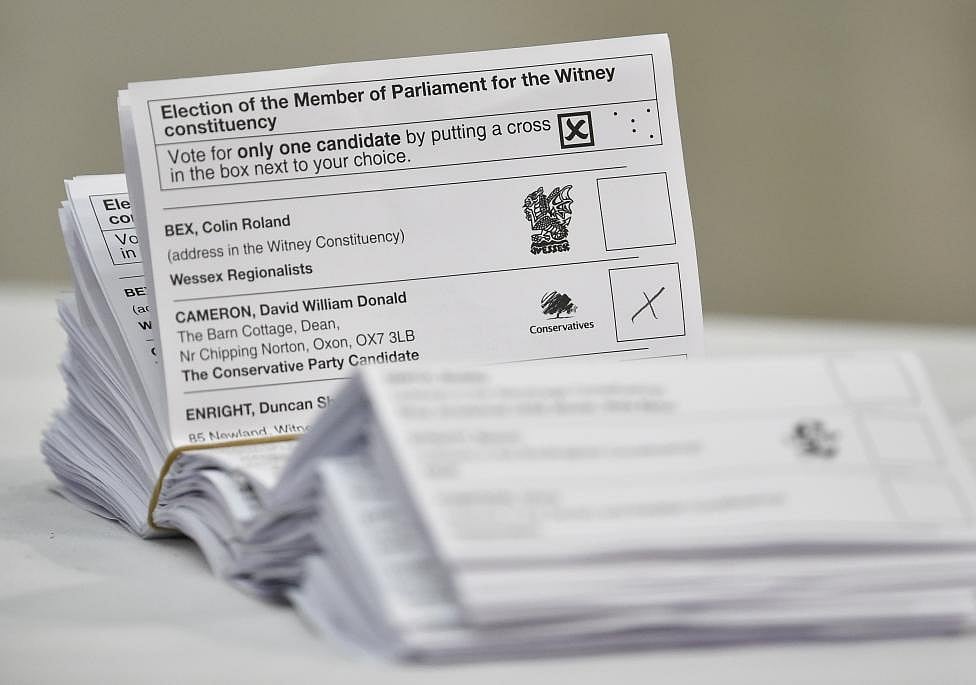
A stack of tallied ballot papers for the constituency of David Cameron is seen on a counting table, as votes are counted in Britain's general election, in Witney, May 8. Reuters
He went to Oxford, London School of Economics and Harvard University and grew up in the shadow of his immigrant father Ralph Miliband, an academic and Marxist theoretician.
Labour strategists sought to make up for any loss of ground due to the massive press propaganda through their dedicated campaign team.
A British-Bangladeshi voter in Redbridge told bdnews24.com’s Syed Nahas Pasha that he had not seen such a vigorous campaign from Labour party in his 40 years in the UK.
Syed Belal Ahmed, a Labour voter from Redbridge, East London, summed up the party effort: "At 6:00am on polling day I got a Labour leaflet, at 10:00am I had a knock on my door requesting to go and vote. After voting at 11.00am, within half an hour, I received a lovely thank-you letter (email) from Labour Party and a request to tell others to go and vote for Labour."
He added: “I am surprised how sophisticated campaign has become.”
In the end, nothing worked for Labour.