Published : 13 Dec 2019, 09:51 PM
Updated : 17 Oct 2022, 11:50 AM


The unrest has already led Japanese Prime Minister Shinzo Abe to cancel a planned visit to India from Sunday.
The new law offers a way to Indian citizenship for six minority religious groups from neighbouring Bangladesh, Pakistan and Afghanistan including Hindus and Christians, but not Muslims.
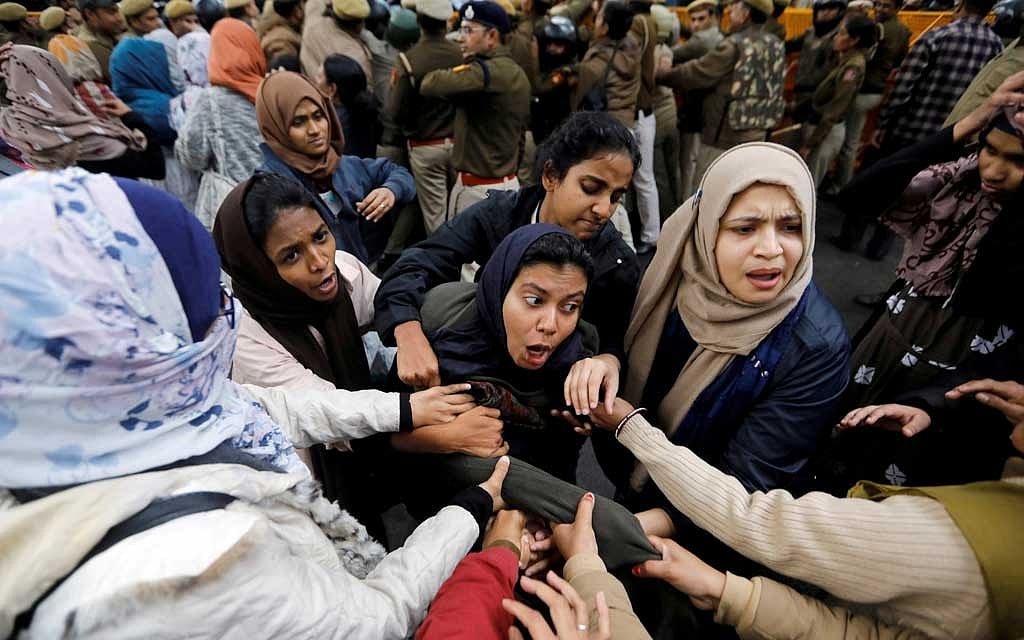
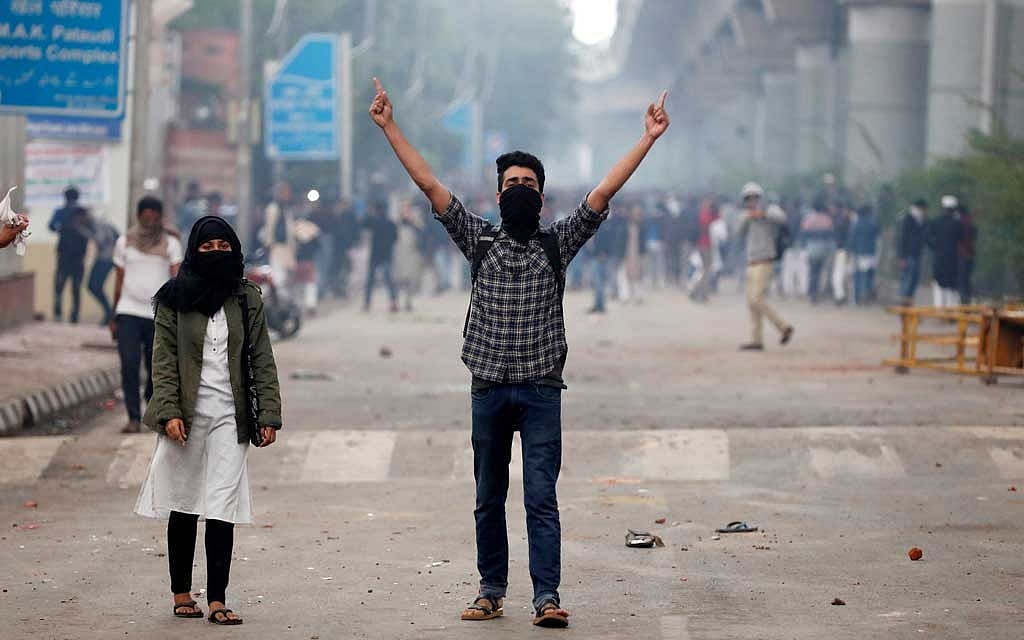
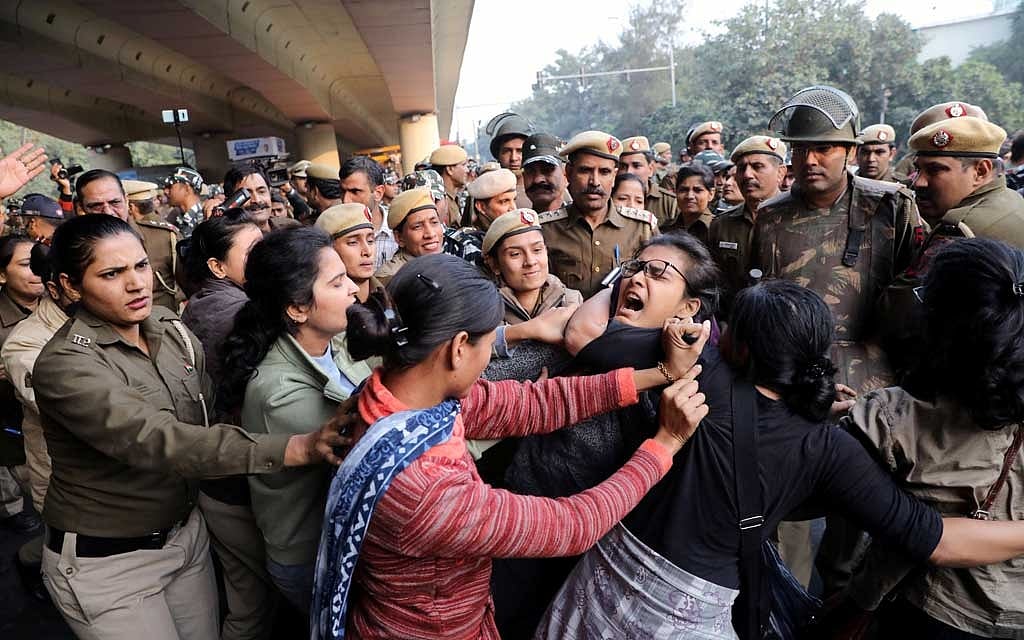
Police fired tear gas and used baton charges to disperse scores of students demonstrating at Jamia Millia Islamia university in the heart of Delhi over the law.
Protestors shout slogans during a protest against the Citizenship Amendment Bill, a bill that seeks to give citizenship to religious minorities persecuted in neighbouring Muslim countries, outside the Jamia Millia Islamia University in New Delhi, India, December 13, 2019. Reuters
Zakir Riyaz, a PhD student in social work, said the new law made a mockery of India's religious openness.
"It goes against the whole idea of a secular India," he said, speaking by phone from the Holy Family Hospital in New Delhi where 15 of his fellow students were admitted after being injured in a police baton charge.
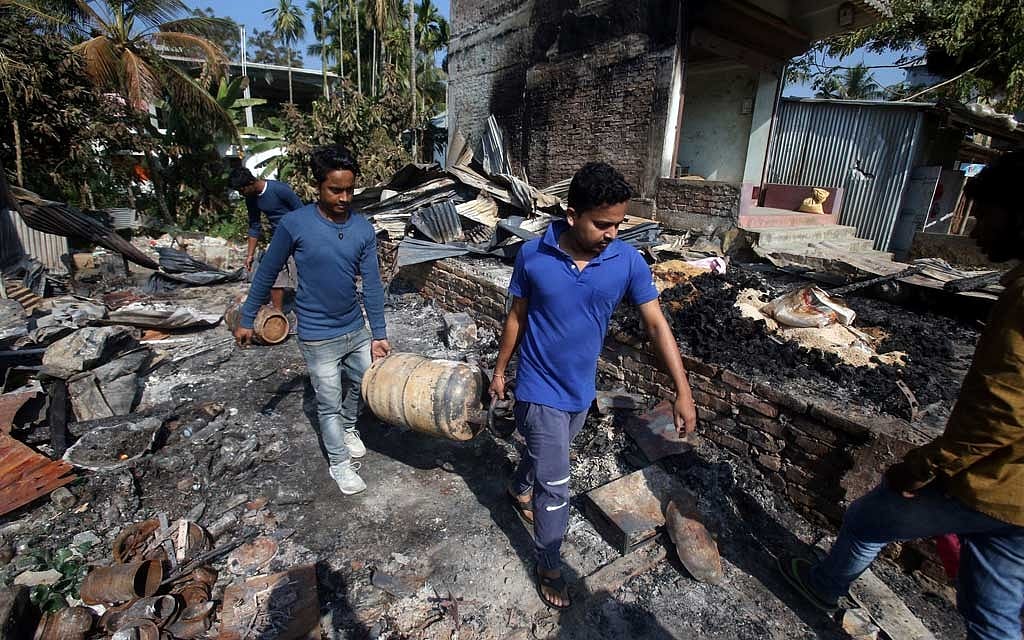
People carry a gas cylinder after their shop was set on fire during a protest against the Citizenship Amendment Bill, a bill that seeks to give citizenship to religious minorities persecuted in neighbouring Muslim countries, on Wednesday night in Gomati district in the eastern state of Triupura, India, December 13, 2019. Reuters
Parvez Hashmi, a local politician who went to the protest site to speak to police, said about 50 students had been detained.
Students said it was meant to be a peaceful protest, with them trying to go from Jamia University to Parliament Street to show their opposition to the legislation. But police pushed them back, leading to clashes.
Police officers try to detain a student of Jawaharlal Nehru University (JNU) during a march to Rashtrapati Bhavan to protest against a proposed fee hike, in New Delhi, India, December 9, 2019. Reuters
Imran Chowdhury, a researcher, said "either give citizenship to refugees of all religions or none at all. The constitution is being tampered with in the name of religion."
Modi's ruling Bharatiya Janata Party denies any religious bias but says it is opposed to the appeasement of one community. It says the new law is meant to help minority groups facing persecution in the three nearby Muslim countries.
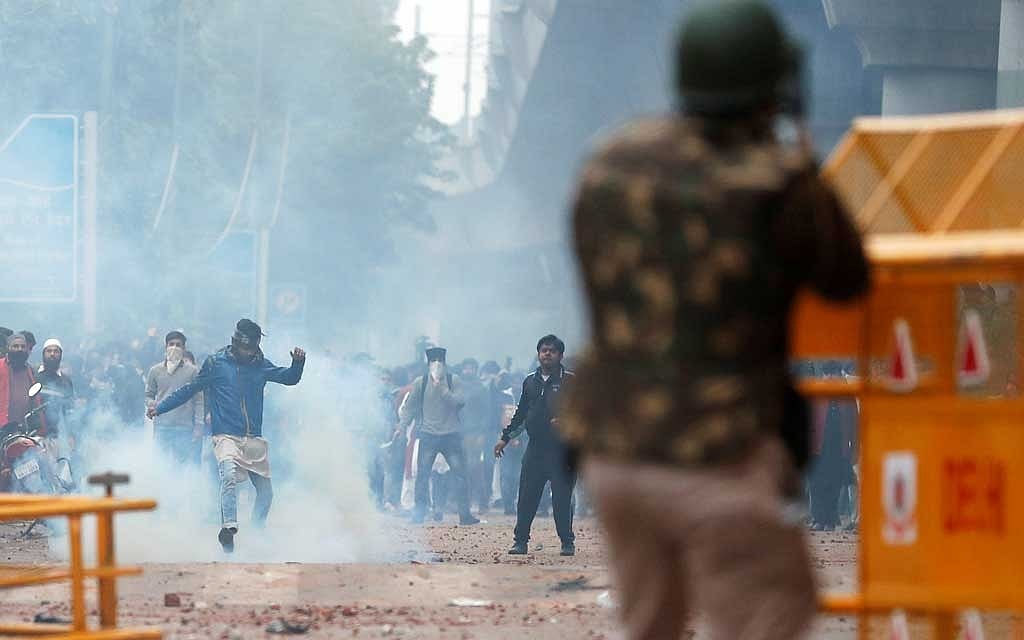
A protestor kicks a tear gas shell during a protest against the Citizenship Amendment Bill, a bill that seeks to give citizenship to religious minorities persecuted in neighbouring Muslim countries, outside the Jamia Millia Islamia University in New Delhi, India, December 13, 2019. Reuters
The United Nations human rights office voiced concern that the new law is "fundamentally discriminatory in nature", and called for it to be reviewed.
Two people were killed in India's Assam state on Thursday when police opened fire on mobs torching buildings and attacking railway stations in protest at the new citizenship rules signed into law on Thursday.
Japan's Prime Minister Shinzo Abe cancelled a trip to Assam for a summit with his Indian counterpart Narendra Modi that had been due to begin on Sunday.
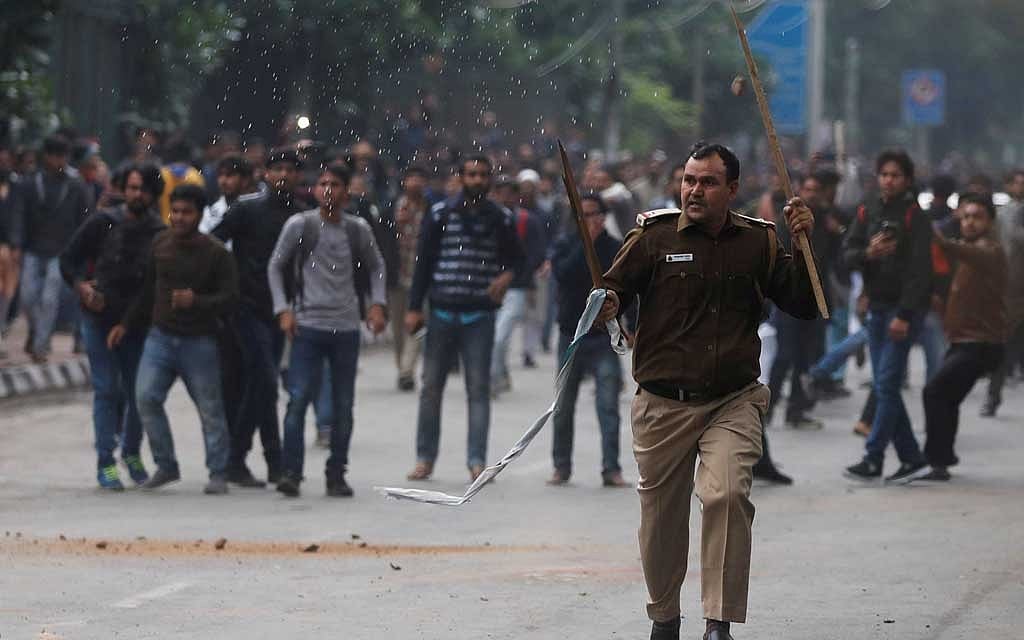
A police officer runs for cover as protestors throw stones outside Jamia Millia Islamia University during a protest against the Citizenship Amendment Bill, a bill that seeks to give citizenship to religious minorities persecuted in neighbouring Muslim countries, in New Delhi, India, December 13, 2019. Reuters
"With reference to the proposed visit of Japanese PM @AbeShinzo to India, both sides have decided to defer the visit to a mutually convenient date in the near future," Indian foreign ministry spokesman Raveesh Kumar said in a tweet.
Japan's Chief Cabinet Secretary Yoshihide Suga said both countries would decide on the appropriate timing for the visit although nothing has been decided yet.
A movement against immigrants from Bangladesh has raged in Assam for decades. Protesters there say granting Indian nationality to more people will further strain the state's resources and lead to the marginalisation of indigenous communities.