


Published : 20 May 2020, 02:15 AM
Updated : 03 Aug 2022, 02:39 PM


Now, two months of counternarcotics operations in Shan state, which the United Nations says resulted in the largest synthetic drug haul on record in Southeast Asia, show that regional lockdowns imposed to tackle the coronavirus pandemic have done little to stem an illicit global trade.
Forty-four raids conducted by the Myanmar military and police from Feb. 20 to April 9 netted nearly 200 million tablets of methamphetamine, 1,120 pounds of crystal methamphetamine, 630 pounds of heroin, almost 300 pounds of raw opium, 640 pounds of opium poppy and 990 gallons of methyl fentanyl, Myanmar authorities said.
“This operation resulted in the seizure of the biggest amount of drugs ever,” said Win Thein Shan, spokesman for Shan state police. “We will make more efforts in the future.”
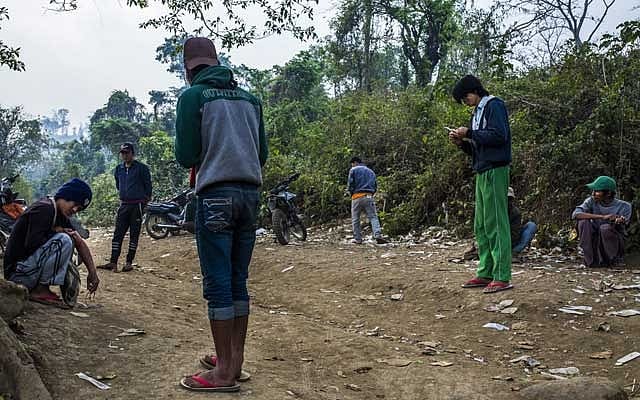
The value of the drugs, which were churned out in far-flung labs often hidden in forested areas of Kutkai township, exceeded $200 million, Myanmar officials said, and would be far more if measured by street value in the West.
“The drug trade in Shan state operates more freely amid COVID-19 because police are busy with other things,” said Tin Maung Thein, district president of the Myanmar Anti-Narcotics Association in the town of Kyaukme in northern Shan state. “The price of all kinds of drugs has dropped, and it shows the trade is easier because of COVID-19.”
The discovery of vats of methyl fentanyl, which is related to the synthetic opioid that has caused a crisis of overdoses in the United States, is particularly worrisome to counternarcotics officials, who say this is the first time such mass production has been found in Myanmar. A few years ago, experts in organised crime watched as Southeast Asian crime syndicates began to dominate the methamphetamine trade.
The Golden Triangle, where Myanmar abuts Laos and Thailand, is now believed to be the world’s largest producer of methamphetamine, after China cracked down on pharmaceutical ingredients being diverted for illicit production of the synthetic stimulant.
Fentanyl, which has been blamed for tens of thousands of overdose deaths in the United States, is far deadlier than methamphetamine. Narcotics experts believe that Chinese manufacturers have been responsible for many of the precursor materials needed to synthesise the drug. In late 2018, President Donald Trump brought up the drug in discussions with President Xi Jinping of China.
As fentanyl began to play a part in US trade talks, the Chinese started to curb the trade, much as they had done for methamphetamine in the face of global pressure, drug experts said. Last year, Beijing declared all forms of fentanyl controlled substances.
But the crackdown in China has simply created opportunities for others, narcotics analysts say.
“Organised crime and drug syndicates look for business environments where there’s government dysfunction or limited government control, as well as easy access to the chemicals,” said Jeremy Douglas, regional representative for the UN Office on Drugs and Crime in Southeast Asia. “Shan state hits every mark.”
The counternarcotics operations in Myanmar this year uncovered precursor ingredients from China, India, Thailand and Vietnam, Douglas said, showing the international diversity of chemicals that were being used in Shan labs and hinting at the involvement of transnational crime syndicates.
Initially, Myanmar officials were not sure of the exact use of the methyl fentanyl that was discovered alongside the more familiar methamphetamine tablets and bags of crystal methamphetamine. They are still not certain where the methyl fentanyl was meant to go, but the sheer volume makes it likely that North America, the drug’s biggest market, was the ultimate destination, authorities said.
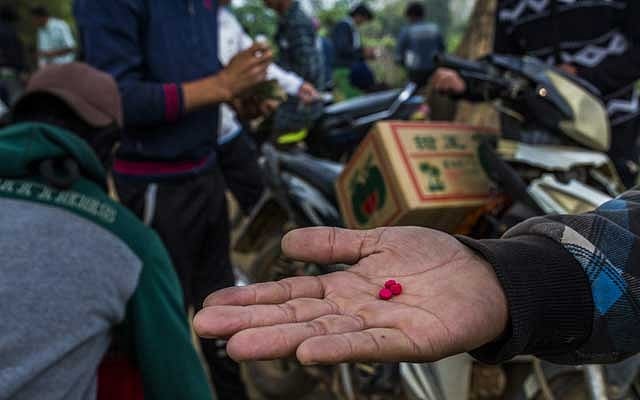
FILE -- Yaba pills, which contain methamphetamine, in Lashio, in the northern Shan State of Myanmar, April 2, 2019. After dominating the global methamphetamine trade, crime syndicates in Myanmar are starting to make fentanyl, the drug that has fueled the US opioid crisis. (Minzayar Oo/The New York Times)
“We’re very worried that Asian crime syndicates will look at the coronavirus as a business opportunity to move in on Mexican syndicates and bring their fentanyl production to North America and the world,” he said. “If that happens, it could be really a direct threat to our public health.”
Shan state is desperately poor, and many of its residents are caught in the crossfire of conflicts between ethnic insurgents and the Myanmar army that have flared for seven decades. The state’s formal economy is dwarfed by illegal drug production and trafficking, according to a report published last year by the International Crisis Group.
For generations, Shan residents have relied on opium production for their livelihoods. Myanmar is the world’s second-largest producer of heroin, the drug derived from opium poppies, after Afghanistan.
But farming takes time and can be upset by the vagaries of nature. Synthetic drugs, like methamphetamine and fentanyl, are far cheaper and easier to produce, as long as authorities are not looking.
Many ethnic guerrilla forces in Myanmar, which have been fighting for autonomy from a government that has long trampled on minority rights, rely on the drug trade to fund their war chests. The US Treasury Department has placed sanctions on individuals connected to the United Wa State Army over involvement in the drug trade. The ethnic Wa possess the country’s largest ethnic army, and their stronghold in northern Shan state is beyond Myanmar’s official control.
Most of the recent drug raids were in a region of northeastern Shan state controlled by the Kaungkha militia, an ethnic Kachin force that is aligned with the Myanmar army. Narcotics experts believe the Kaungkha militia, also known as the Kachin Defense Army, has been funnelling methamphetamine and crystal methamphetamine to the Arakan Army, an ethnic armed group that is embroiled in heavy fighting with the Myanmar military in the country’s far west.
Now authorities have added fentanyl to the rap sheet.
“I don’t know the effect of fentanyl, but we seized all kinds of synthetic drug materials,” said Win Thein Shan, of Shan state police.
Representatives of ethnic armed groups say the fact the Kaungkha militia was able to operate on such a large scale for so long hinted at official involvement in the drug trade.
“People think the Wa people are doing the biggest drug trade, but the largest haul of synthetic drugs was seized in Kaungkha, which is under the control of the Myanmar military,” said Nyi Rang, a spokesman for the United Wa State Army. “I don’t want to say it by name, but everyone knows who controls these areas.”
Brig. Gen. Zaw Min Tun, a spokesman for the Myanmar military, denied any army involvement in narcotics production.
“Most of the drug traffickers are ethnic armed groups,” he said. “Yes, there are some drug users in the Myanmar military, but there is no one in the military who is involved in the drug trade.”
In its report last year, the International Crisis Group said that “the military should also investigate and take concerted action to end drug-related corruption within its ranks, focusing on senior officers who facilitate or turn a blind eye to the trade.”
Itself cash-strapped, the Myanmar military operates one of Asia’s largest standing armies. Soldiers, often barely out of childhood and ill-equipped, are involved in fighting in the country’s borderlands, where ethnic minorities are concentrated.
Even with this record drug haul, regional experts are concerned that the seizures represent only a tiny fraction of what is being churned out in jungle redoubts in Shan state.
“We have been expecting something for a while but not anything of this scale,” said Douglas, of the UN Office on Drugs and Crime. “This is a huge business, and we’re pretty sure it’s going to get even bigger.”
©2020 The New York Times Company













