


Published : 11 Jan 2020, 11:19 AM
Updated : 17 Oct 2022, 10:59 AM


“Iraq is between friends who are 5,000 miles away from us and a neighbour we’ve had for 5,000 years,” Prime Minister Adel Abdul-Mahdi said in a New Year’s Day telephone call with Trump, according to a close adviser, Abdul Hussain al-Hunain. “We cannot change geography and we cannot change history, and this is the reality in Iraq.”
Iraq is caught in a vise.
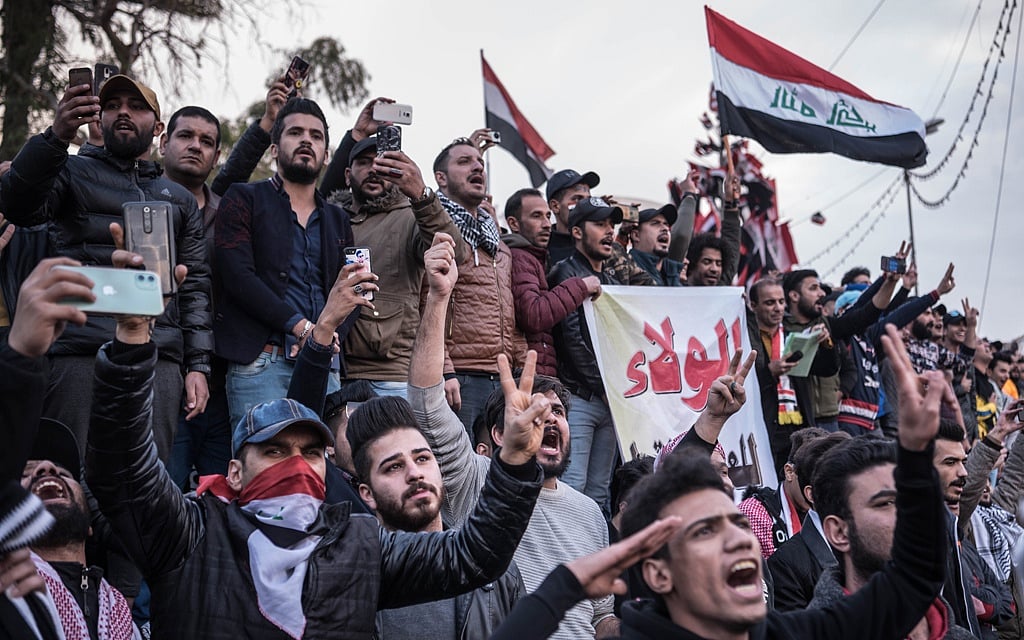
Many Iraqis were furious that the United States violated their country's sovereignty by carrying out airstrikes on Iraqi soil. A spate of strikes in December killed at least two dozen members of a pro-Iranian Iraqi military unit, provoking the assault on the US Embassy.
A separate strike last week killed Iran’s top military commander, the deputy chief of a coalition of Iraqi militias and eight other people, leading to a vote by Iraq’s Parliament to expel US forces from the country and a counterstrike by Iran on two US military posts in Iraq early Wednesday.
But acceding to the political pressure to rid the country of US troops would be a “disaster” for Iraq, militarily and economically, a senior Iraqi official said.
The main mission of the roughly 5,200 US troops stationed at a handful of bases around Iraq is to help the country fight the Islamic State group. If they leave, the official said, it would not only hamper that battle but also have a host of knock-on effects, from the departure of troops from other coalition countries to dire financial hardship if, as Trump has threatened, the United States imposed economic sanctions.
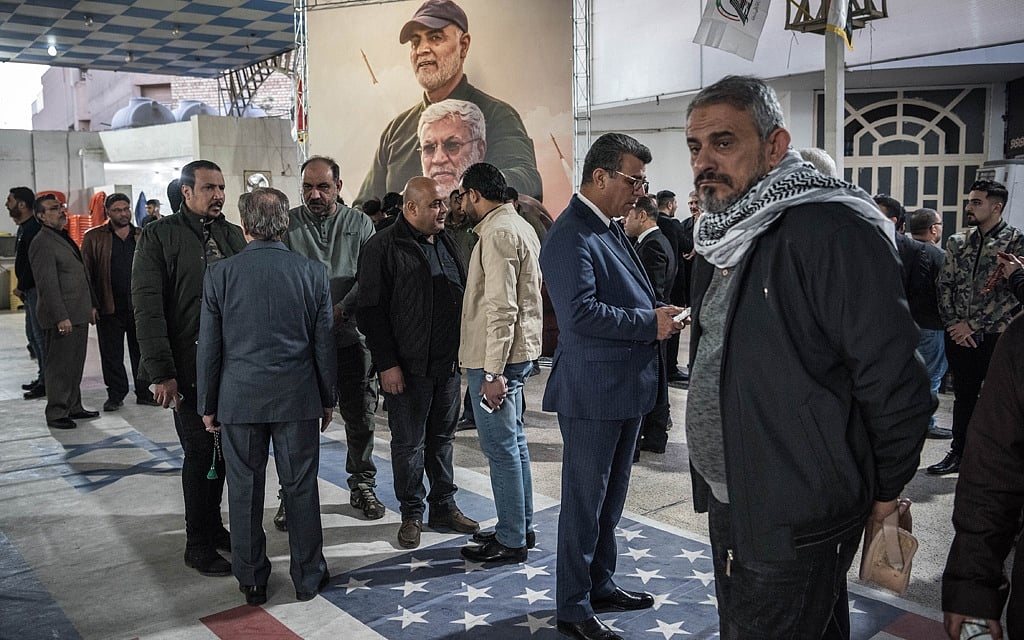
Mourners, some standing on the flags of Israel and the United States, gather for the funeral of the funeral ceremony of Abu Mahdi al-Muhandis, a commander in the Popular Mobilization Forces, at a mosque in Baghdad on Tuesday, Jan 7, 2020. He appears on the banner in the background together with Iranian Maj Qasem Soleimani, top. (Sergey Ponomarev/The New York Times)
For now, however, Abdul-Mahdi seems to be moving ahead with plans to implement Parliament’s will. On Friday, he said that he had asked Secretary of State Mike Pompeo to send a delegation from the United States to discuss steps for withdrawal.
Pompeo fired back that the United States would do no such thing, despite the military’s frequent refrain that it is a guest of the Iraqi government and will comply with its host’s demands.
“We are happy to continue the conversation with the Iraqis about what the right structure is,” he said at a news conference Friday. But the US mission in Iraq is to train Iraqi forces to fight the Islamic State, he said, and “we’re going to continue that mission.”
After the Iraqi Parliament vote Sunday, Trump threatened to impose “very big sanctions” on Iraq if it ousted US forces — “sanctions like they’ve never seen before.” He also said that Iraq would have to reimburse the United States for billions of dollars it had invested in a major air base there.
But for many Iraqis, booting out the Americans was long overdue. Although many remain grateful that the United States ousted longtime dictator Saddam Hussein and fought alongside Iraqi forces to drive out the Islamic State, they are still pained by US military mistakes and decisions, including massive civilian casualties during the war that followed the US invasion and the humiliating abuse of prisoners at Abu Ghraib.
The recent US airstrikes killed Iranian proxy fighters who were also members of the Iraqi security forces — and considered heroes by many Iraqis for their role in helping fight the Islamic State. The final straw appears to have been the US drone strike last week that killed the Iranian military leader, Gen Qassem Soleimani, and the deputy chief of Iraq’s Popular Mobilization Forces, the armed groups that have fought against the Islamic State.
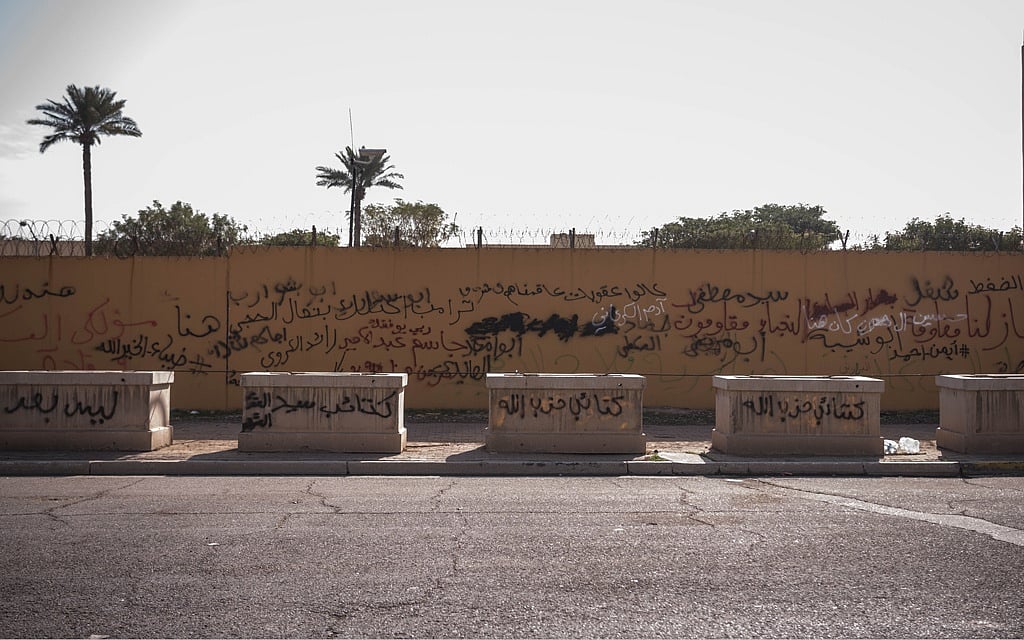
Graffiti on the walls surrounding the US Embassy in Baghdad on Thursday, Jan 9, 2020. As US-Iran tensions flare, Iraq is caught in the middle. (Sergey Ponomarev/The New York Times)
The feeling is especially strong among Shiite Muslims, who make up a majority in Iraq; many have ties to Iran’s Shiite theocracy. Iran has long sought the ouster of US troops, which it views as a threat on its border.
But the unanimous vote in Parliament — taken in the heat of the moment, with no consideration of the potential consequences and costs to the country — suggests more unity than may be the case. Only 170 out of 328 members voted, with most Sunni Muslim and Kurdish members refusing to attend.
One of the few Sunni members who did attend the session, Ahmed al-Jarba, raised a red flag, saying that the departure of US troops might benefit Iran.
After the Americans leave, he asked, “Are our neighbors our friends or our masters?” referring to Iran. “Are we going to hand the country’s wealth and decisions into the hands of neighboring countries?”
Al-Hunain, the senior adviser to the prime minister, said that Abdul-Mahdi’s hope was that if the US forces left, Iran would no longer have security concerns about them and would leave Iraq alone.
Senior Iraqi government officials, diplomats and scholars laid out the opposite scenario: Iraq, they said, could be forced into the arms of Iran, deprived of US dollars, and isolated from the West.
As worrying — even for Iran — is the risk that the Islamic State might return if there are no Americans to help fight it. The Sunni extremist group no longer controls territory in Iraq and is much diminished, but it still launches near-daily attacks.
A second senior Iraqi official and a senior Western diplomat said that if the Americans left, so would European and other coalition forces because they depend on US logistical and technical support. The US hospital at the Baghdad International Airport, for instance, treats the personnel of all 30 countries in the international coalition.
The economic sanctions that Trump threatened would be intended not only to punish Iraq but also to effectively extend the administration’s pressure campaign against Iran. The two countries’ economies are closely entwined.
Iraq would risk being cut off from its main source of dollars because its account at the Federal Reserve Bank in New York could be frozen. Iraq deposits the proceeds of its oil sales there, withdrawing them to pay government salaries and contracts.
The United States could also end the waivers that allow Iraq to buy Iranian gas to fuel its electricity generators in the south, which supply at least 35% of the country’s power. Iraq could seek another source, but it could be difficult to find one on short notice. The other option — making do with less electricity — could spawn unrest in the south as soon as the weather heats up, as electrical shortages did in 2018.
American and other foreign companies might reduce or suspend operations if they become concerned about safety. A number of American contractors left in the days after Soleimani’s death because they wanted to stay out of the line of fire.
So far, Abdul-Mahdi appears willing to face those potential consequences. If he harbors any thoughts of compromise, he has kept them to himself, perhaps wary of the anti-American political climate.
“It looks like the decision making and opinion in the prime minister’s office is turning eastward,” a senior Iraqi official said. “They are almost in denial about what a drastic path they are going down.”
The problem, said Joost Hiltermann, the Middle East and North Africa program director for the International Crisis Group, is that no one in the government is seriously considering possible compromises.
“The Iraqis don’t want either the United States or Iran, but if they have to have one, they would rather have both because they balance each other out,” he said. “The US is a counterweight to Iran.”
There are a few glimmers of potential ways out.
Abdul-Mahdi’s adviser, al-Hunain, said that while the US forces are not welcome now, the government does want other international forces to stay. Talks with other coalition countries could open the door to keeping at least some Americans, those arguably needed to sustain the coalition and help fight the Islamic State.
The Europeans, for their part, would like to preserve the ability to fight the Islamic State in Iraq, fearing that any relaxing of pressure would allow the group to reconstitute.
A senior Western diplomat said the British and French were working to outline an alternative mission for the international forces relying on a smaller number of troops focused on ensuring that “the gains made against ISIS are not lost.”
Perhaps the most promising sign that Abdul-Mahdi might be open to compromise was his request for a briefing paper from Iraq’s National Security Council on the options for proceeding with the parliamentary mandate. Abdul-Mahdi is an economist and has served as finance minister, a background that gives him an understanding of the price of economic isolation even if he now seems more swayed by political concerns.
The council provided three options, according to a senior official who works closely with the council: The first was to require US troops to leave as quickly as possible, an approach that could at least deter Iranian-backed armed groups from attacking them.
The second option was a negotiated withdrawal, which would slow the drawdown and potentially allow the fight against the Islamic State to go on in some places even as troops were withdrawing from others.
The third was a renegotiation of the agreement with the US-led coalition that might allow for some troops to stay, which would open the door to having other international forces stay as well.
The National Security Council recommended Option 3.
© 2020 The New York Times Company













