November 23, 2026

Legal case for Britain's 2003 Iraq invasion 'far from satisfactory': UK inquiry

Britain's decision to go to war with Iraq in 2003 had a "far from satisfactory" legal basis and ex-Prime Minister Tony Blair's case for military action was over-hyped, a long-awaited inquiry into the conflict concluded on Wednesday.

Reuters

>>

Reuters

Published : 06 Jul 2016, 09:43 PM

Updated : 19 Oct 2022, 05:21 PM

Image
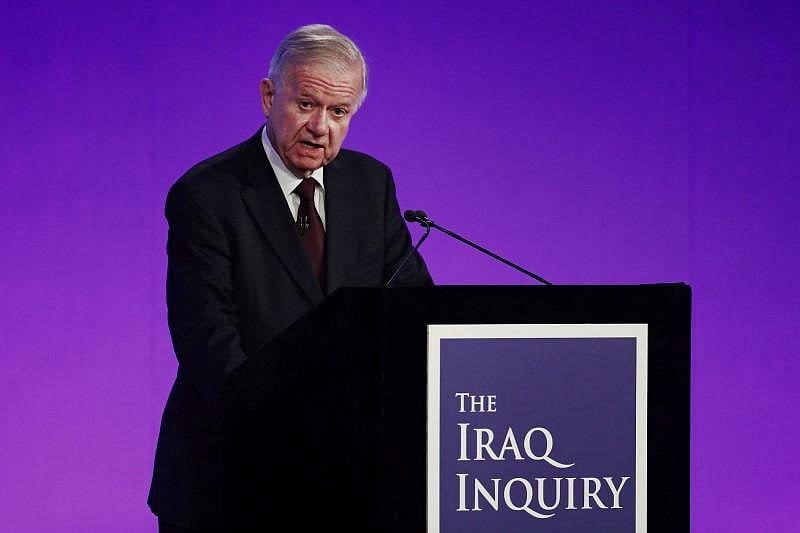
Sir John Chilcot presents The Iraq Inquiry Report at the Queen Elizabeth II Centre in Westminster, London, July 6, 2016. Reuters
Image
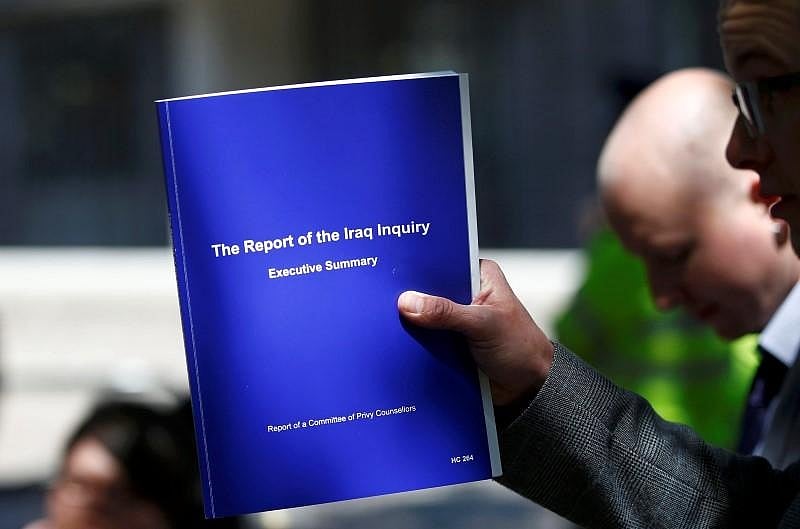
A man holds a copy of the executive summary of The Report of the Iraq Inquiry, by John Chilcot, at the Queen Elizabeth II centre in London, July 6, 2016. Reuters


The intelligence about Iraq's alleged weapons of mass destruction which Blair used to justify joining the US-led invasion, which led to the removal of Saddam Hussein and the deaths of 179 British soldiers, was flawed but went unchallenged, inquiry chairman John Chilcot said.
 
There was no imminent threat from Saddam in March 2003 and the chaos in Iraq and the region which followed should also have been foreseen, he added.
 
"The inquiry has not expressed a view on whether military action was legal," Chilcot told reporters and relatives of some of the soldiers killed in Iraq.
 
"We have, however, concluded that the circumstances in which it was decided that there was a legal basis for military action were far from satisfactory."
 
Blair's statement to parliament in 2002 about the risk posed by Iraq's alleged weapons of mass destruction and an intelligence dossier to the public that accompanied it were presented with a "certainty that was not justified", he said.
 

Image
A man holds a copy of the executive summary of The Report of the Iraq Inquiry, by John Chilcot, at the Queen Elizabeth II centre in London, July 6, 2016. Reuters

A man holds a copy of the executive summary of The Report of the Iraq Inquiry, by John Chilcot, at the Queen Elizabeth II centre in London, July 6, 2016. Reuters

Chilcot outlined a catalogue of failures made in the run-up to and aftermath of the war. He said days before the invasion, Blair had been asked by the government's top lawyer to confirm Iraq had committed breaches of a United Nations Security Council resolution, which would justify war. Blair said such breaches had been committed but Chilcot said: "The precise basis on which Mr Blair made that decision is not clear." He also said Blair changed his case for war from focusing on Iraq's "vast stocks" of illegal weapons to Saddam having the intent to obtain such weapons and being in breach of UN resolutions. "That was not, however, the explanation for military action he had given before the conflict," Chilcot said.
Related Stories