


Published : 14 May 2017, 02:49 AM
Updated : 19 Oct 2022, 03:35 PM



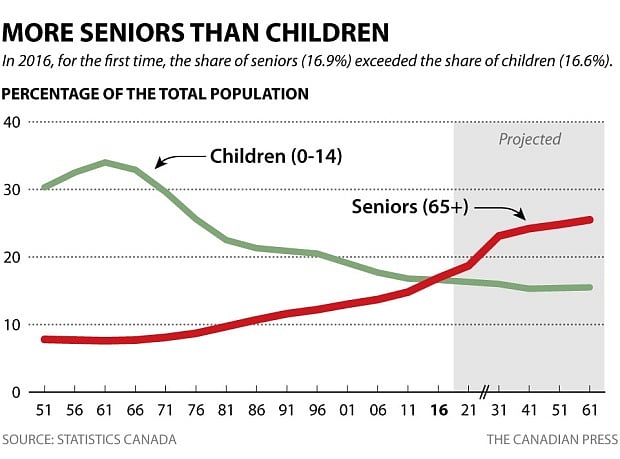
Statistics Canada's 2016 census figures showed there are now 5.9 million Canadian seniors, compared to 5.8 million Canadians 14 and under, the biggest shift since the Confederation in 1867.
As per the new census, the country now has a population of 35.1 million, which is 10 times greater than in 1871, when the first census was conducted. In first 100 years, the population grew from 3.5 million to 20.1 million.
Canada conducts the census every five years, and the 2016 census result was released earlier this month.
This is due to the historic increase in the number of people over 65 — a jump of 20 percent since 2011. It is is a significantly greater increase than the five percent growth experienced by the population as a whole.
The increase in the share of the oldest Canadians was even bigger — up 19.4 per cent for those over 85 and up 41.3 per cent among those over 100, Statistics Canada says.
The median age of the Canadian population in 2016 increased to 41.2 years, six months older than the median age just five years ago. The median age is the point that separates an equal number of Canadians who are older and younger.
“The ageing of the population is due to the first baby boomers turning 65 over the last five years, as well as the increasing life expectancy of Canadians and a low fertility rate.”
The projections suggest the imbalance in the population will only grow.
“By 2031, about 23 per cent of Canadians could be seniors, similar to Japan, the world's oldest country.”
If the trend continues then by 2061, there could be 12 million seniors to just eight million children in Canada.
"As people get older, they need more health care, more home care, and that puts increasing demands on government spending," Dr Frances Woolley, an economics professor at Carleton University in Ottawa, told CBC News.
"There are big challenges for the government coming on the fiscal side."
But, statistics shows, Canada is still younger than most of its G7 counterparts. Only the United States has a younger population among the world's biggest industrialised economies.
The growth in the number of working Canadians was the lowest since 1851, making its share of the population the smallest in 40 years.
In 1966, there were twice as many people entering the labour market as there were heading for retirement. Today, however, there are just 4.3 million Canadians between ages 15 and 24, compared to 4.9 million Canadians 55 to 64.
This could put a strain on the government's balance sheet — and force it to make difficult political decisions.













