


Published : 19 Sep 2021, 08:21 AM
Updated : 14 Oct 2022, 06:59 PM


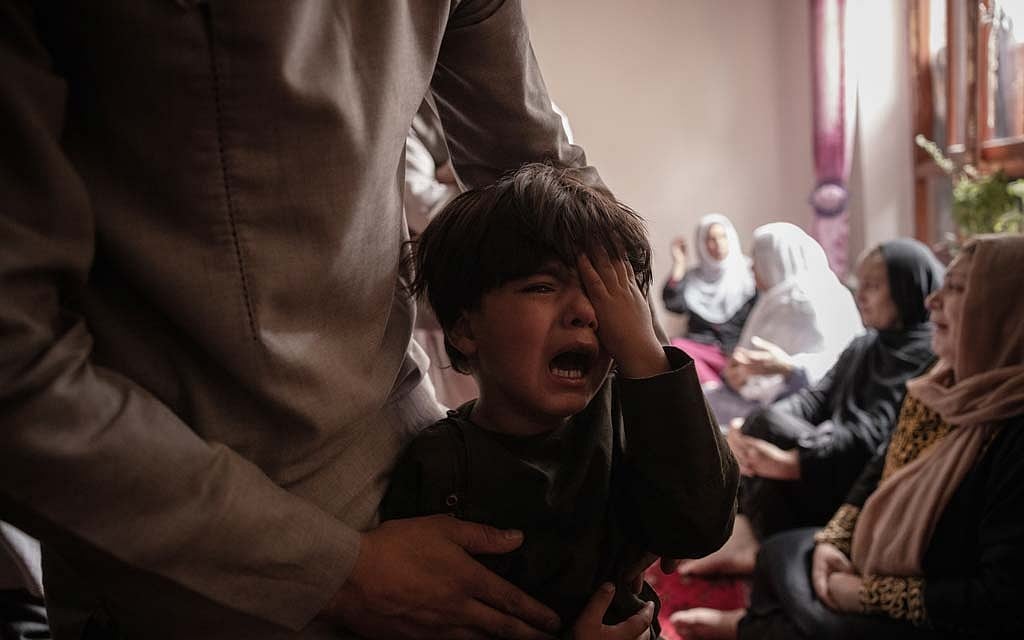
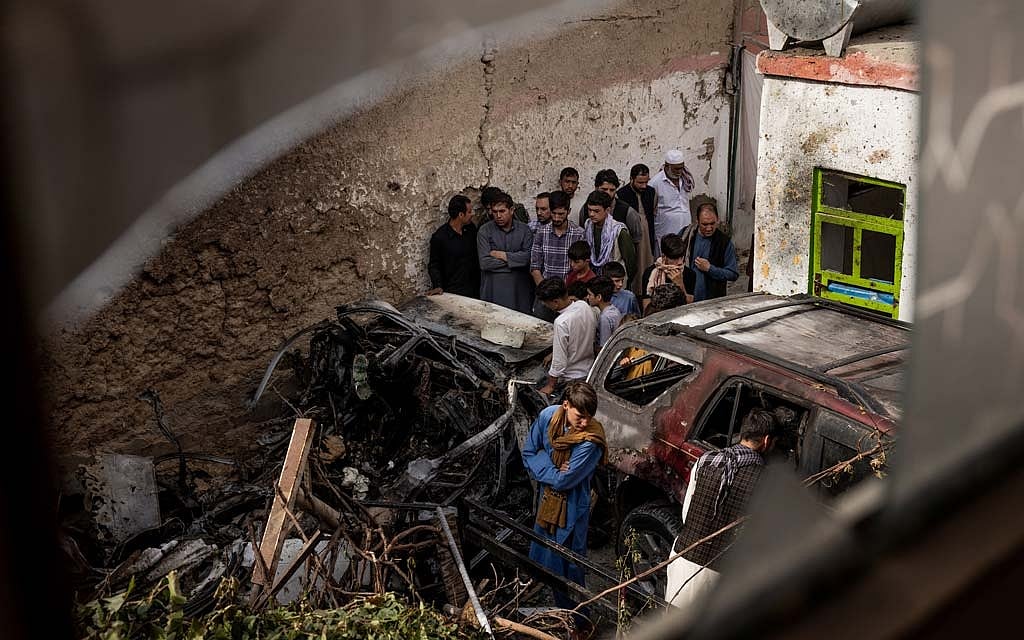
But for the Afghan family it devastated, and for the co-workers of the targeted man, Zemari Ahmadi, the American apology did nothing to ease their sense of vulnerability in the new Taliban order. If anything, their fears and feelings of exposure have only increased.
Emal Ahmadi, the brother of Zemari Ahmadi, described his family as having been tarnished twice over: first by being suspected by the United States of being linked to the Islamic State in Khorasan, a branch of the Islamic State group that is active in Afghanistan and is an enemy of the Taliban.
And second because it has now been revealed that his brother worked for an American aid organisation — a fact that only became widely known after the drone strike.
“There’s a big threat against us, now that everyone knows that he was working for the Americans,” Emal Ahmadi said. “But we had no choice but to tell the media, so that the world would believe” that the family was not connected to the Islamic State group, he said.
The Pentagon launched the strike from a Reaper drone on Aug 29, barely 48 hours before the last US soldier withdrew from Afghanistan. Before the attack, the US military had been tracking a vehicle believed to be connected to the Islamic State group and whose driver was thought to be preparing a bomb.
In fact, the car belonged to Zemari Ahmadi, an aid worker, who was going about his daily work for a Pasadena, California-based food charity. When he returned home, the missile struck, killing 10 people, seven of them children.
That the Americans tied this target to the Islamic State group posed a serious threat to family members and close associates because the Taliban treat the Islamic State group as mortal enemies and have been in competition with them for fighters and influence in Afghanistan for the past three years. So the Ahmadi family was eager to erase any thought that they might be connected to the extremist group.
While the United States is no longer seen as a battlefield enemy of the Taliban in the way that it was before the militants effectively took over the Afghan government on Aug 15, the Taliban still view any American nonprofit groups operating in the country with deep suspicion.
In trying to clear the family name of connections to ISIS, it was revealed that Nutrition and Education International, or NEI, Ahmadi’s employer, was preparing the paperwork to make it possible for him to immigrate with his family to the United States.
The Pentagon’s admission of error, which came after insisting for more than two weeks that the attack was warranted, was broadcast Saturday on Afghan television. As part of their coverage, Afghan news channels showed images of the Ahmadi home as his surviving family members held up photos for reporters of the children they had lost in the blast, including a girl of 2.
The Pentagon’s deeper review of the strike followed a New York Times investigation casting doubt on Ahmadi’s connection to ISIS and on any explosives being in his vehicle. The military concluded that there had been a series of mistakes that culminated in the deadly strike.
“We now know that there was no connection between Mr. Ahmadi and ISIS-Khorasan, that his activities on that day were completely harmless and not at all related to the imminent threat we believed we faced, and that Mr. Ahmadi was just as innocent a victim as were the others tragically killed,” said Defence Secretary Lloyd Austin in a statement.
For one of Zemari’s colleagues, the country director for NEI, the Islamic State group taint still lingers.
At a news briefing Friday about the incident, Gen. Kenneth McKenzie Jr., the head of US Central Command, said that Ahmadi’s car first came under surveillance after it was seen picking up a bag at a suspected Islamic State group safe house, labelled “Compound No 1.”
“In the 40 hours prior to the strike, sensitive intelligence indicated Compound No. 1 on the map was being used by ISIS-K planners, used to facilitate future attacks,” McKenzie said. “We have very good intelligence to support that belief that this was an ISIS-K-related centre.”
However, witness testimony and visual evidence gathered by the Times indicates that this compound was likely the home of NEI’s country director, Ahmadi’s boss. The director had asked Ahmadi to stop by his home to pick up his laptop on the way to work that morning.
On Saturday, the director, who has previously asserted to the Times that he was not connected to the Islamic State group, gave a tour of his home while his young children and elderly parents were present, the second such visit by a Times reporter since the attack. Inside the house, children’s English lessons were visible on a white board.
“My father built this house. I grew up here,” the country director said. “I really feel threatened, afraid, insulted, and humiliated by having the label of ISIS.”
For security reasons, the Times is not publishing his name or the address of the country director, who is seeking to be resettled in the United States.
When asked whether there could have been an Islamic State group safe house nearby, the director said that he had known most of his neighbours for years, but that there had been a new tenant in the house next door, which shares a wall. He said he found that person’s behaviour suspicious and had reported him to the Afghan intelligence service. The tenant moved out before the Taliban took over the capital.
McKenzie’s briefing noted that rockets were fired from nearby the compound on Aug. 30, the morning after the fatal drone strike. Less than 200 yards from the NEI director’s house was the wreckage of a white Toyota Corolla used in the rocket attack, one of the most common cars found on the streets of Kabul. It was still present Saturday.
As news of the American admission spread, Afghans took to social media to express anger and frustration, but little surprise, at the Pentagon’s mistake. Many demanded that the United States pay compensation for the family.
McKenzie said the military was discussing the possibility of payments.
While the drone strike has received considerable attention, in part because it came in the last 48 hours the United States was in Afghanistan, it was a familiar sequence for Afghans and those who track civilian casualties.
For much of the past 20 years, as the United States and its allies waged war in Afghanistan, Western forces have killed the wrong people in their effort to target terrorists.
In the years in between the 2001 invasion and Ahmadi’s death, the United States admitted to mistakenly killing hundreds of civilians. The military killed dozens of civilians at a wedding in 2002 and more than 100 civilians, many of them children, in Farah province in 2009. In 2016, the military mistakenly bombed a Doctors Without Borders hospital in Kunduz province, killing 42 doctors, patients and medical staff.
For Ahmadi’s relatives, the mistaken killing shook their faith in America, even as they still desperately wish to be resettled there as refugees.
They questioned the US military’s latest narrative of events, including that the targeting team, which believed that water containers being carried by Ahmadi contained explosives, did not see any of the seven children before they carried out the strike.
“They could see the containers being put in the car, but they couldn’t see the children?” said Ahmadi’s uncle, Mohammed.
His brother, Emal, said that he’d previously believed official accounts about US airstrikes in distant parts of Afghanistan.
“Back then, we’d think, yeah, that’s good that they hit, say, ISIS,” he said. “After this happened to us, I realised that maybe many of those people were innocent, like we were.”
©2021 The New York Times Company













