Published : 20 Sep 2018, 09:35 AM
Updated : 08 Apr 2022, 03:19 PM


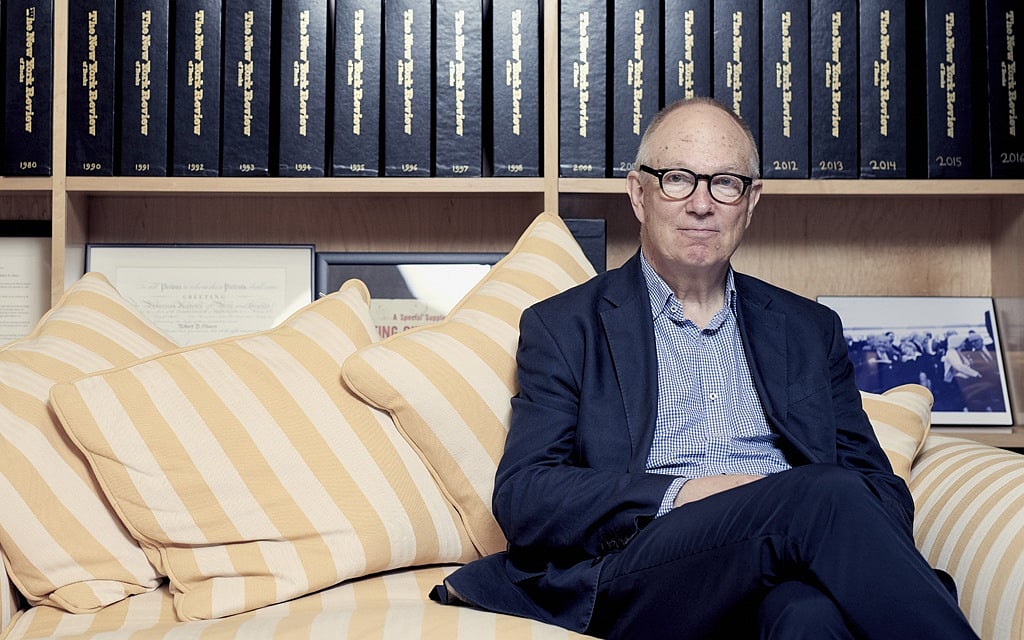
“Ian Buruma is no longer the editor of The New York Review of Books,” Nicholas During, a publicist for the magazine, wrote in an email. It was unclear whether Buruma had resigned or was fired.
The essay’s author, Jian Ghomeshi, who was acquitted of sexual assault charges in 2016, lamented his status as a pariah, “constantly competing with a villainous version of myself online.”
It caused immediate furor, with some criticising what they saw as a self-pitying tone, and soft pedaling of the accusations, which included slapping and choking, and had come from more than 20 women, rather than “several,” as Ghomeshi wrote. Buruma drew further censure by giving an interview that many interpreted as showing a lack of interest in the accusations against Ghomeshi.
The upheaval at the publication shows the raw emotion still surrounding nearly every #MeToo accusation and response, less than year after the first reports about Harvey Weinstein’s behavior unleashed a tide of allegations against other famous men.
Ghomeshi is among several high-profile men, including the comedian Louis C.K. and the former public radio host John Hockenberry, who have recently resurfaced in the public eye after allegations of sexual misconduct or harassment. The re-entry attempts have been met with both approval and opprobrium — Louis CK's surprise stand up set last month in New York was applauded by the crowd and denounced by many others — underscoring how little consensus exists about what sort of redemption the #MeToo men deserve.
Hockenberry wrote a 7,000-word piece titled “Exile” in Harper’s Magazine this month, rueing his continued banishment and shaming. “For almost a year I have lived as a pariah facing cold silence or open hostility in public,” he wrote. “I have watched presumed friends vanish. I have listened to colleagues, lawyers, and PR professionals tell me that I am unemployable.”
Ghomeshi’s essay, which was half as long, was published online last Friday. Attempts to reach him for comment on Wednesday were unsuccessful. Buruma did not respond to a phone call and email seeking comment.
On Wednesday, the magazine posted a note atop the essay that began, “The following article, which has provoked much criticism, should have included acknowledgment of the serious nature and number of allegations that had been made against the writer, Jian Ghomeshi.” It then listed some of the allegations.
In the essay, Ghomeshi recounted his experience being fired from his job as the host of “Q,” a culture program for the Canadian Broadcasting Corp., in 2014 amid reports about his behaviour.
“Even as I feel deep remorse about how I treated some people in my life, I cannot confess to the accusations that are inaccurate,” he wrote. “What I do confess is that I was emotionally thoughtless in the way I treated those I dated and tried to date.”
“I was demanding on dates and in personal affairs. I would keep lobbying for what I wanted. I was critical and dismissive. Some women I cared about went along with things I wanted to avoid my disappointment or moods. I ought to have been more respectful and responsive with the women in my life. To them I say, you deserved much better from me.”
But the broader theme of the piece, titled “Reflections From a Hashtag,” was how Ghomeshi became a target of ostracism on social media and in Canadian newspapers, an experience that left him “suicidal.”
“There has indeed been enough humiliation for a lifetime,” he wrote. “I cannot just move to another town and reboot with a pseudonym. I’m constantly competing with a villainous version of myself online. This is the power of a contemporary mass shaming.”
Ghomeshi’s piece, which has yet to reach print subscribers, appears in the magazine’s Oct. 11 edition, which includes three essays on the cover as a package under the headline “The Fall of Men.”
Backlash against the piece began even before it was posted, as word of it leaked out to Nicole Cliffe, a writer for Slate, who tweeted about it. “The NYRB staffers I heard from were aghast, and didn’t just want to register disapproval of the Ghomeshi piece, they wanted the news leaked as soon as possible,” Cliffe said in an email on Wednesday.
Then, in an interview with Isaac Chotiner of Slate, which was posted not long after the essay was, Buruma defended his decision to publish Ghomeshi’s piece, noting that while “not everyone agreed,” once the decision was made, the staff “stuck together.”
When pressed by Chotiner about the several accusations of sexual assault against Ghomeshi, Buruma said: “I’m no judge of the rights and wrongs of every allegation. How can I be?” He also noted that Ghomeshi had been acquitted and said there was no proof he committed a crime, adding, “The exact nature of his behaviour — how much consent was involved — I have no idea, nor is it really my concern.”
The Slate interview drew detractors even from within The Review’s own ranks. In a series of tweets, Amia Srinivasan, a contributor to the magazine and lecturer at University College London, slammed Buruma for saying Ghomeshi’s behaviour was not his concern, and for his assertion that the Ghomeshi piece had the office’s support. “Top-down decision-making often feels this way to those in power,” she wrote. “Feel free to consider this a complaint.”
But the reaction was not uniform. Laura Kipnis, also a contributor, said that The Review had a history of publishing “tough, controversial pieces” that did not kowtow to public opinion, and she lamented that doing so cost Buruma his job.
Letting people in Ghomeshi’s position have a platform did not exonerate them, she said. “It’s hearing what somebody has to say in the position of suddenly being exiled from social life, and sentenced to a non-existence,” she said.
Kipnis also said as news of Buruma’s departure spread, fellow writers shared alarm about having to self-censor. “People are terrified to get caught in a Twitter storm,” she said. “And if they say they support Ian, it’s easy for someone to say, ‘There’s someone who doesn’t care about sexual assault.'”
Considered one of the foremost intellectual journals in the country, The Review was founded by Robert Silvers and Barbara Epstein in 1963 during a New York newspaper strike, as they saw an opportunity to capture readers and advertising revenue. Since then it has showcased lengthy literary criticism and left-leaning political coverage.
Its contributors have included WH Auden, Elizabeth Hardwick, Susan Sontag, Gore Vidal, Hannah Arendt, Zadie Smith and Michael Chabon. As of last year, it had 150,000 subscribers, about 130,000 for the print edition, a broadsheet that remained largely unchanged.
The magazine relies heavily on advertising from university-affiliated book publishers. An employee of a university press who saw messages from an industry email list said that several publishers had communicated to the list that they were cancelling ads because of the Ghomeshi essay. The employee, who was not authorised to speak about the emails and so requested anonymity, did not have independent knowledge of whether any ads had been pulled.
In an email Wednesday, Jennifer Crewe, the director of the Columbia University Press, said, “the university press community was greatly concerned about the Ghomeshi article and they expressed that concern.” But, she added, “to my knowledge no one threatened to pull ads.”
Buruma, who was born in the Netherlands and had written for the magazine for decades, took over just after Labor Day last year, following the death of Silvers. Buruma described Silvers’ tenure as “a monarchy,” and said he would make The Review “a slightly more democratic operation.”
On Wednesday morning, the publisher and owner, Rea Hederman, called a meeting of the editorial staff and announced Buruma’s departure, according to two employees who were there but declined to be identified because they were not authorised to speak publicly.
The Review declined to elaborate on whether Buruma was asked to leave or did it voluntarily. But James Fenton, an English poet and literary critic, longtime contributor to The Review, and friend of Buruma’s, said he believed the editor was unhappy about leaving.
“If it was wrong judgment, it was wrong judgment on one article,” Fenton said. “Ian didn’t want to leave The New York Review.”
@2018 New York Times News Service