Published : 14 Jan 2019, 07:39 PM
Updated : 05 Aug 2022, 05:48 PM


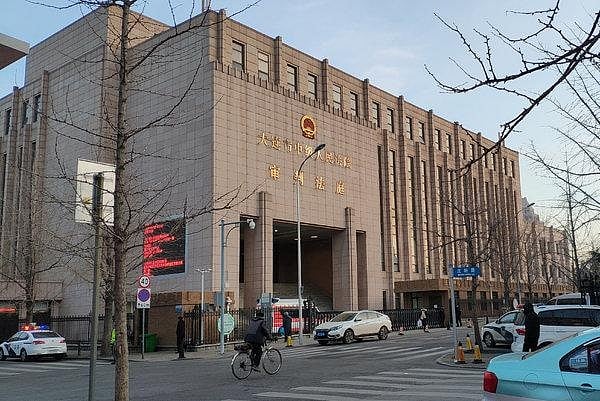
The court in northeastern China announced the death penalty against the Canadian, Robert Lloyd Schellenberg, after a retrial that lasted one day, and gave no indication that his sentence might be reduced to a prison sentence. Schellenberg’s fate is likely to become a volatile factor in diplomacy between Beijing and Ottawa after Canadian authorities arrested a Chinese tech executive last month.
A terse official statement from the Dalian Intermediate People’s Court said that it had “convicted Schellenberg of smuggling drugs and sentenced him to death.”
Last month, a court ordered Schellenberg to be retried after he appealed a 15-year prison sentence for smuggling methamphetamines. But against a backdrop of sharply increased tensions between China and Canada, the court sided with prosecutors who called for a stiffer sentence at a new trial.
“The worst-case scenario is what happened, our worst fears were realised,” Schellenberg’s aunt, Lauri Nelson-Jones, who has acted as a spokeswoman for his family, said by telephone from Maryland. She said she was trying to contact his immediate family to find out if they knew about the court judgment.
“I didn’t think we’d get a verdict this fast regardless of the outcome,” Nelson-Jones said. “It’s shocking, especially from a North American view of how things go.”
On Monday, prosecutors and Schellenberg offered starkly different accounts of his role in the smuggling operation.
Prosecutors told the court that they “now have evidence that highly suggests Schellenberg was involved in organised international drug crime,” China’s central television broadcaster said in an online report. “Schellenberg argued that he was a tourist visiting China and framed by criminals.”
Schellenberg’s unusually swift appeal hearing and retrial came after the Chinese government was incensed by the December arrest in Vancouver, British Columbia, of Meng Wanzhou, the chief financial officer of Huawei, a Chinese telecommunications equipment manufacturer.
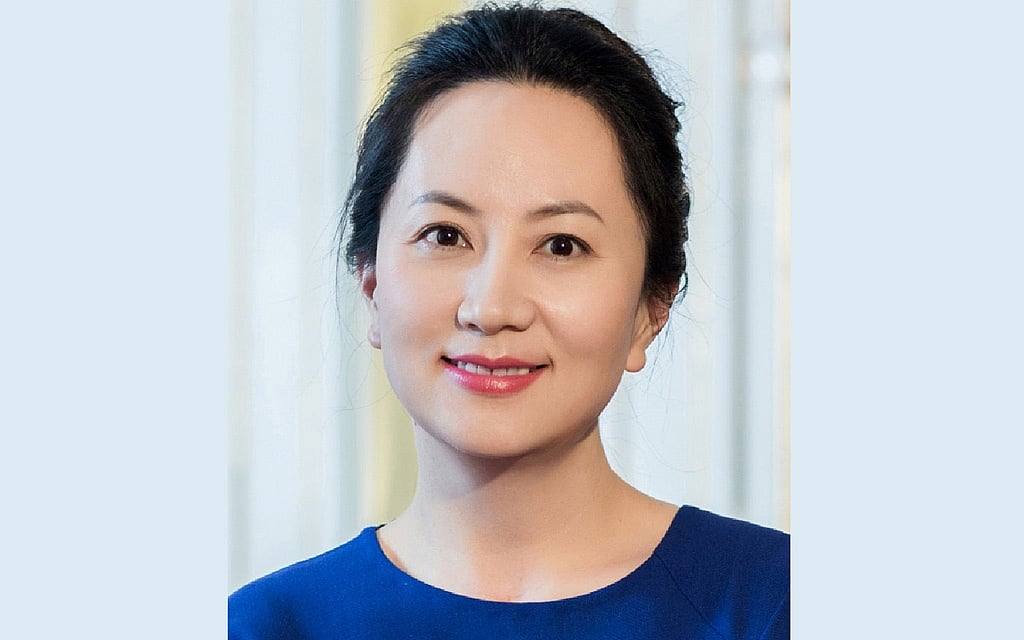
Meng Wanzhou, Huawei Technologies Co Ltd's chief financial officer (CFO), is seen in this undated handout photo obtained by Reuters Dec 6, 2018. REUTERS
“He’s become a pawn,” she said. “We can only guess, but that is definitely what it looks like and that is incredibly worrisome.”
Schellenberg appears to be the first North American sentenced to death in China in recent times. The sentence must still be examined and ratified by China’s highest court, the Supreme People’s Court.
As well imposing the death sentence on Schellenberg, Chinese authorities arrested two Canadians last month: Michael Kovrig, a former diplomat; and Michael Spavor, a businessman.
Those men have been accused of “endangering national security,” a sweeping charge that can include espionage. The police, however, have not announced any specific allegations against them while they remain in secret detention, denied visits from lawyers and family members.
On Monday, a spokeswoman for the Chinese Foreign Ministry, Hua Chunying, said Kovrig did not have diplomatic immunity, rejecting a comment from Prime Minister Justin Trudeau of Canada, who on Friday suggested that Kovrig had such protection.
Kovrig, who works for the International Crisis Group, is on leave from Global Affairs Canada, the country’s foreign service. The International Crisis Group, which gives advice on solving conflicts, has adamantly denied that Kovrig did anything to harm China.
Some foreign experts have said China’s swift action in all three cases appeared intended to pressure Canada to free Meng and return her to China, rather than sending her to the United States. The prospect that Schellenberg could be executed created a potent threat, they said.
Sending the case back for retrial gives China the opportunity to threaten death and to drag out that threat for as long as necessary,” Donald Clarke, a professor at the George Washington University Law School who is an expert on Chinese law, wrote in a commentary last week for Lawfare, a national security blog.
After his arrest, Schellenberg was held for 15 months before his first trial, and it took an additional 32 months before a court declared him guilty and sentenced him to 15 years in prison for his role in a failed attempt to smuggle drugs from China to Australia.
The tempo of Schellenberg’s case has accelerated since Meng’s arrest. She is out on bail and under house arrest in Canada until the courts there decide whether she can be extradited to the United States. US prosecutors have accused her of fraudulent bank transactions related to business deals with Iran that violated US sanctions.
At Schellenberg’s appeal hearing last month, prosecutors said that emerging evidence indicated he had played a bigger role in a drug trafficking network and so his initial sentence was too light.
At the retrial, prosecutors said that Schellenberg was heavily involved in a failed attempt to smuggle methamphetamines to Australia in pellets stuffed inside tires. They produced a witness, Xu Qing, to testify against the Canadian. But Schellenberg said he was unwittingly recruited into the scheme by Xu, reported Agence France-Presse, one of three foreign news outlets allowed into the court.
“He is an international drug smuggler and a liar,” Schellenberg said, according to the agency.
The Chinese Ministry of Foreign Affairs has denied that Schellenberg’s trial and the arrests of Kovrig and Spavor have anything to do with Meng’s arrest. At a news briefing Friday, a spokesman for the ministry, Lu Kang, said critics should not undermine Chinese law for political purposes.
© 2019 New York Times News Service