Published : 17 Dec 2019, 11:01 AM
Updated : 17 Oct 2022, 11:50 AM


Two days before a historic vote on two articles of impeachment, about a half-dozen first-term Democrats in districts that Trump won in 2016 — all impeachment skeptics — said they had become convinced that they had no choice but to move forward with official charges of high crimes and misdemeanors against the president.
The House is all but certain to pass two articles of impeachment, for abuse of power and obstruction of Congress, against Trump on Wednesday on a mostly party-line vote, making him the third president in history to be impeached.
In comments to constituents, interviews and opinion pieces, and statements issued by their offices on Monday, the moderate Democrats said they were embracing impeachment fully aware that their decision could cost them their congressional careers.
“What the president did was wrong,” said Rep Ben McAdams of Utah, whose district skews Republican by 13 percentage points. “His actions warrant accountability. I cannot turn a blind eye, thereby condoning this president and future presidents, Republican or Democrat, to do the same.”
“I will vote yes, knowing full well the Senate will likely acquit the president in a display of partisan theater that Republicans and Democrats perform disturbingly well,” McAdams added in a statement that criticized how members of both parties have handled the impeachment debate.
Rep. Joe Cunningham of South Carolina, who represents a district where Republicans have a 10-point advantage, said Republicans had offered no convincing evidence to exonerate Trump, adding, “This is simply about the rule of law.”
“If I wanted to do what was easy politically, I would just vote no and move on,” Cunningham told his hometown paper, The Post & Courier in Charleston, South Carolina. “But it’s about doing what’s right for our country.”
In Michigan, Rep Elissa Slotkin, a CIA analyst, was greeted with jeers, chants and political threats from constituents at a town-hall-style meeting after revealing in a newspaper op-ed that she, too, would vote for both articles of impeachment.
In comments to reporters after the meeting, Slotkin said the decision was a “tough call.”
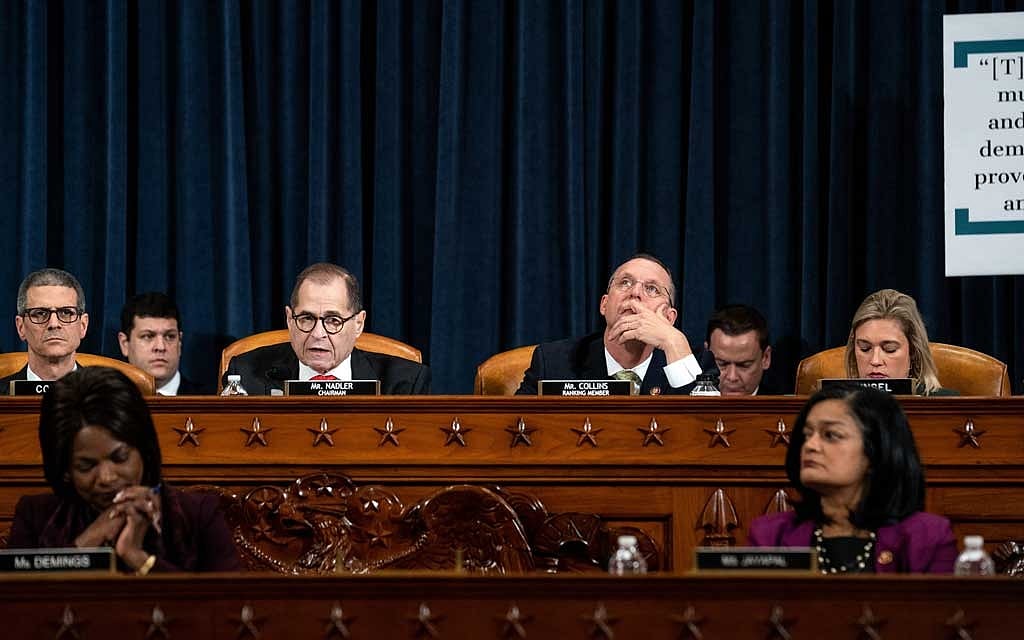
House Judiciary Committee Chairman Jerrold Nadler (D-NY), center left, and the ranking member, Rep Doug Collins (R-Ga), center right, during a committee meeting on the articles of impeachment against President Donald Trump in Washington on Thursday, Dec 12, 2019. (Erin Schaff/The New York Times)
The question at the heart of the impeachment debate is not whether Trump leaned on Ukraine to investigate one of his political rivals when Kyiv was in dire need of US military aid. Both Republicans and Democrats agree that he did. At issue is whether that constituted an egregious abuse of power that warrants impeachment.
The statements of support from the Democratic lawmakers came as the House Judiciary Committee formally presented its case for impeaching Trump in a 658-page report published online early Monday morning, arguing ahead of the final vote in the House that he “betrayed the nation by abusing his high office.”
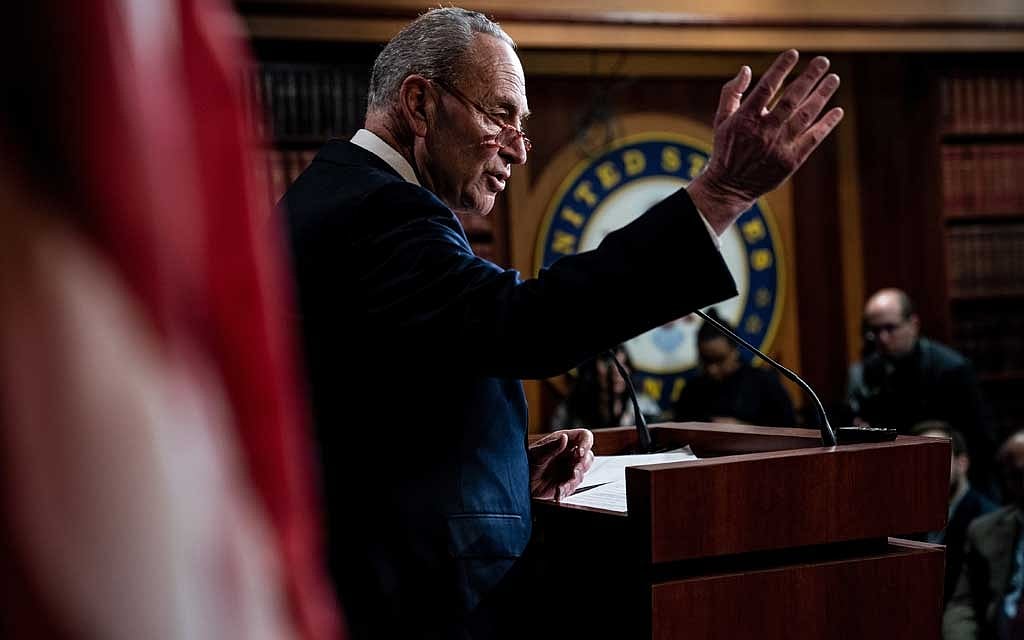
Across the Capitol, Sen Chuck Schumer, D-NY, the Senate minority leader, previewed a coming partisan clash over the procedures to govern an impeachment trial in the Senate, demanding for the second day in a row that Republicans call senior White House officials to testify as witnesses.
About a dozen moderate Democrats have yet to announce how they will vote Wednesday. Only two Democrats have indicated they will vote against impeaching Trump in a vote that could set in motion a Senate trial early next year.
On Wednesday, the House will formally vote on the recommendations contained in the Judiciary Committee report, which echoes similar documents produced during the impeachment inquiries involving Presidents Richard M Nixon and Bill Clinton.
The report provides no new allegations or evidence. But it offers a detailed supporting argument for the two articles of impeachment the committee approved, charging that Trump abused the power of the presidency to enlist Ukraine in tarnishing his political rivals and obstructed Congress by blocking witnesses from testifying and refusing to provide documents.
The report included a scathing 20-page dissent from Rep Doug Collins, R-Ga, the top Republican on the Judiciary Committee, who accused Democrats of conducting an unfair process in a partisan attempt to drive Trump from office because they dislike him and his policies.
“The case is not only weak but dangerously lowers the bar for future impeachments,” he wrote. “The record put forth by the majority is based on inferences built upon presumptions and hearsay. In short, the majority has failed to make a credible, factually based allegation against this president that merits impeachment.”
Looking toward a Senate trial, Schumer on Monday renewed his demand that senators who serve as jurors should hear from Mick Mulvaney, the acting White House chief of staff; John R Bolton, a former national security adviser; Robert Blair, a senior adviser to Mulvaney; and Michael Duffey, a top budget official.
The remarks by Schumer were the opening salvo in a coming negotiation with Sen Mitch McConnell of Kentucky, the Senate Republican leader. McConnell has signaled that he prefers a quick impeachment trial without witnesses, and has said that he will coordinate closely with Trump and his White House lawyers on the trial process.
Republicans close to McConnell said that the senator planned to meet with Schumer, probably before the week is over, to begin discussions about how to conduct a trial. While McConnell, as majority leader, can dictate the terms of a trial, his slim 53-seat majority means that the handful of more moderate Republican members in his ranks will have influence over how it unfolds.