


Published : 08 Jun 2022, 02:33 PM
Updated : 25 Oct 2022, 09:54 AM


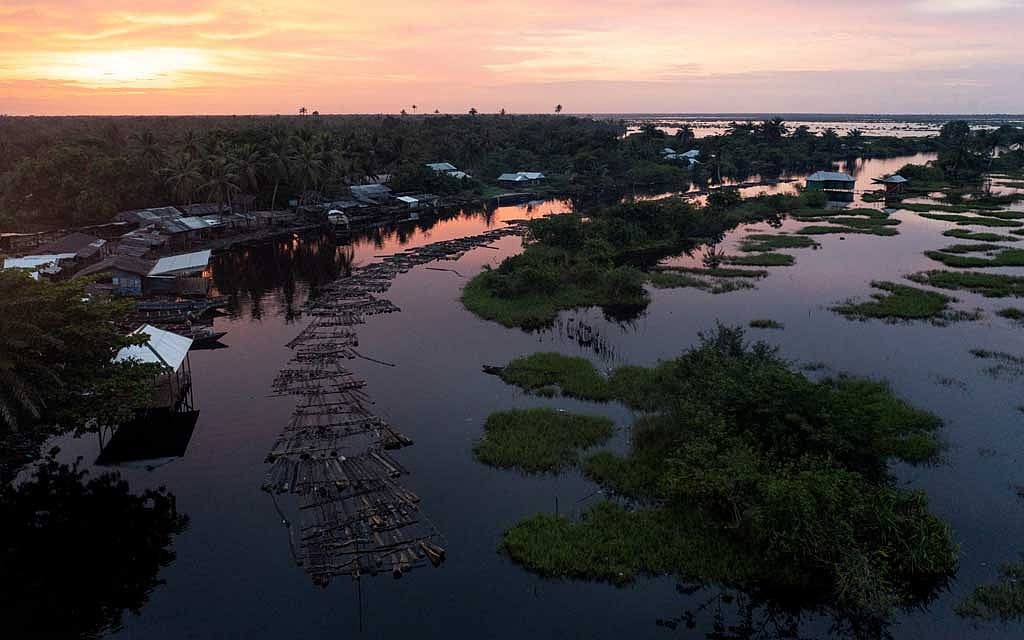
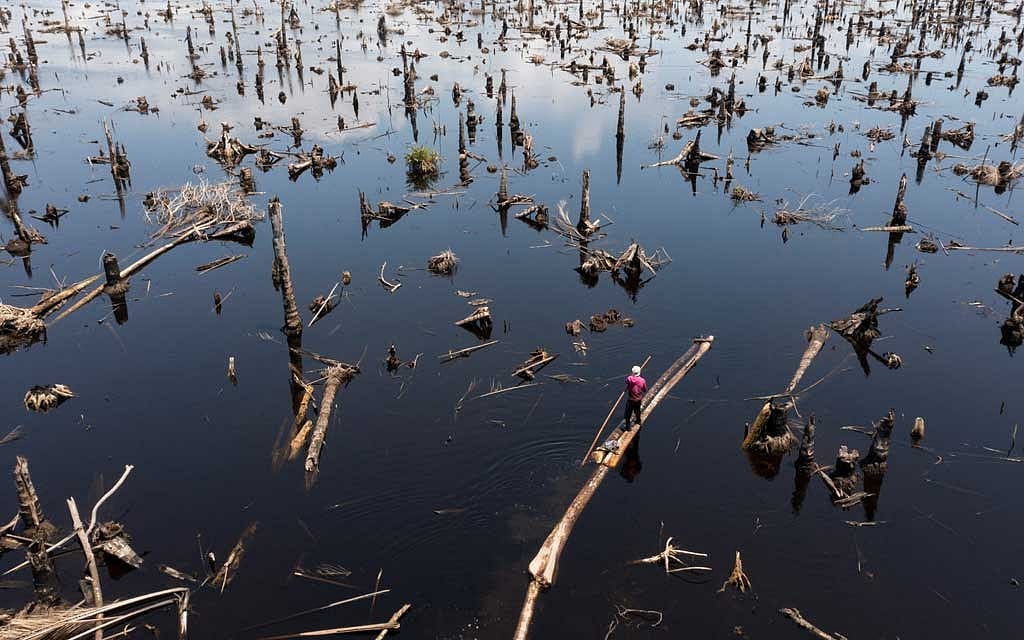
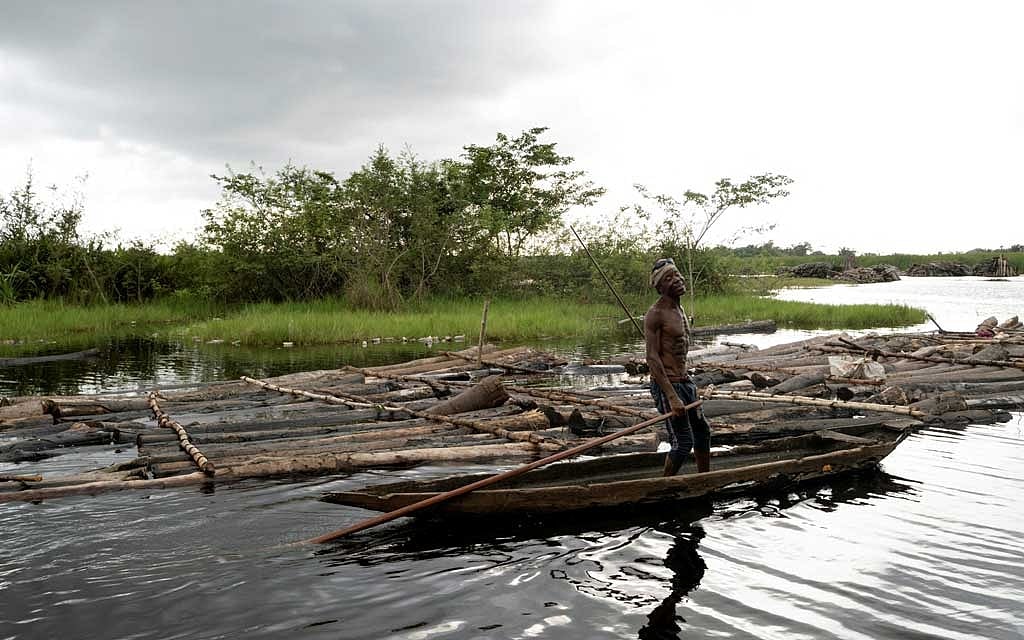
Around him, the stumps dotting the swampy forest were a reminder of trees that once stood tall but are fast disappearing to illegal logging in Ondo state, southwest Nigeria.
"We could cut down over 15 trees in one location, but now if we manage to see two trees, it will look like a blessing to us," the 61-year-old father of two said.
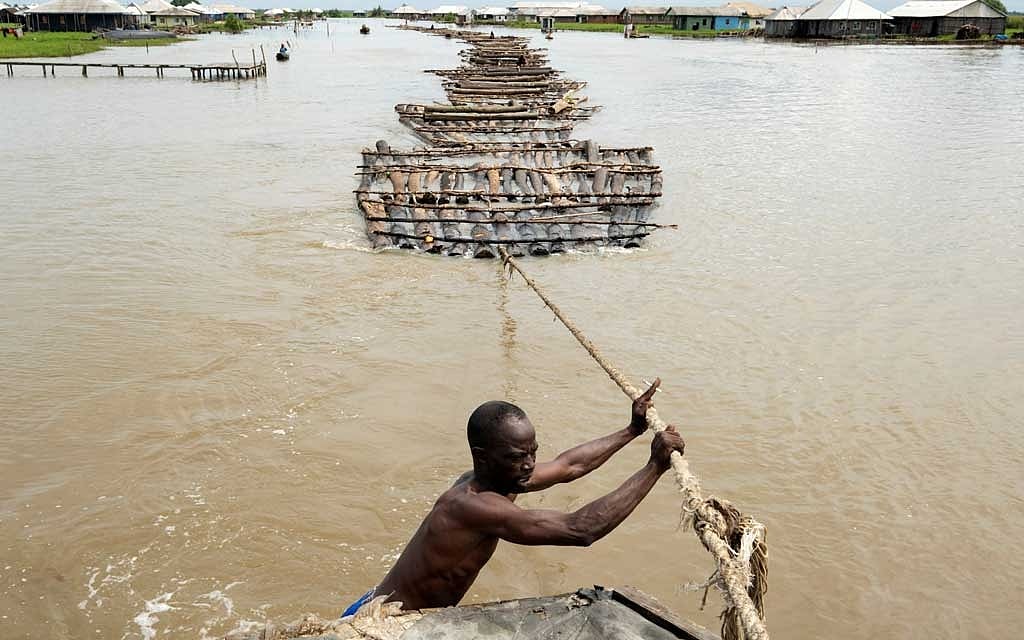
Elewuro, the captain of the tug boat, controls the collection of rafts attached to his boat, in Ipare, Ondo State, Nigeria, Nov 9, 2021.After hammering their logs into rafts, various loggers come together and rent a tug boat, which is used to transport all of their logs through water channels from Ondo State to Lagos State. Reuters/Nyancho NwaNri
After felling the trees, Marigi put markers on them, a message to other loggers that he is the owner. The logs would be transported via creeks and rivers all the way to Nigeria's commercial capital Lagos.
"During the time of our forefathers, we had big trees but sadly what we have now are just small trees and we don't even allow them to mature before we cut them," Marigi said.
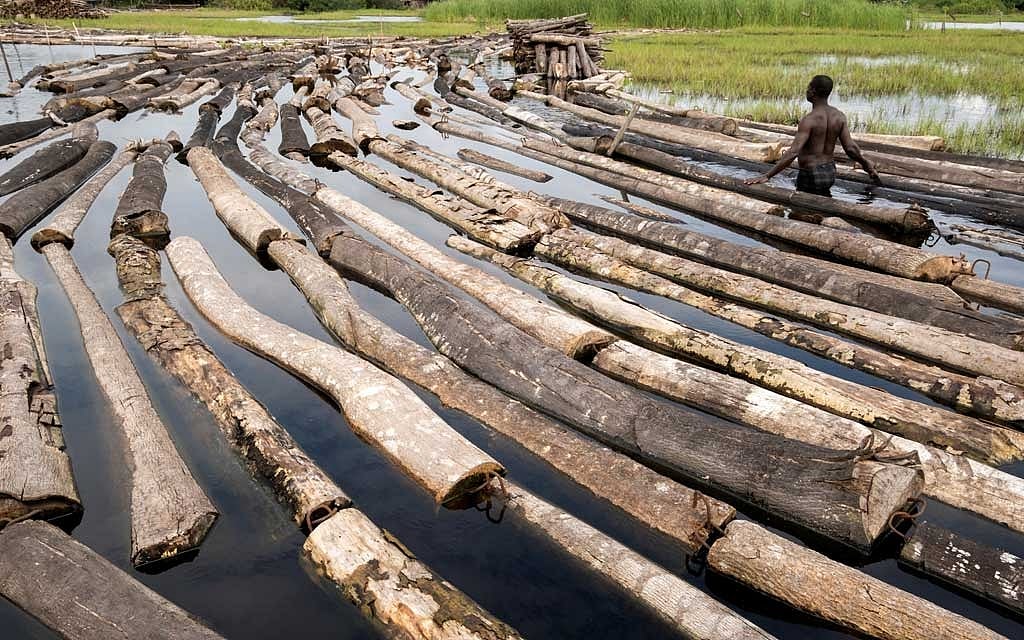
Logger, Komiyo Ikuejamoye, arranges logs on the river in Ipare, Ondo State, Nigeria, Oct 11, 2021. After felling the trees and cross-cutting them, the loggers pull the logs out of the flooded forest floor onto the river, where they will eventually be hammered into rafts, ready for transportation to Lagos state. Reuters/Nyancho NwaNri
President Muhammadu Buhari told a COP15 meeting in Abidjan, Ivory Coast on May 9 that Nigeria had established a national forestry trust fund to help regenerate the country's forests. That may not be enough as the country loses forests at a faster pace.
"Protecting the forest means protecting ourselves. When we destroy the forest, we destroy humanity," said Femi Obadun, director of forest management for Ondo state's agriculture ministry.
It's something Marigi knows all too well, but his priority is to eke out a living.
Logger, Egbontoluwa Marigi, 61, paddles his logs out of the flooded forest floor onto the river in Ipare, Ondo State, Nigeria, Oct 14, 2021. "During the time of our forefathers, we had big trees but sadly what we have now are just small trees and we don't even allow them to mature before we cut them," Marigi said. Photo taken with a drone. Reuters/Nyancho NwaNri
With other loggers, they have put together money to hire a tugboat to pull the rafts through creeks and rivers from Ondo state to Lagos.
Makeshift shelters on the rafts are made from wood and help shield Marigi and his friends from the weather. Food is shared while they belt out local folk songs to lift spirits.
"We don't sleep at night during the journey. We monitor the logs and make sure that (they don't) detach from the tugboat," Marigi told Reuters.
Logger, Egbontoluwa Marigi, 61, sings in his canoe while putting together his log rafts for transportation in Ipare, Ondo State, Nigeria, Nov 8, 2021. "During the time of our forefathers, we had big trees but sadly what we have now are just small trees and we don't even allow them to mature before we cut them," Marigi said. Reutrers/Nyancho NwaNri
Marigi's journey ends at a lagoon in Lagos, where rafts from Ondo state and other parts of the country converge and the logs are processed at sawmills and sold to different users.













