Published : 19 May 2026, 08:02 AM
Updated : 21 Aug 2026, 03:45 PM


Global Power Play: US-Pakistan Axis
Unexpected elevation: Islamabad’s military-led establishment has unexpectedly risen as a key mediator in the volatile US-Iran war.
Intoxicating ascent: Pakistani officials hail the role as a historic high, following years of quiet, military-led diplomacy.
Stalled accord: An ambitious "Islamabad Accord" framework was floated, but momentum stalled as high-level meetings fell through.
Tehran strikes back: Iran has rejected Pakistan as a credible mediator, claiming Islamabad prioritises Trump’s goals.
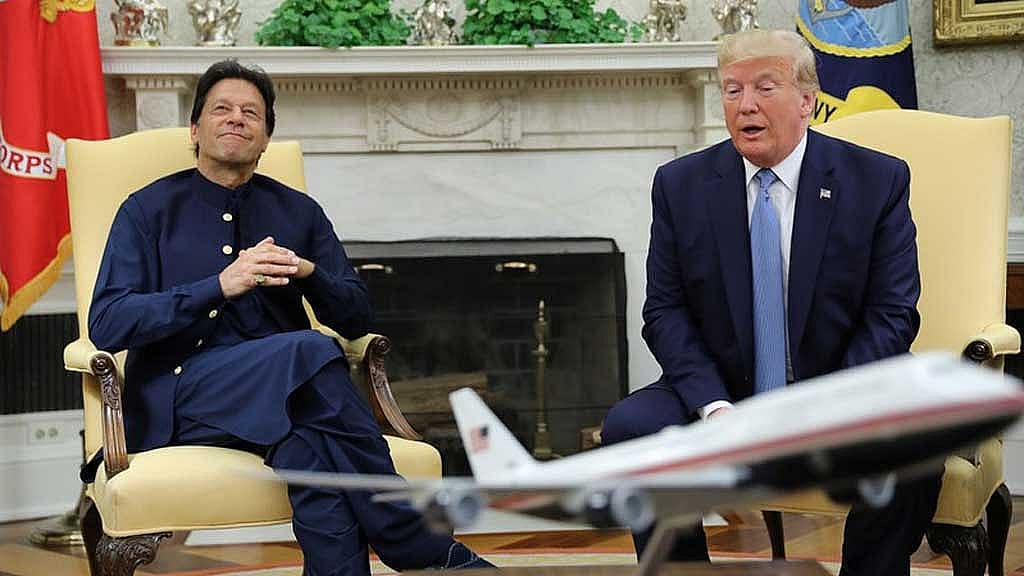
The Trump paradox: Trump praised Pakistan's leaders as "great", even as US politicians revive bitter double-dealing fears.
The geopolitical relationship between Washington and Islamabad has rarely followed a straight line. Yet few moments capture its volatility as sharply as the present -- when Pakistan’s military-led establishment, long viewed in Washington with scepticism, now finds itself unexpectedly elevated as a mediator in one of the world’s most combustible conflicts.
On Sunday, Pakistan’s Prime Minister Shehbaz Sharif described Islamabad’s involvement in mediation efforts over the US-Iran war as “one of the shining moments in history”, as quoted by Drop Site News.
Former ambassador Masood Khan was even more effusive: “We are in seventh heaven and on cloud nine and it’s intoxicating,” he was quoted as saying.
“I’ve had a long diplomatic career and I have never seen Pakistan on such a high pedestal.”
What may appear to some as a sudden diplomatic ascent is, in reality, the culmination of years of shifting alignments, strategic recalibration, and behind-the-scenes engagement between Pakistan’s military leadership and successive US administrations.
For a country of over 200 million people, nuclear-armed and politically turbulent, Pakistan’s re-emergence as a diplomatic interlocutor has not occurred in isolation.
It is the product of converging pressures: Washington’s search for intermediaries in West Asia crises, Islamabad’s recalibrated foreign policy ambitions, and a steady consolidation of military authority at home.
Drop Site News -- the Washington-based nonprofit investigative news organisation -- has previously reported extensively on Pakistan’s internal political restructuring and its external diplomatic repositioning, seeking to trace how Islamabad’s internal power dynamics intersect with broader geopolitical shifts.
The latest diplomatic episode appeared, at least briefly, to cement Pakistan’s rising profile.
In late April, as US markets closed for the weekend, Axios reported that Iranian Foreign Minister Abbas Araghchi was expected in Islamabad as part of renewed diplomatic manoeuvring to revive stalled US-Iran negotiations.
According to reports circulating in Washington, a trilateral meeting involving US envoy Steve Witkoff and Jared Kushner was being considered.
At the same time, Pakistan’s Inter-Services Public Relations (ISPR) disseminated messaging through journalists on WhatsApp, attributing it to “government sources”.
The message suggested that Islamabad was preparing to facilitate a renewed round of US-Iran talks, and that American logistical support was already in place.
The claims spread rapidly through international media and financial markets. Initial reactions reflected optimism that a diplomatic backchannel had been activated.
Pakistani officials were briefly praised in sections of Western commentary for what appeared to be a deft diplomatic intervention.
Yet within days, the narrative began to collapse.
Drop Site reporting indicated that Araghchi’s visit had no connection to restarting US-Iran negotiations, and that no meeting involving Witkoff or Kushner was planned.
US President Donald Trump subsequently confirmed that the proposed American participation had been cancelled.
The episode underscored a recurring pattern in Pakistan’s diplomatic positioning: rapid ascent in perceived influence, followed by abrupt recalibration when the underlying assumptions proved overstated.
By Sunday, Iranian officials themselves began to push back publicly. Ebrahim Rezaei, a spokesperson for Iran’s national security apparatus, offered a pointed assessment.
“Pakistan is a good friend and neighbour of ours, but it is not a suitable intermediary for negotiations and lacks the necessary credibility for mediation,” he was quoted as saying. “They always take Trump’s interests into account and do not say a word against the Americans’ wishes.”
His remarks reflected a broader scepticism within parts of Tehran’s strategic community regarding Islamabad’s neutrality in high-stakes negotiations involving Washington.
Despite the setback, Pakistan has remained engaged in diplomatic facilitation efforts, including logistical support such as providing aircraft for Iranian officials during regional travel.
Yet analysts note that its effectiveness as a mediator is increasingly contested by other regional actors -- including Oman, Russia, China, Saudi Arabia, and Turkey -- each seeking influence over the evolving diplomatic landscape.
A Mediator Forged in Crisis
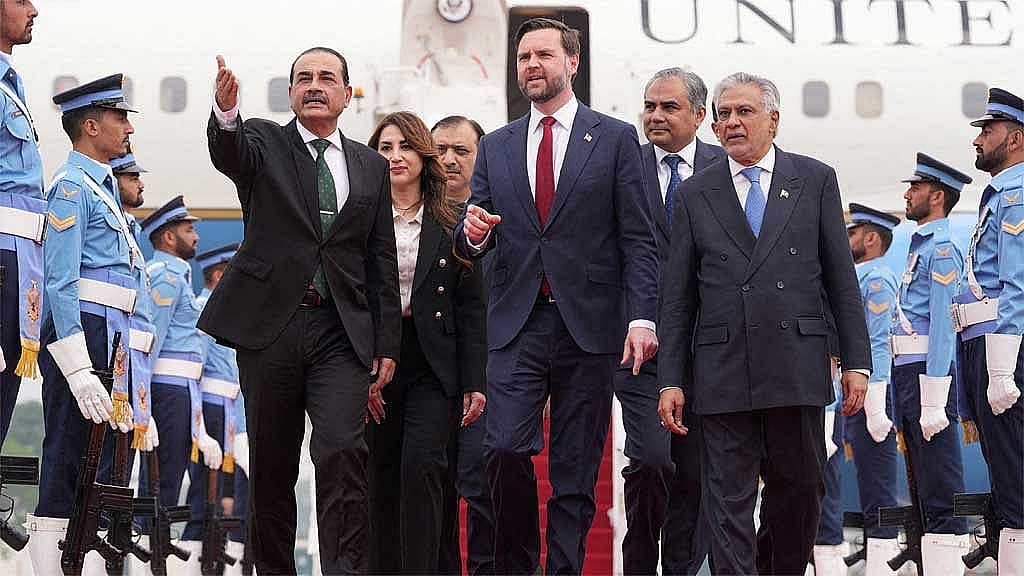
Pakistan’s renewed diplomatic visibility cannot be understood without examining the broader trajectory of US-Pakistan relations over the past decade, which have oscillated between cooperation and deep distrust.
In Washington policy circles, Pakistan has long been viewed through a dual lens: a nuclear-armed partner with strategic utility, and a state whose internal politics and regional alignments often diverge from US priorities.
The shift now under way reflects less a sudden transformation than a gradual reconfiguration of interests on both sides, Drop Site said.
In 2021, CIA Director William J Burns travelled to Islamabad seeking expanded counterterrorism cooperation and access arrangements in the wake of the US withdrawal from Afghanistan.
According to contemporaneous accounts, he was not granted an audience with then-prime minister Imran Khan.
Khan’s refusal to engage on Washington’s terms signalled a broader breakdown in relations. It also reinforced a perception in parts of the Biden administration that Pakistan was becoming less reliable as a strategic partner.
That moment marked a turning point. As Afghanistan collapsed into Taliban control and US influence in the region waned, Islamabad’s leverage diminished -- but its internal military establishment began recalibrating its external positioning.
Around the same period, diplomatic cables and internal communications reviewed in earlier Drop Site reporting indicate that Pakistan’s military leadership began quietly expanding its own channels of engagement with Western political networks, independent of the civilian government.
This dual-track diplomacy would later become central to Pakistan’s re-emergence in global negotiations.
Despite the fanfare emanating from Islamabad and the brief burst of international attention surrounding Pakistan’s claimed mediating role, the reality on the ground remains far more uncertain, Drop Site News reports.
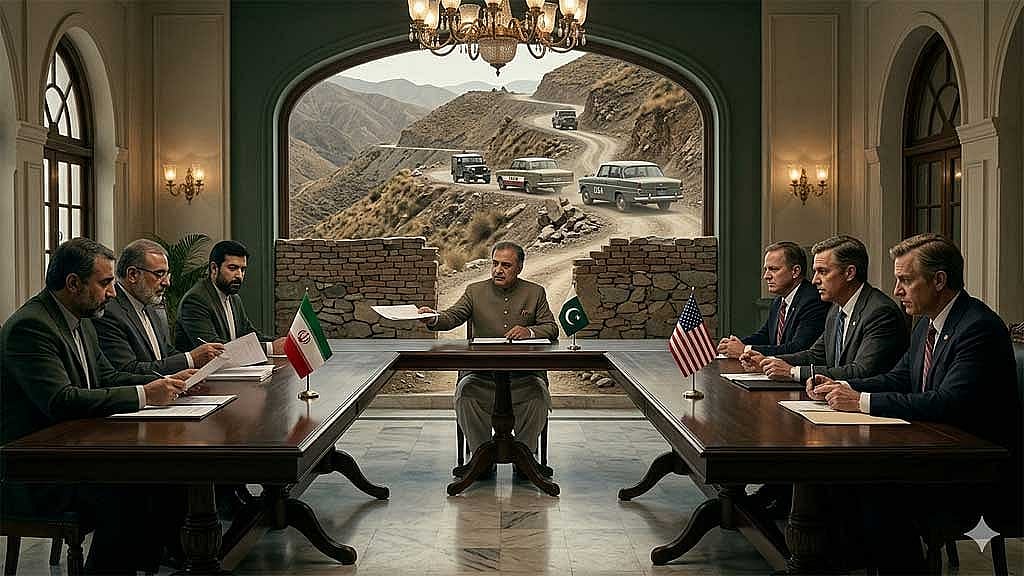
The diplomatic momentum that was being projected in public statements and media leaks has begun to stall, revealing once again the fragile architecture underpinning Pakistan’s renewed visibility on the global stage, according to Drop Site News.
What was initially framed as a potential breakthrough in backchannel diplomacy between the United States and Iran is now increasingly viewed by officials and observers as another overextended assertion of influence -- one that has struggled to survive contact with the realities of competing interests, fractured alliances, and shifting geopolitical priorities, the report adds.
While Field Marshal Asim Munir had at one point floated the idea of an “Islamabad Accord”, envisioned as a comprehensive framework that could not only halt hostilities but also reset broader US-Iran relations, those ambitions have yet to translate into any substantive diplomatic outcome, the investigation finds.
The proposal, once briefly circulated in diplomatic circles as a possible conceptual umbrella for talks, has since receded into the background as negotiations elsewhere have taken precedence, it adds.
Fragmented Diplomacy, Competing Intermediaries
Instead, the mediation process has fragmented into parallel diplomatic tracks involving multiple regional actors.
Oman has continued its longstanding role as a discreet facilitator of US-Iran communication, while Russia, China and Saudi Arabia have each attempted to shape elements of the broader strategic environment.
Turkey, too, has quietly expanded its diplomatic outreach, seeking to position itself as a convening power in a rapidly shifting regional balance.
In this increasingly crowded field, Pakistan’s role appears less central than initially projected, even if it remains symbolically significant, Drop Site said.
Officially, Islamabad continues to describe itself as engaged in constructive facilitation.
Privately, however, diplomatic sources cited by Drop Site acknowledge that the pace of engagement has slowed and the likelihood of a near-term breakthrough has diminished.
At the same time, political pressures are beginning to mount within Washington over Pakistan’s suitability as a mediator in such a sensitive negotiation process.
A growing chorus of scepticism, particularly among pro-Israel policymakers and commentators, has raised questions about Islamabad’s reliability and strategic alignment, the report notes.
Following reporting by CBS News, Senator Lindsey Graham publicly challenged Pakistan’s credibility in the negotiations, accusing it of “double-dealing” in relation to the movement of Iranian diplomatic personnel.
Pakistan has firmly rejected the allegations, insisting that the aircraft in question was part of a legitimate Iranian delegation that had remained in the country in anticipation of diplomatic developments.
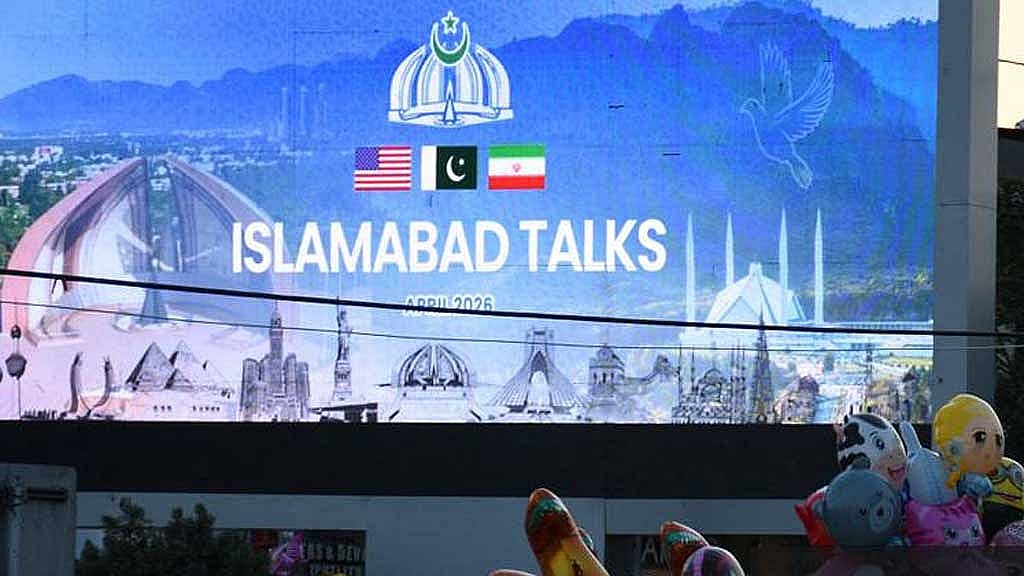
Despite Islamabad’s clarification, the issue has continued to circulate within US political debate, adding further friction to an already complex diplomatic environment.
The exchange underscored a broader reality: Pakistan’s renewed prominence in Washington has not eliminated longstanding suspicions about its strategic intentions, the investigation argues.
Instead, it has revived familiar debates about trust, leverage and dependency that have defined US-Pakistan relations for decades, it adds.
President Trump, however, struck a markedly different tone when asked about Pakistan’s role.
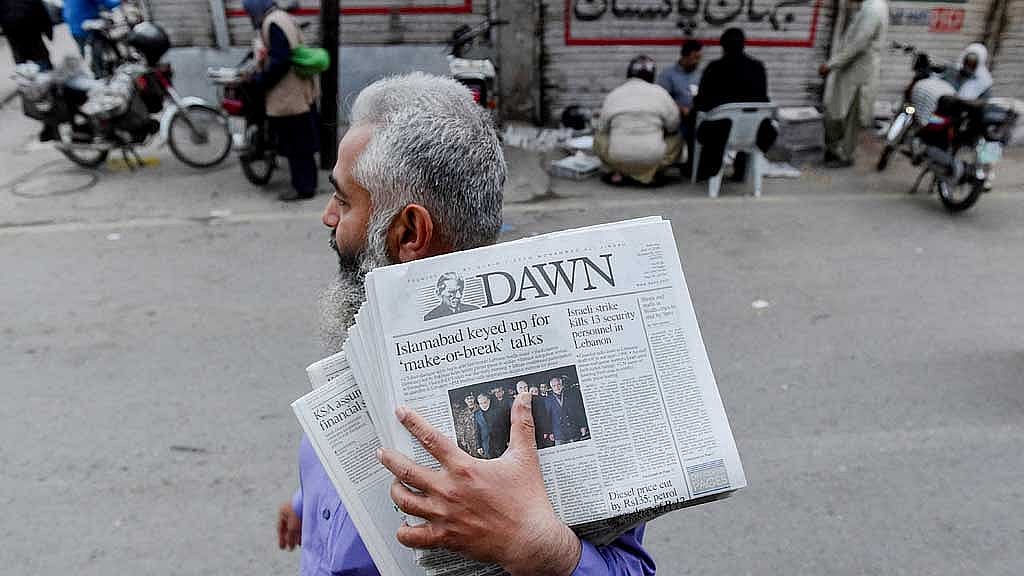
Responding to a reporter’s question, he said: “They’re great. I think the Pakistanis have been great. The field marshal and the prime minister of Pakistan have been absolutely great.”
The remark, while brief, encapsulated the current paradox of the relationship: a mixture of political endorsement at the highest level, layered over persistent institutional uncertainty and unresolved strategic contradictions, according to Drop Site.
For Pakistan, the stakes are considerable.
Its military leadership has invested heavily in positioning the country as a relevant interlocutor in global negotiations, particularly at a time when traditional sources of economic and diplomatic leverage remain constrained.
Engagement with Washington, renewed outreach to Gulf partners, and calibrated management of ties with Beijing all form part of a broader strategy aimed at maintaining strategic flexibility, the investigation finds.
Yet the sustainability of this approach remains in question. Each diplomatic opening has been accompanied by structural limitations -- whether in the form of regional rivalries, domestic political constraints, or the sheer complexity of the conflicts in which Pakistan seeks to play a role.
As the situation stands, the US-Iran track remains unresolved, the broader regional war continues to evolve, and Pakistan’s mediating role exists in a state of conditional recognition rather than concrete influence, Drop Site reports.
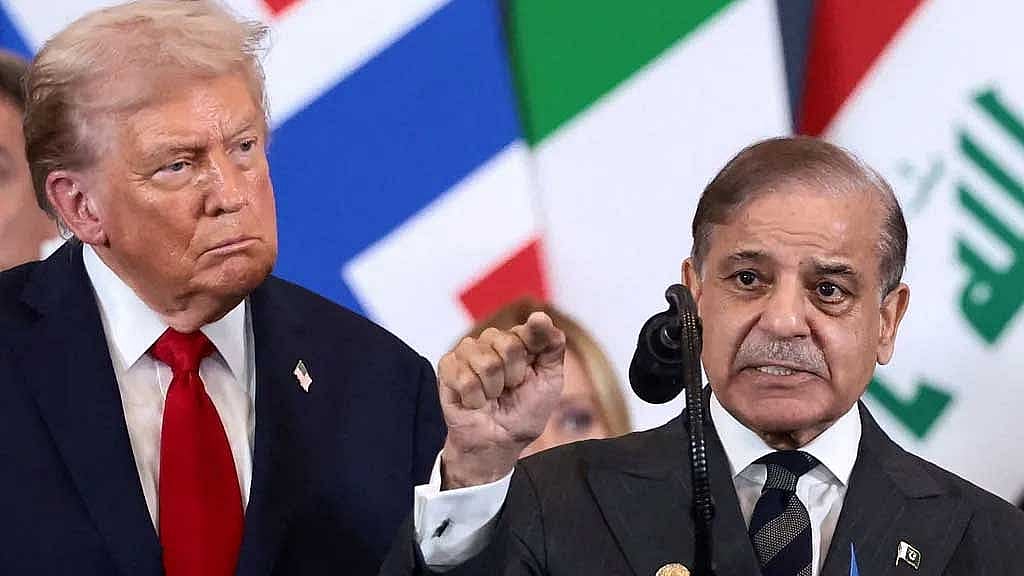
What emerges most clearly from the unfolding sequence of events is not a linear story of diplomatic ascent, but a cyclical pattern of ambition, visibility and constraint, it adds.
Pakistan’s re-emergence as a perceived intermediary power reflects both its strategic location and its institutional adaptability, but it also exposes the limits of influence that can be exercised without stable political consensus, consistent external trust, or durable economic leverage.
In Washington, the debate is increasingly shaped by competing interpretations: whether Pakistan is a useful conduit in an otherwise intractable conflict, or a transactional actor whose alignment shifts according to circumstance.
In Tehran, scepticism about Islamabad’s neutrality persists. And within Pakistan itself, the balance between international ambition and domestic political fragility continues to define policymaking at the highest levels, according to the investigation.
For now, the diplomatic process continues in fragmented form, sustained more by necessity than by momentum.
Whether it evolves into a coherent negotiation framework or dissolves into parallel, competing initiatives will depend on factors far beyond Islamabad’s control.
What is already clear, however, is that the initial optimism surrounding Pakistan’s mediation push has given way to a more sober reassessment -- one shaped by the realities of power, perception, and the enduring complexity of the conflicts it seeks to influence.