Published : 21 Nov 2026, 10:46 PM
Updated : 21 Nov 2026, 10:46 PM


The world's religious landscape has been heading for a major shift, with Muslims on course to outnumber Christians globally by 2035. Both faiths will continue to grow, but their rates of growth will differ considerably over the coming decades.
The global Muslim population is set to rise 80 percent between 2020 and 2070, from 2.02 billion to 3.64 billion.
The number of Christians, meanwhile, will increase by 30 percent to 2.96 billion, broadly in line with world population growth.
According to an Al Jazeera report citing Pew Research Center estimates, birth rates are the main driver of the change.
Muslim women had an average of 3.1 children between 2020 and 2025, compared with 2.5 among Christian women and 1.6 among women of other faiths. The replacement rate is about 2.1 children per woman.
Births outnumbering deaths will add an estimated 1.6 billion Muslims and 792 million Christians by 2070. The 53 Muslim-majority countries will account for 1.2 billion, or 74 percent, of the increase.
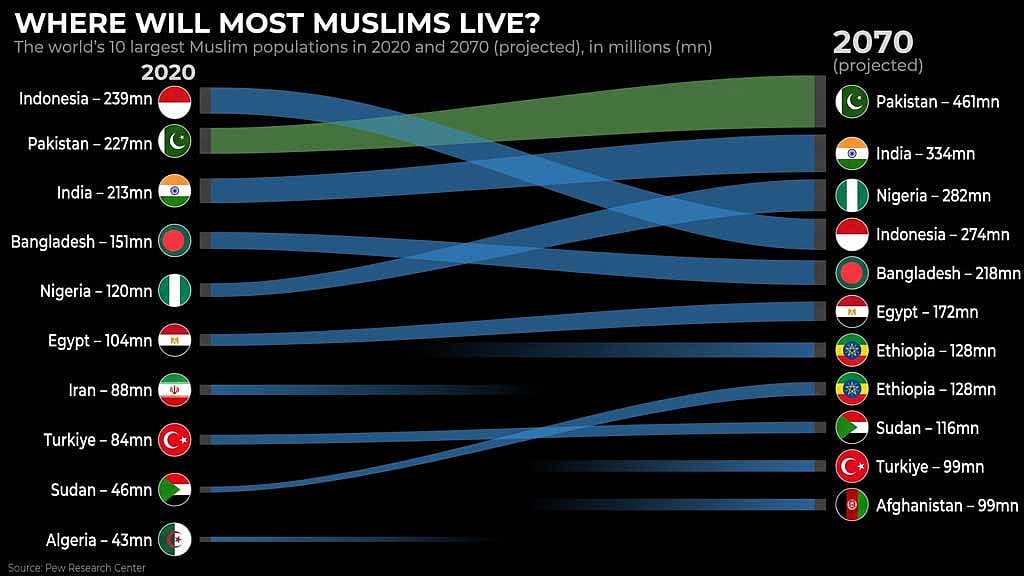
Indonesia had the largest Muslim population in 2020, with 239 million, followed by Pakistan, just 12 million behind. Pakistan's numbers will double to 461 million, while Indonesia's will rise by 15 percent, putting Pakistan on course to take the lead before 2070.
India will move from third to second place, with its Muslim population rising from 213 million to 334 million. Nigeria will climb from fifth to third, reaching 282 million and pushing Indonesia to fourth.
Four of the top 10 will be in Africa: Nigeria, Egypt, Ethiopia and Sudan. Afghanistan and Ethiopia will replace Iran and Algeria, while Sudan's Muslim population will more than double to 116 million, overtaking Turkiye.
The study covers 201 countries and territories, representing 99.98 percent of the world's population.
Its estimates assume current fertility, mortality and religious-switching trends continue, though wars, disasters and economic shifts could alter the outcome.
Hindus and Jews will grow more slowly than the global population, while Buddhists and people with no religious affiliation will decline.