Published : 10 Mar 2026, 06:44 AM
Updated : 21 Aug 2026, 03:27 PM


Pakistan's Prime Minister Shehbaz Sharif said on Monday that schools would close for two weeks and office workers would work more from home as he announced a range of measures to cut fuel use and government spending to cope with surging oil prices due to the Iran war.
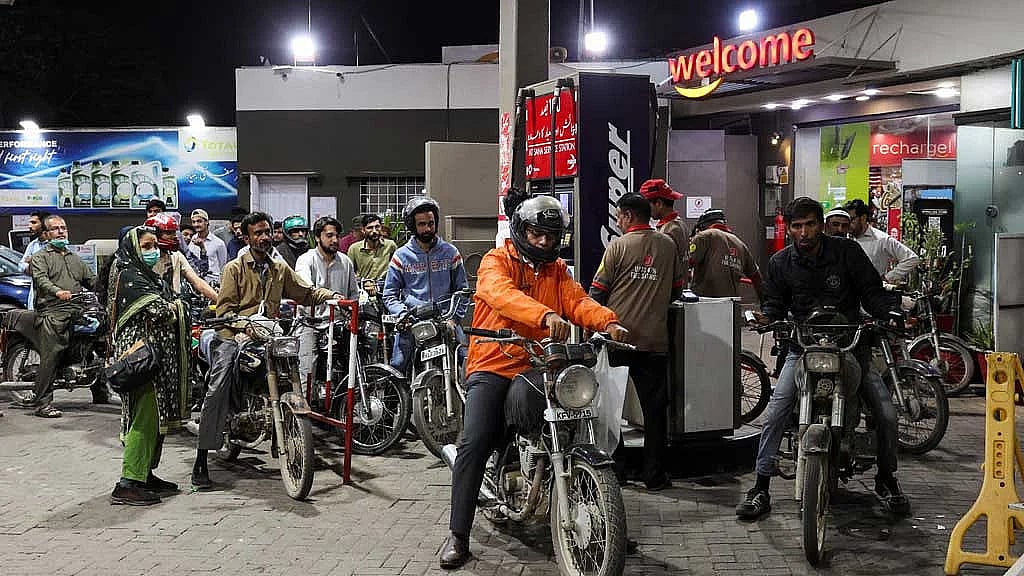
Pakistan will slash fuel use across government and shift some public services online, Sharif said, as the Israeli-US war with Iran threatens energy supplies and has already pushed fuel prices in Pakistan sharply higher. Pakistan imports most of its energy.
"To stabilise the economy we have taken difficult decisions," Sharif said in a televised address to the nation, adding that the government was trying to minimise the burden on citizens although it had little control over global fuel prices.
FUEL-SAVING DRIVE
Schools will from next week close for two weeks, while universities will shift to online classes to reduce commuting.
Government departments will face a 50 percent cut in fuel allowances for two months, while 60 percent of official vehicles – excluding buses and ambulances – will be taken off the road, Sharif said.
He also said that only 50 percent of staff will work in offices, except in essential services, while government offices will operate four days a week.
The government will also cut departmental spending by 20 percent, ban the purchase of vehicles, air conditioners and furniture, and restrict most foreign travel by ministers and officials.
Pakistan last week raised petrol and diesel prices by 55 rupees ($0.1971) per litre, the largest increase on record, after global oil markets surged due to the conflict.
As Pakistan imports most of its energy, its inflation rate is highly sensitive to global fuel prices.
The central bank said earlier on Monday that rising global energy prices linked to the Middle East war had increased uncertainty around the inflation outlook, after the bank kept its policy rate unchanged at 10.5 percent.