Published : 24 Nov 2026, 10:01 AM
Updated : 24 Nov 2026, 10:01 AM


Before the lingering memories of the delicious home-cooked Bangladeshi meal we had enjoyed the previous night could fade, a bright, sunny morning arrived, beckoning us towards a new destination - Madrid, the Spanish capital.
Early in the morning, I set out with Shimul Bhai for Alcalá de Henares Railway Station. Spain has an excellent transport system, particularly its rail connections between Madrid and the surrounding towns. To get to the capital, we decided to rely on Spain’s renowned commuter rail network, Cercanías.
Trains on the C-2 and C-7 lines run regularly from Alcalá towards Madrid. After buying our tickets, we boarded one of these modern, well-maintained trains. The commuter trains offer a fascinating glimpse into the everyday lives of Spanish people. Some passengers were reading books, others were listening to music on headphones as they worked on phones or laptops, while a few chatted quietly with one another. As the train left the outskirts of Alcalá and headed towards Madrid, the scenery outside the window gradually changed, giving way to the landscape of a modern city.
After a comfortable journey of just 40 minutes, our train pulled into Estación de Madrid Atocha, one of Spain’s largest, busiest and most historic railway stations. The station is now officially known as Madrid Puerta de Atocha-Almudena Grandes. In 2022, the name was changed in honour of Almudena Grandes, one of Spain’s most celebrated contemporary novelists.
The moment I stepped off the train and entered the station’s main building, I stopped in amazement. I had visited many railway stations across Europe, but I had never seen anything quite so unusual and beautiful. The entire station seemed like a tropical jungle! At the heart of this magnificent iron-and-glass structure, built in 1892, lies an enormous indoor botanical garden. Spanning approximately 4,000 square metres and home to more than 7,000 plants, the garden brings together a remarkable variety of greenery from different parts of the world. From towering palm trees to a wide range of tropical plants, the lush vegetation gives the station an almost magical appearance.
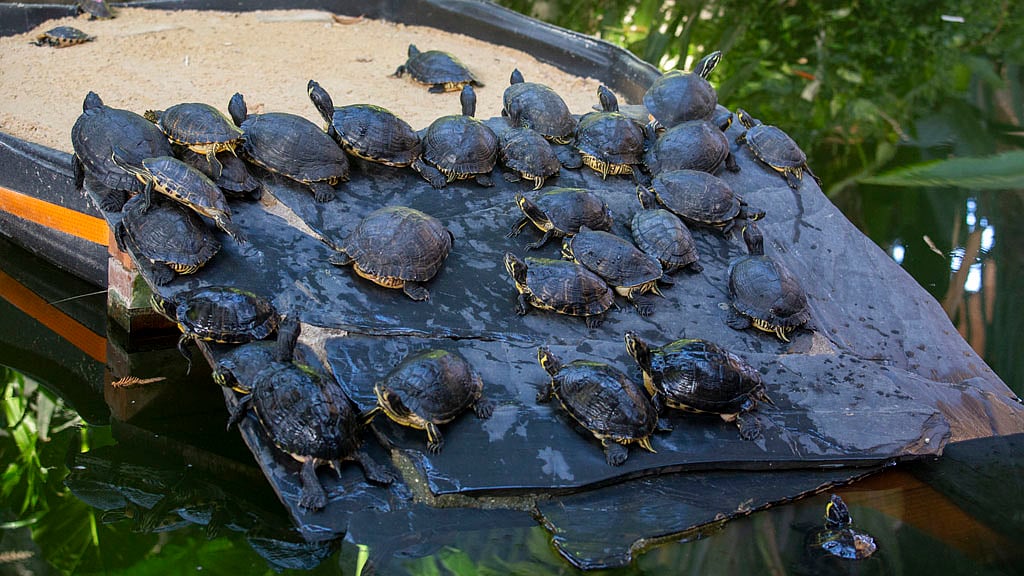
What fascinated me most was a large pond inside the station, where hundreds of turtles were basking in the sunlight and swimming leisurely. During my visit in 2018, the turtle pond was one of Atocha Station’s main attractions, but they have since been relocated elsewhere for their protection. Passengers waiting for their trains could sit and watch the turtles swimming about. It was hard to believe that such a dense tropical garden and a pond full of turtles could exist inside a railway station. I would hardly have believed it had I not seen it with my own eyes.
Still enchanted by the station’s unusual beauty, we eventually stepped out onto the streets of Madrid. Gentle January sunshine bathed the city. Shimul Bhai and I had already agreed that we would explore Madrid’s royal splendour not by bus or car, but on foot. After all, there is no better way to experience the true pulse of a European city than by walking along its historic streets and narrow lanes.
Compared with many other European cities, Madrid’s streets are remarkably wide and lively. Shimul Bhai knew the city’s ways and byways quite well, so following his lead, we headed straight for the famous square known as Puerta del Sol, often regarded as the heart of Madrid.
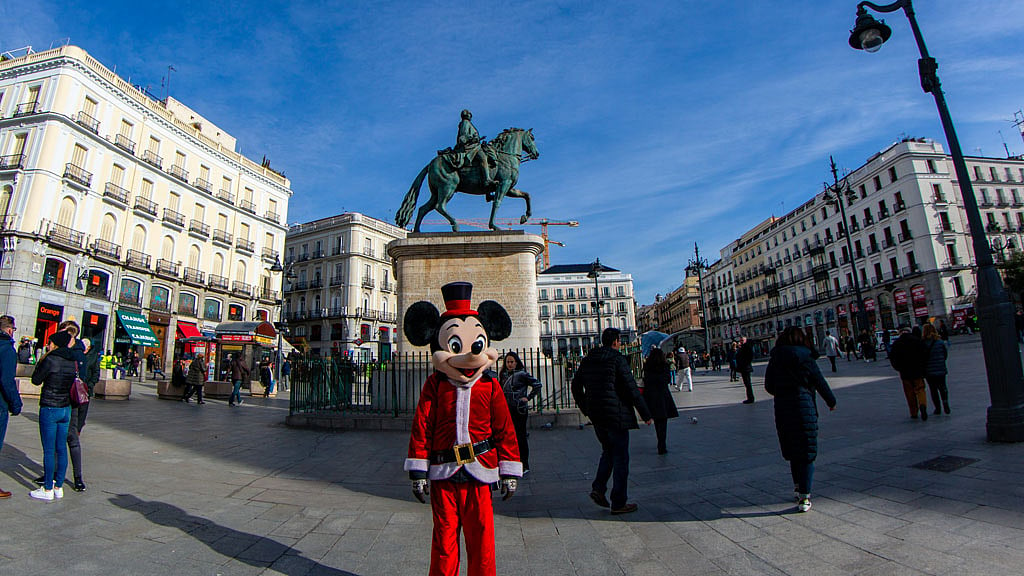
In Spanish, Puerta del Sol means “Gate of the Sun”. When Madrid was surrounded by defensive walls in the 15th century, this was one of the city’s principal gateways. Today, the square is home to the marker of Spain’s geographical centre, known as Kilometre Zero, and is also a fascinating place to observe the diversity of urban life.
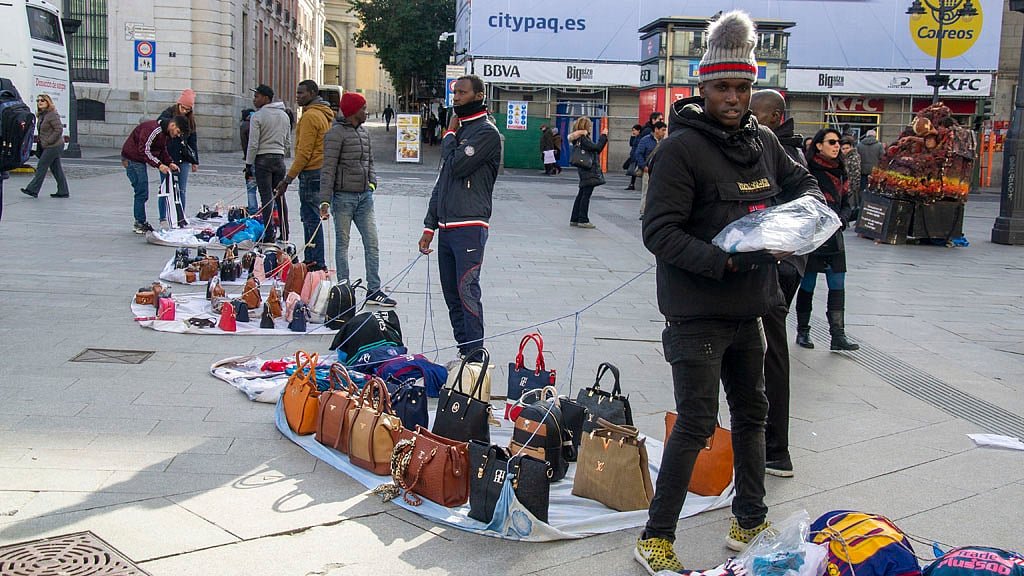
On one side of the square, I noticed undocumented migrants from various African countries selling souvenirs and other gift items to tourists using an unusual method. The hawkers had spread their merchandise over a large piece of cloth, with ropes tied to its four corners. The idea was simple: at the first sign of approaching police officers, they could pull the ropes, gather up all their belongings in one swift movement, sling the bundle over their shoulders and run! It was a striking glimpse of their daily struggle for survival.
Alongside this unusual scene, the square was also a major hub of entertainment. Some performers, covered in paint from head to toe, stood motionless like living statues, amusing tourists and earning their pocket change. Elsewhere, street musicians played guitars and sang beautiful Spanish songs. The entire square was buzzing with energy and life.
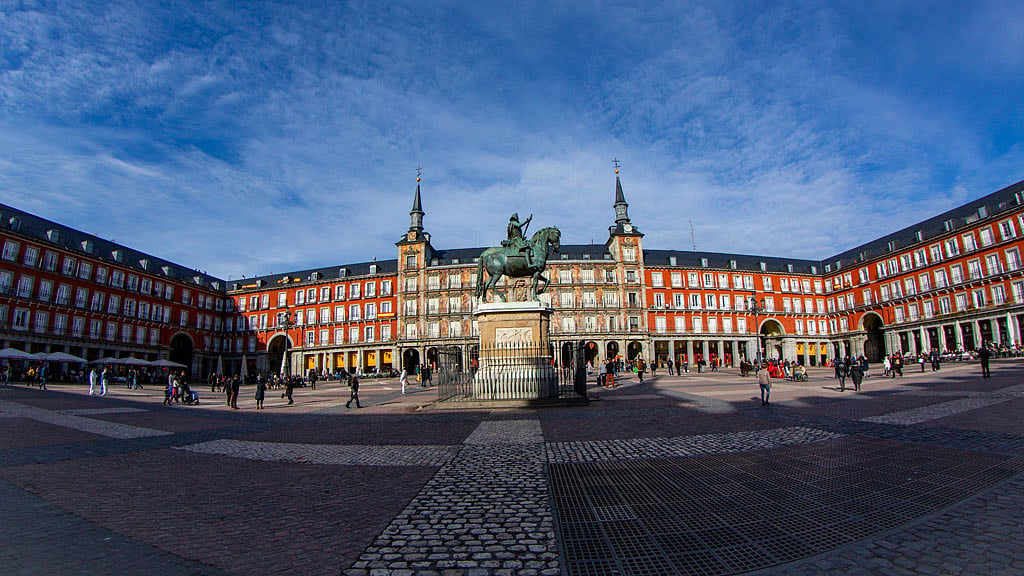
After a five-minute walk from Puerta del Sol, we arrived at Plaza Mayor, one of Spain’s oldest and most historic squares. Towering red-brick buildings surround a vast rectangular open space. Their ground floors feature continuous arcaded walkways, lending the square a distinctly regal appearance. The square was built in the 17th century during the reign of King Philip III. A magnificent bronze equestrian statue of the king stands at its centre. In centuries past, members of the royal family watched public celebrations from the balconies of these historic buildings. Today, we stood in the same square, taking in the atmosphere and imagining the history embedded in its walls.
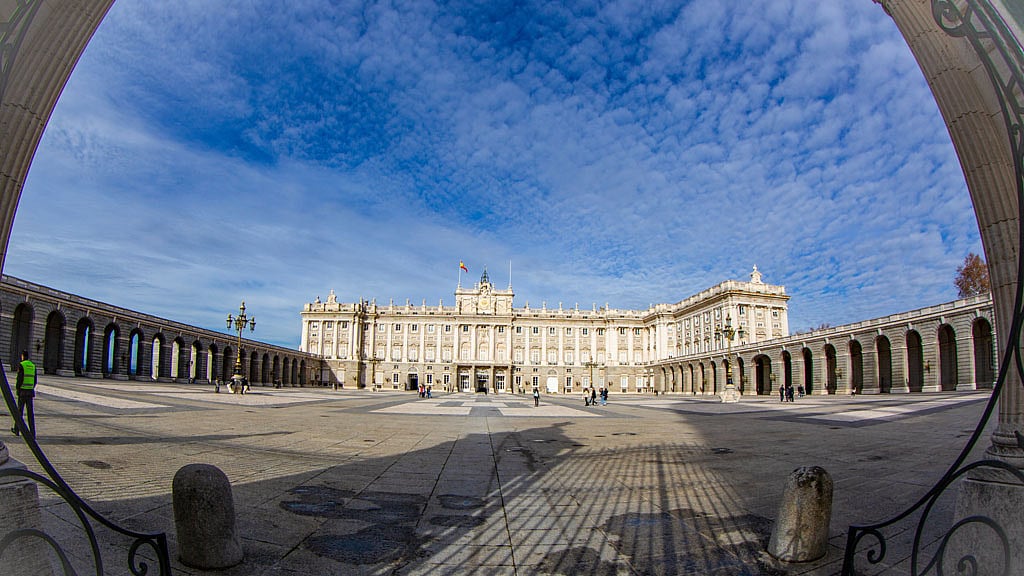
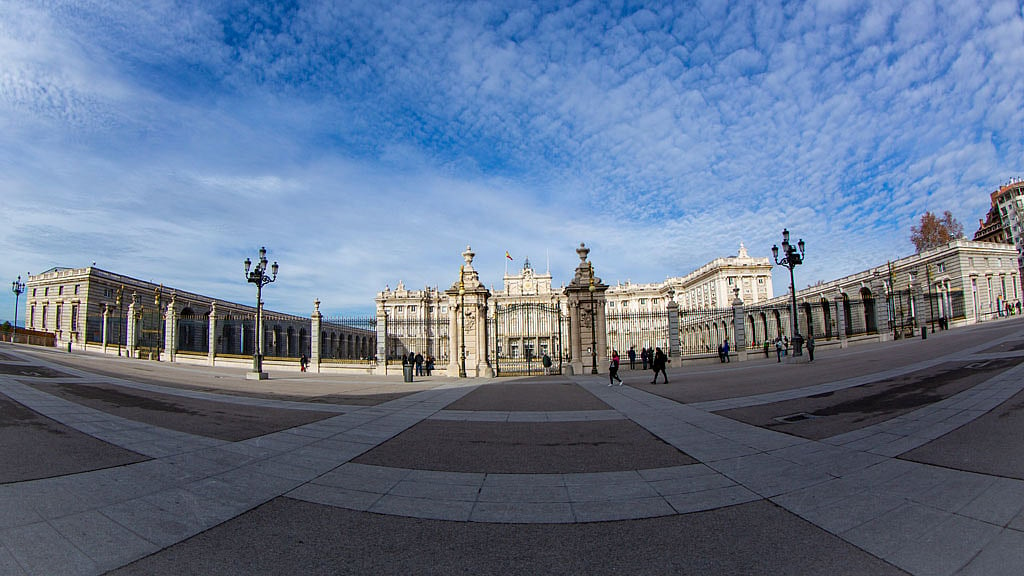
Leaving Plaza Mayor behind, we continued on foot towards the Royal Palace of Madrid (Palacio Real de Madrid), a magnificent symbol of Spain’s royal heritage. It is one of the largest royal palaces in Europe. Its expansive courtyards and breathtaking architecture offer a glimpse of the former glory of the Spanish Empire.
As we strolled through the beautiful gardens adjoining the palace grounds, we came across the striking white-marble Fuente de las Conchas, or the Fountain of the Shells. A little further on, we saw the Fuentes Gemelas, or Twin Fountains. Standing beside these fountains were several beautifully sculpted white-stone statues depicting ancient Spanish kings and queens.
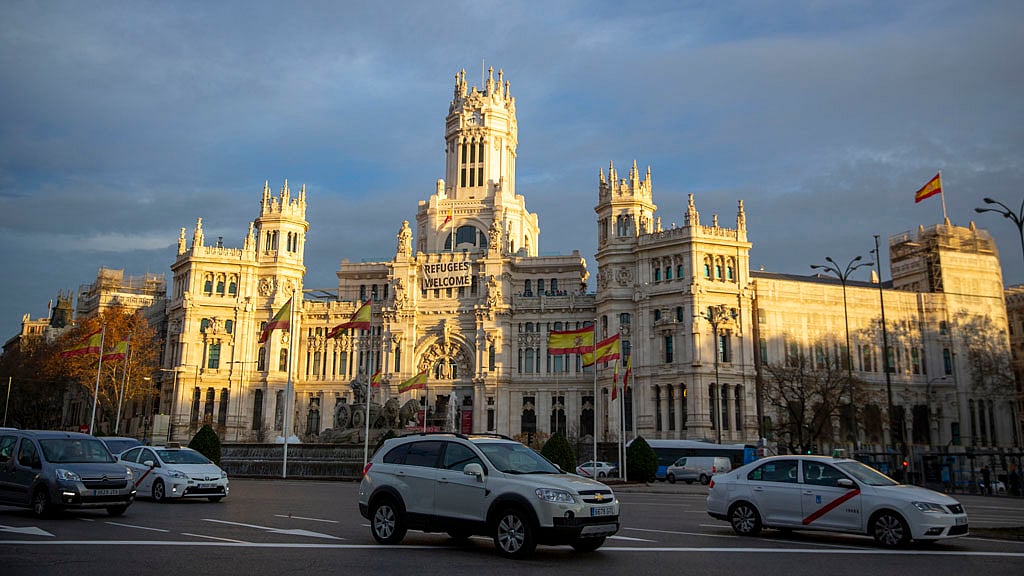
After admiring the royal palace, its exquisite sculptures and fountains, we made our way towards another of Madrid’s iconic squares, Plaza de Cibeles. At the centre of the square stands a magnificent marble fountain depicting Cybele, the Greek goddess. Behind it rises the grand Palace of Communications. Together, they create a truly spectacular sight.
By then, it was well past midday. After walking continuously through so many of Madrid’s squares and streets, we were beginning to feel quite hungry. However, we did not have enough time to sit down for a leisurely meal at a restaurant, as there was still so much more of the city to explore. To save time, we stepped into a nearby McDonald’s. Without much ceremony, we hurriedly finished up lunch and were soon back on our feet. With our hunger satisfied, we felt ready to continue exploring.
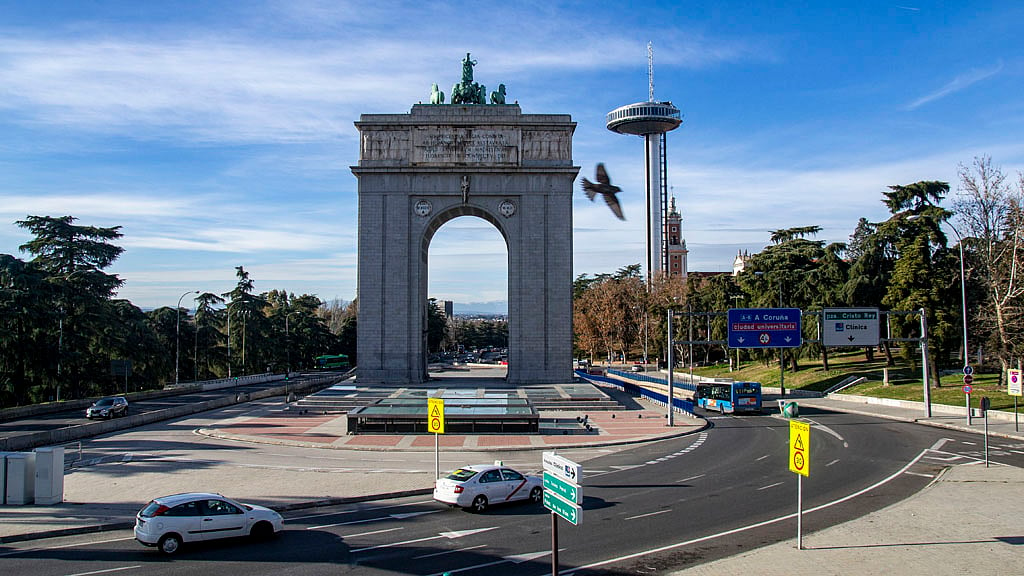
The real beauty of Madrid seemed to unfold layer by layer through its magnificent squares. After enjoying the sights of Plaza de Cibeles, we headed towards the Moncloa district. There, standing tall against the skyline, was the Arco de la Victoria, or Arch of Victory, a monument associated with the Spanish Civil War. This imposing structure serves as a reminder of a dark and turbulent chapter in Spain’s history.
Right beside it stood Faro de Moncloa, Madrid’s famous observation tower. Shimul Bhai had planned to take me to the top of this 92-metre-high tower so I could enjoy a bird’s-eye view of the entire city. I was equally excited about the opportunity to capture some aerial views of Madrid with my camera. Unfortunately, the tower was closed that day and we had no choice but to admire its impressive height from below. My wish to see Madrid from above and photograph its sprawling cityscape would have to wait for another visit.
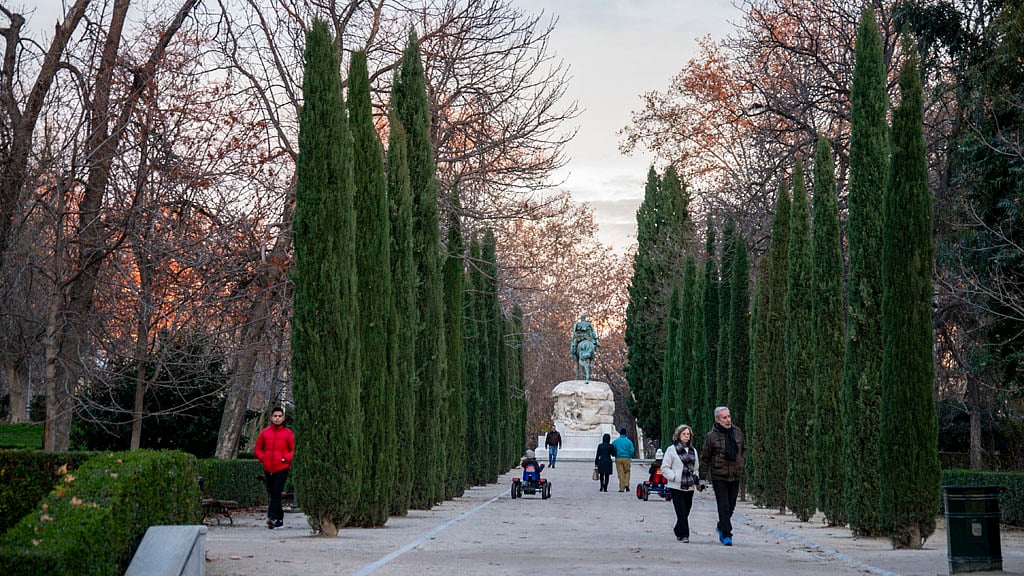
After spending hours walking through Madrid’s grand streets and squares and exploring the Moncloa district, our feet were beginning to weary. Seeking a peaceful place to rest after navigating the crowds of this historic city of concrete and stone, Shimul Bhai took me to Madrid’s most famous green retreat, Parque del Buen Retiro, commonly known as Retiro Park.
In Spanish, the name means “Park of Pleasant Retreat”, a fitting description that reflects its history. The vast park was originally created in the 17th century, during the reign of King Philip IV, as a private retreat for the Spanish royal family. At the time, it was strictly off-limits to the general public. It was finally opened to everyone in 1868, towards the end of the 19th century.
Inside this magnificent royal park, nature seemed to unfold like an enormous canvas. We walked past rows of ancient trees, beautiful sculptures and broad pathways, gradually making our way towards the far end of the park. There, in a relatively quiet and peaceful setting, lay a beautiful lake. Sunlight shimmered on its crystal-clear water, while swans, wild ducks and various other waterbirds, whose names I did not know, swam peacefully in the middle. Some occasionally flapped their wings, climbed onto the banks and pecked at food offered by visitors.
We spent quite some time sitting on a bench in the park. Watching the ducks splash about in the water, we hardly noticed how the pleasant, sunny afternoon in Madrid gradually gave way to evening.
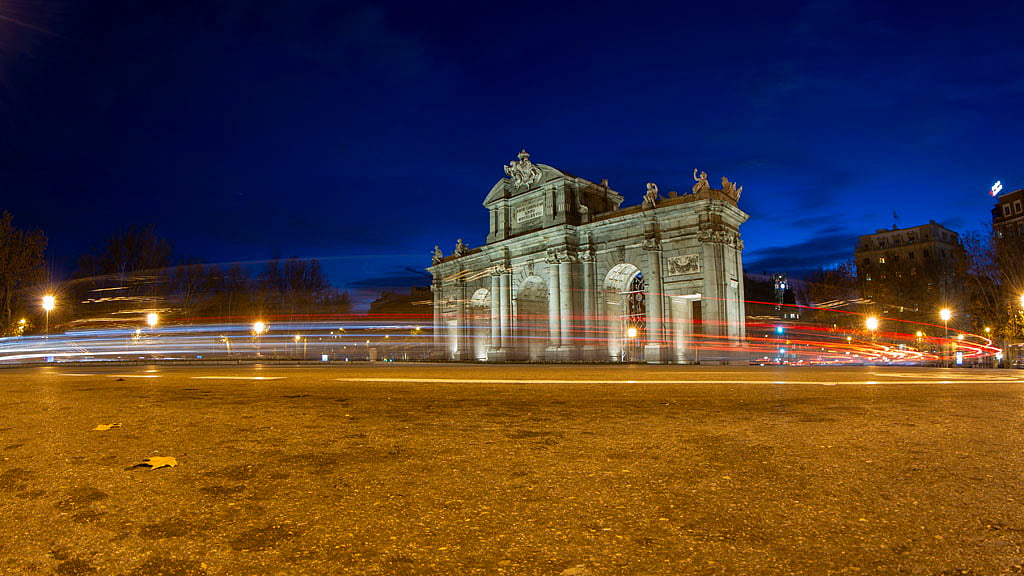
As we left Retiro Park in the enchanting light of dusk, another historic landmark came into view: Puerta de Alcalá. Built in the 18th century, this magnificent gateway once served as one of the main entrances to Madrid from the east. Under the evening twilight, the combination of neon illumination and the soft glow of the fading daylight made the monument look even more spectacular. I took several beautiful photographs of it in that magical light. The grandeur of the historic city, with its centuries-old stone buildings, and the serenity of nature made Madrid feel like a living painting.
After a full day of walking and taking in Madrid’s royal splendour, darkness had completely settled over the city. We returned to Atocha Station and boarded a commuter train back to Alcalá. Although I still felt a little disappointed about not being able to visit the top of Faro de Moncloa, the joy of discovering Madrid on foot had more than made up for it.
With wonderful memories of the day and a little weariness in our bodies, the train carried us back towards our familiar destination in Alcalá de Henares.