Published : 25 Jul 2023, 07:30 PM
Updated : 25 Jul 2023, 06:48 PM


Oppenheimer is an epic in the old-school sense, a vast canvas that transcends the conventional boundaries of genre, moving from courtroom drama to poignant coming-of-age-tale to saga of revenge to gripping thriller. But, at its heart is the enigmatic figure of J Robert Oppenheimer, the inventor of the atomic bomb.
A recent interview revealed writer-director Christopher Nolan’s script was written in the first person. A rare choice, but one that puts the entire film into perspective. Specifically, the unreliable perspective of its lead character. As much as the story is about Oppenheimer, it is also about how he sees himself.
It begins with hubris – the tale of Prometheus stealing fire from the gods and giving it to humanity.
In that opening, the film’s thesis becomes clear. After all, parallels can be drawn to Oppenheimer’s story, but it takes a particular sense of entitlement and self-regard to cast oneself as a mythical figure made to suffer because of their enlightenment and generosity.
It is a classic tale – a man whose relentless quest for progress and answers clouds their judgment. But it is, of course, more nuanced and complicated. Through the lens of Oppenheimer, the narrative accumulates shades of grey, perhaps retroactive in its justifications.
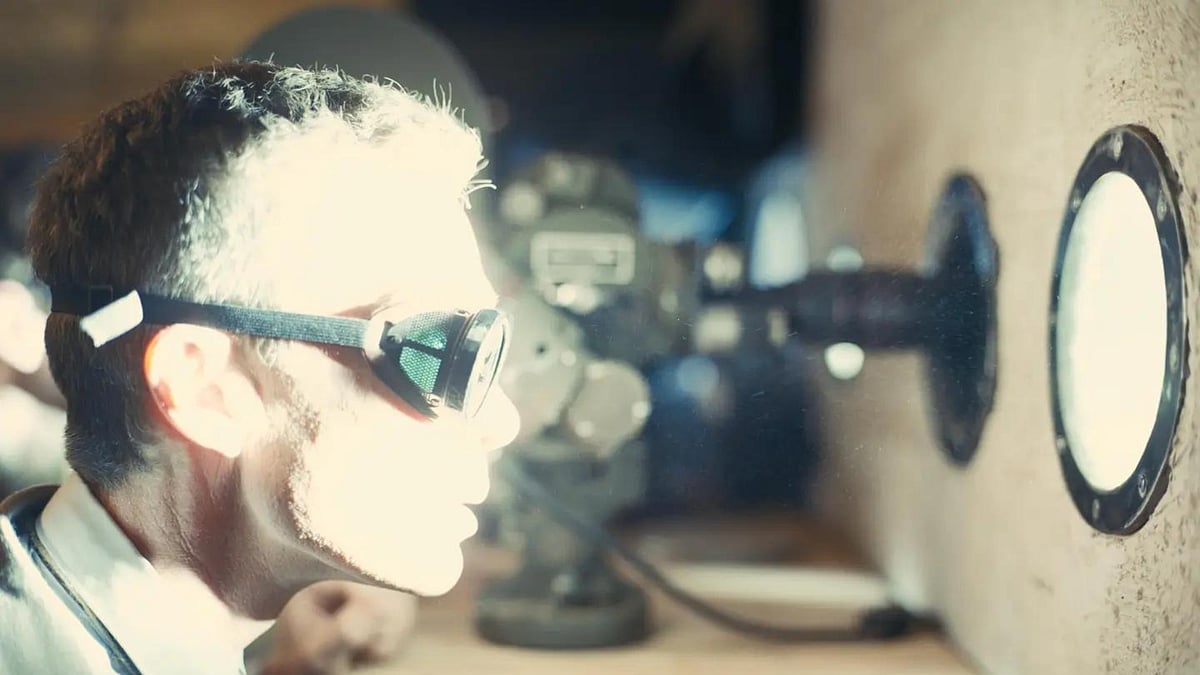
Thankfully, lead Cillian Murphy manages to combine these contradictions into a cohesive and compelling character.
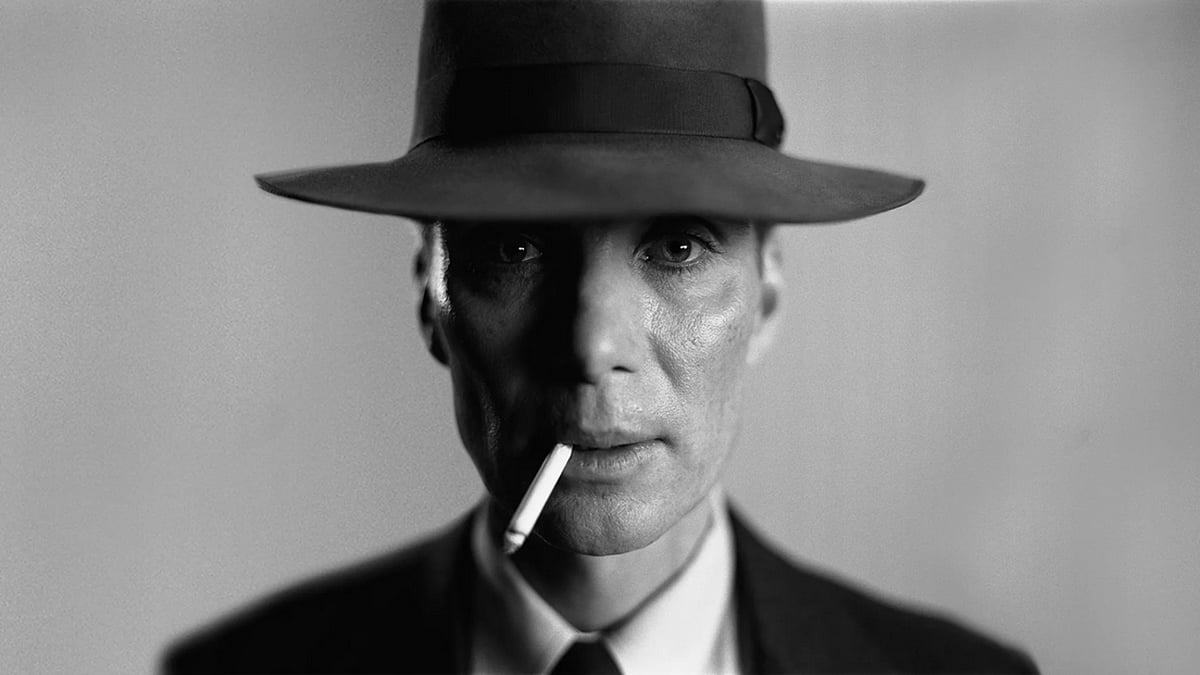
His tour-de-force performance realises the internal struggles of the man’s career. It draws the audience in, eliciting a mixture of both sympathy and disgust. After all, the film takes it as a given that he is a genius but does not shy away from presenting his shallowness in other areas, or his more conflicted and despicable actions. And nearly all of it is found in Murphy’s expressive eyes, which provide a window into the essence of a man who maintains a rigid inexpressiveness in his demeanour.
He is at the centre of the film’s most potent scenes, when Oppenheimer is lost in his own mind, grappling with the immense evil he has unleashed on the world. But, even amid the turmoil, the audience is explicitly informed that Oppenheimer feels no remorse. He feels guilt but his primary motivation is to relieve himself of its burden instead of redressing it.
Murphy is ably backed by standout performances by Emily Blunt and Robert Downey, Jr. Despite the limited screen time afforded to them, they make them count. But the real revelation is Benny Safdie, who stands toe-to-toe with Murphy in portraying a conflicted, layered character.
That character is revealed to the audience not only through the images and sound, but also the potent dialogue, which guides us through the many facets of Oppenheimer.
The film’s unexpected relevance is not lost either. With the spectre of nuclear warfare looming over our modern world, Oppenheimer forces us to confront the moral tightrope we tread between progress and devastation as a species.
Despite all its achievements, the film is not without its problems. While the screenplay is exceptional in its scope, breadth, and ambition, it can also be inconsistent. The female leads are often simplistic, mainly serving to humanise Oppenheimer rather than tell their own stories. The scientific jargon is also difficult to follow. The film eschews overt explanations and can be confusing in the details.
And there are, of course, considerations about the responsibility of making a film about a historical figure without addressing some of the atrocities they were responsible for. The film hints at the massacre of livestock and the seizure of property from Hispanic people for the Manhattan Project’s tests at Los Alamos, but it does little with them. The project’s racism against Hispanic workers also goes unaddressed.
These are not new criticisms of Nolan, who has managed to carve out a space as one of the few auteurs who can make a splash at the box office based solely on his name. His detractors call him a cold filmmaker, slightly callous of his female leads, narrow in his perspective, obsessed with the technical aspects of production, and devoted to his cinematic vision at the expense of the actual film he is making.
No wonder then he was drawn to Oppenheimer. Or that Oppenheimer is a technical marvel with a rapturous background score and sparkling cinematography.
But what sets Oppenheimer apart from a more formal experiment like Tenet is its more human aspect. The haunting sense that the creations of man, no matter how ground-breaking, can never be divorced from their consequences. Even as it plays as a sweeping epic, it feels personal. And that makes it a landmark achievement for Nolan and a brilliant testament to the complex nature of creation and destruction.
This article is part of Stripe, bdnews24.com's special publication focusing on culture and society from a youth perspective.