


Published : 23 Apr 2020, 04:16 AM
Updated : 17 Oct 2022, 11:06 AM


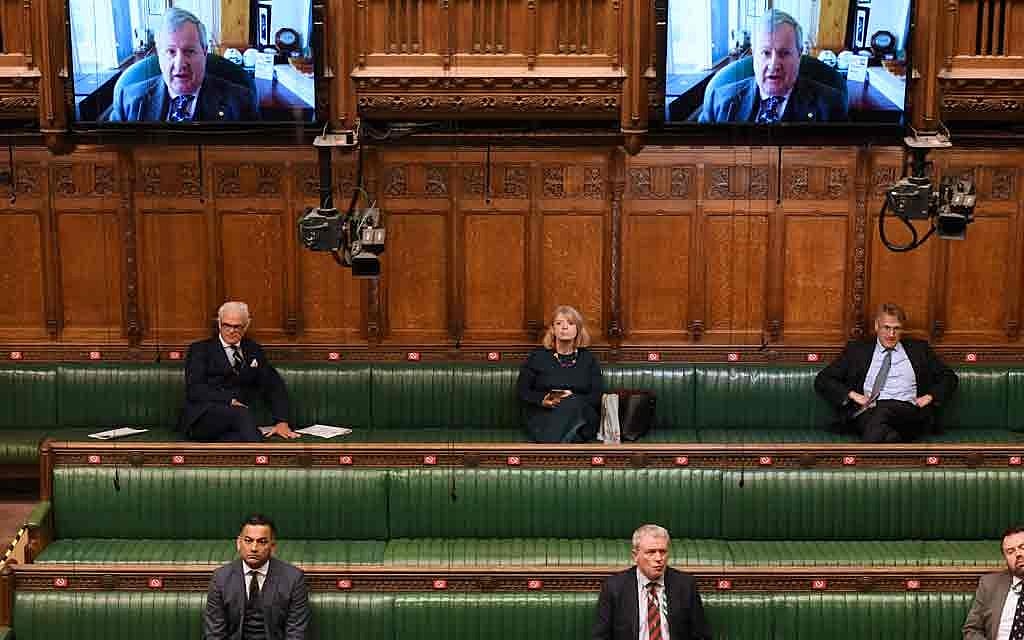
As Britain endures its fifth week of a national lockdown, with businesses shuttered and citizens ordered to stay at home, parliament has returned from an extended Easter break in a very unfamiliar form.
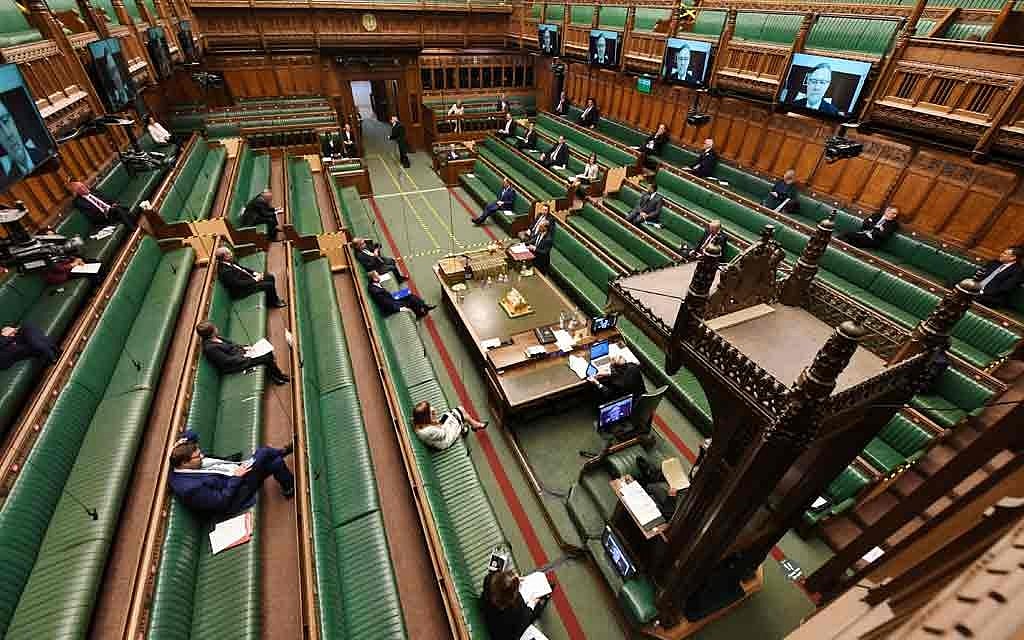
A maximum of 50 lawmakers are physically allowed in the debating chamber, with another 120 permitted to join in via Zoom video conference beamed onto television screens dotted around the walls of the ornate wood-panelled room.
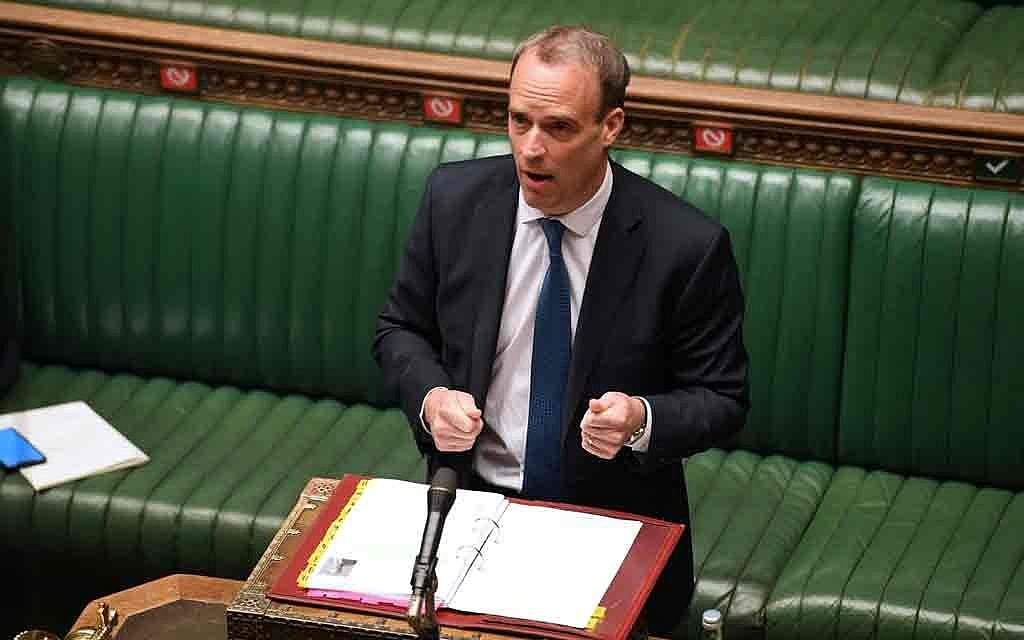
Raab, deputising for Prime Minister Boris Johnson who is recovering from a spell in intensive care with COVID-19, faced questions from lawmakers - absent the usual jeering in the crowded chamber, replaced by an orderly and almost entirely glitch-free interrogation.
Earlier, Speaker Lindsay Hoyle said he had his "fingers crossed" that the new arrangement would work - and it mostly did.
Britain's Foreign Secretary Dominic Raab speaks during the weekly question time debate at the Parliament, during the hybrid parliament session amid the coronavirus disease (COVID-19) outbreak, in London, Britain, April 22, 2020. ©UK Parliament/Jessica Taylor/Handout via REUTERS
Lawmakers, dressed formally in line with the Commons' usual dress code, quizzed Raab from their homes, showing off an array of artwork, wallpaper and bookcases. One later posted a picture of himself asking a question from a tablet computer balanced on a box, supported by a pair of training shoes.
Raab spoke from the debating chamber, where a handful of other lawmakers sat on the green benches, observing social-distancing markers taped on the carpet. The leader of the opposition Labour Party Keir Starmer also attended in person.
Johnson watched proceedings from his Chequers country residence where is is convalescing, his spokesman said.
The closest brush with technical disaster was when one lengthy question was inadvertently cut short, leaving lawmaker Peter Bone's face animatedly reaching the climax of his interrogation on screen without audio.
General view during the weekly question time debate at the Parliament, during the hybrid parliament session amid the coronavirus disease (COVID-19) outbreak, in London, Britain, April 22, 2020. ©UK Parliament/Jessica Taylor/Handout via REUTERS
Prior to the session, lawmakers had expressed concerns that the choreographed question session would blunt their ability to skewer ministers with unexpected follow-up questions.
Parliament later approved an expansion of the business the hybrid parliament could consider to include legislation. It also agreed to allow remote voting for the first time ever - although the way in which this would be conducted has yet to be agreed and no votes are expected until it has been.
Jacob Rees-Mogg, the government's leader in parliament, said the earlier hybrid session had gone "remarkably smoothly."
"Rapid change inevitably comes with risk, but these are exceptional times," he said.













