Published : 05 Oct 2026, 09:46 PM
Updated : 05 Oct 2026, 09:46 PM


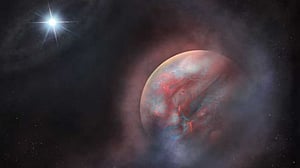
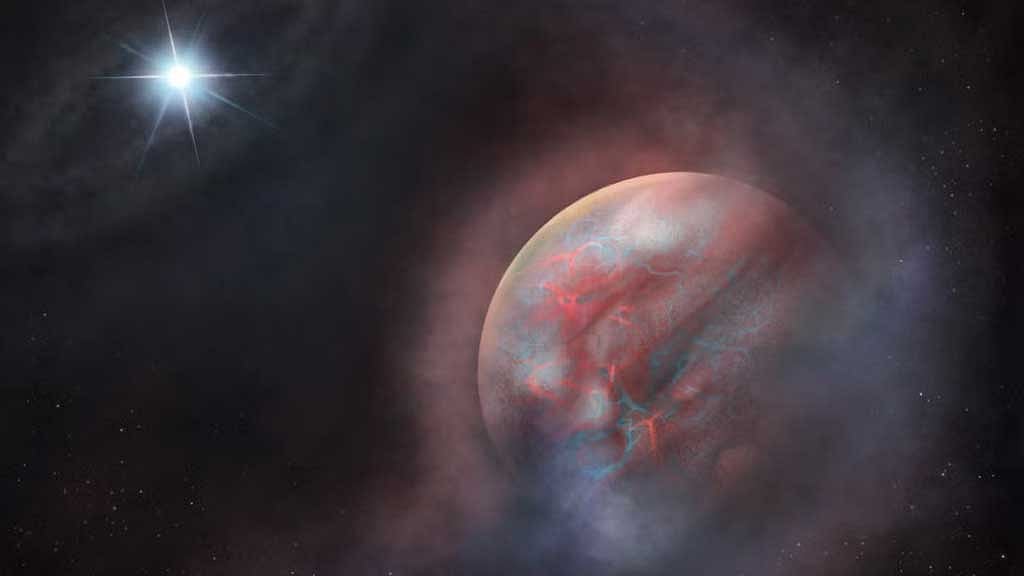
Astronomers believe they have discovered a planet unlike any seen before -- one formed from the debris of the very star it now orbits.
The world, described as a "second-generation planet", appears to have coalesced from material cast off by a dying star as it collapsed into a white dwarf -- the dense, cooling remnant left behind when a star runs out of fuel, reports The Independent.
"It's a bit like finding a planet that has risen from the ashes of the very star it once orbited," Jamie Williams, a PhD student at the University of Warwick who led the research, was quoted as saying by The Independent.
The discovery centres on a white dwarf named HS 0209+0832, which displayed an unusual chemical signature -- including large quantities of a material called niobium, produced as stars die, that has never previously been detected in a white dwarf.
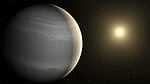
Researchers believe the signature is produced as the white dwarf draws in material from the outer atmosphere of the nearby giant planet, which is slowly being stripped away by radiation.
Data from Nasa's TESS telescope revealed a faint, repeating signal every 4.4 days, consistent with a Jupiter-sized planet in close orbit.
Planets of this type had previously been theorised around pulsars, but never confirmed around a white dwarf, according to The Independent.
Since white dwarfs are far more common in the universe, the find suggests such reborn worlds may be more widespread than previously thought.
The findings are published in the journal Nature Astronomy.