Published : 18 Jul 2024, 07:40 PM
Updated : 28 Aug 2026, 01:11 AM


Japanese scientists have devised a way to attach living skin tissue to robotic faces and make them "smile," in a breakthrough that holds out promise of applications in cosmetics and medicine.
Researchers at the University of Tokyo grew human skin cells in the shape of a face and pulled it into a wide grin, using embedded ligament-like attachments.
The result, though eerie, is an important step towards building more life-like robots, said lead researcher Shoji Takeuchi.
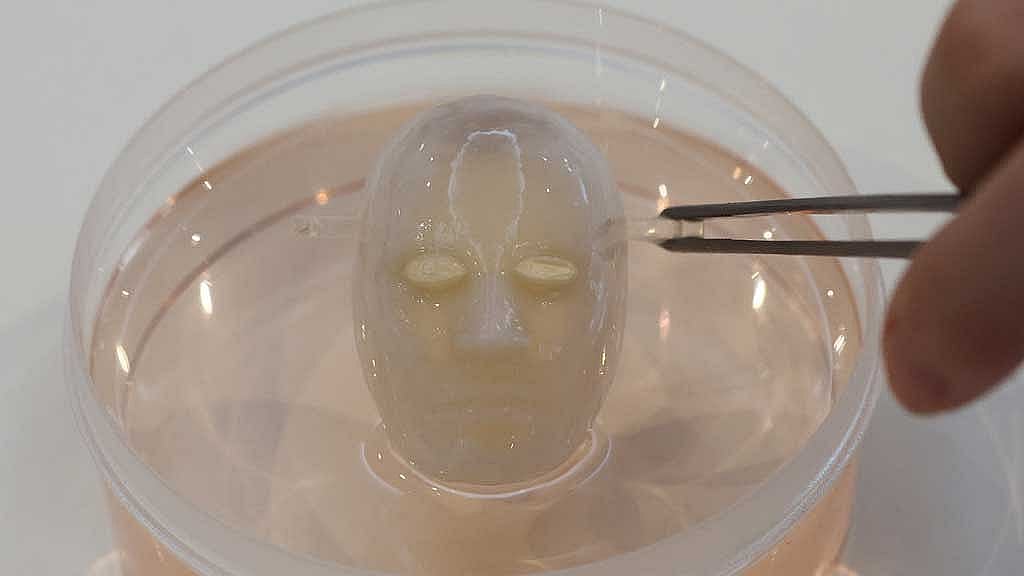
"By attaching these actuators and anchors, it became possible to manipulate living skin for the first time," he added.
The smiling robot, featured in a study published online, last month by Cell Reports Physical Science, is the fruit of a decade of research by Takeuchi and his lab on how best to combine biological and artificial machines.

Living tissue has numerous advantages over metals and plastics, Takeuchi said, ranging from the energy efficiency of brains and muscles to skin's ability to repair itself.
Looking ahead, the researchers aim to add more elements to the lab-grown skin, including a circulatory system and nerves. That could lead to safer testing platforms for cosmetics and drugs absorbed through the skin.
It could also produce more realistic and functional coverings for robots. Still, there remains the challenge of ridding people of the strange or unnerving feelings evoked by machines that fall just short of being entirely convincing.

"There's still a bit of that creepiness to it," Takeuchi acknowledged about the robot. "I think that making robots out of the same materials as humans and having them show the same expressions might be one key to overcoming the uncanny valley."