Published : 02 Sep 2018, 12:58 PM
Updated : 19 Oct 2022, 02:18 PM


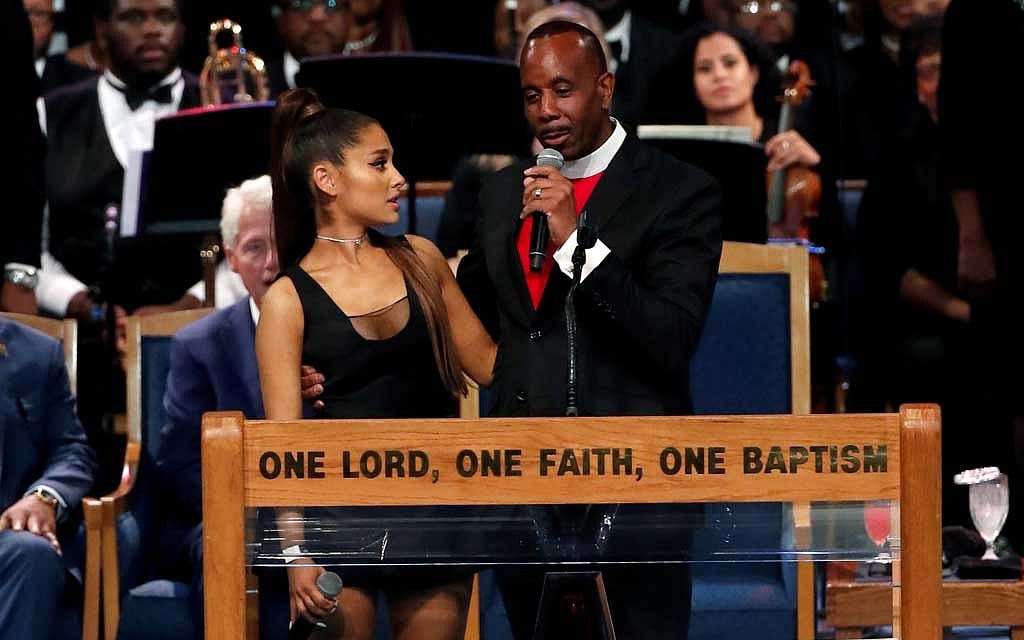
Bishop Charles H Ellis III of the Greater Grace Temple was criticised by many social media users for appearing to touch the side of the Grammy-nominated artist’s breast after she sang at the funeral in Detroit on Friday.
Some tagged photos online with the hashtag #RespectAriana, riffing on the title of one of Franklin’s biggest hits.
“It would never be my intention to touch any woman’s breast. ... I don’t know, I guess I put my arm around her,” Ellis told the Associated Press after the service. “Maybe I crossed the border, maybe I was too friendly or familiar but again, I apologise.”
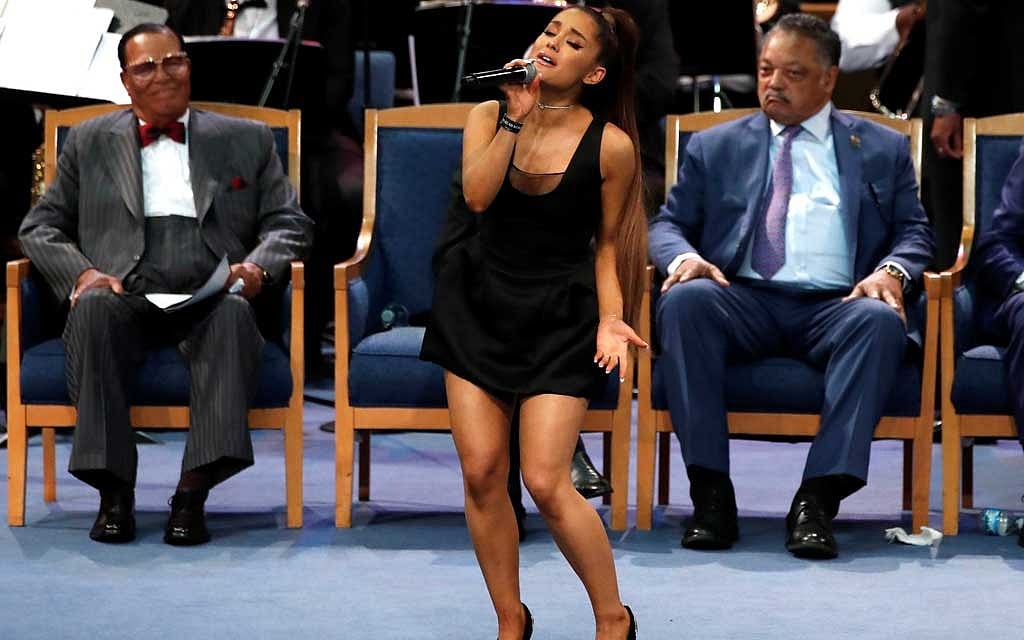
Singer Ariana Grande performs at the funeral service for the late singer Aretha Franklin at the Greater Grace Temple in Detroit, Michigan, US, Aug 31, 2018. Reuters
Grande, whose songs include “Problem” and “No Tears Left to Cry,” sang Franklin’s hit “Natural Woman” at the funeral.
Among those seated behind Grande as she performed were former President Bill Clinton, civil rights leaders Jesse Jackson and Al Sharpton and Nation of Islam leader Louis Farrakhan.