Published : 01 Aug 2026, 03:39 AM
Updated : 08 Sep 2026, 09:29 AM


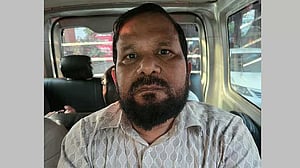
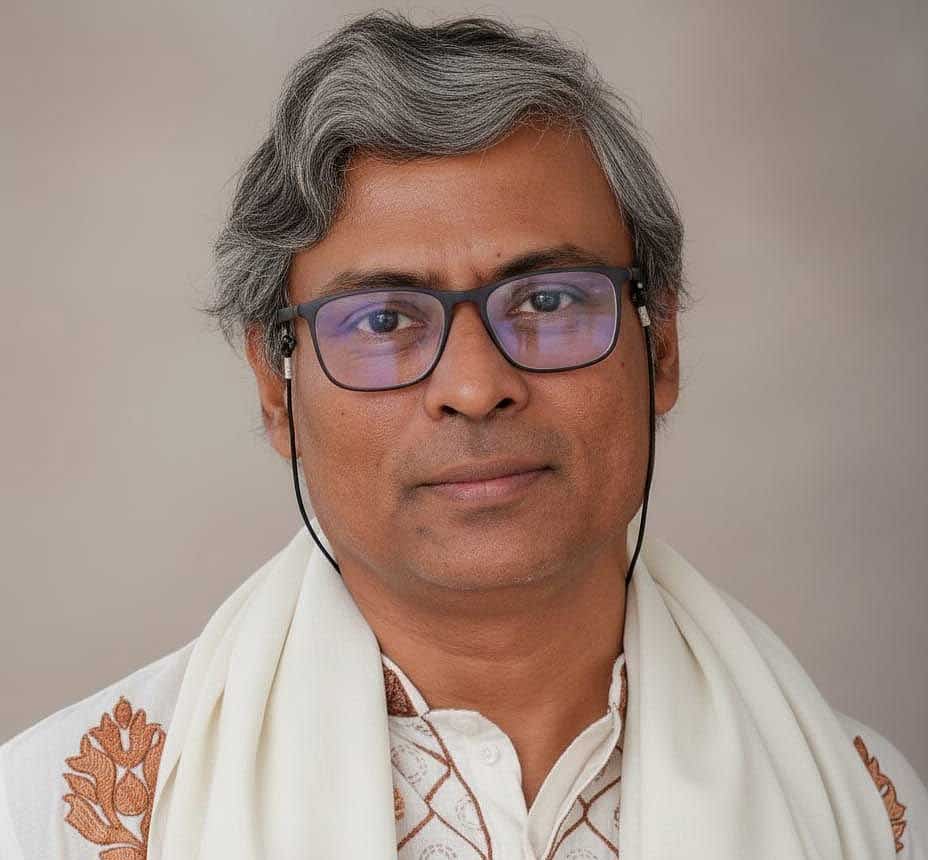
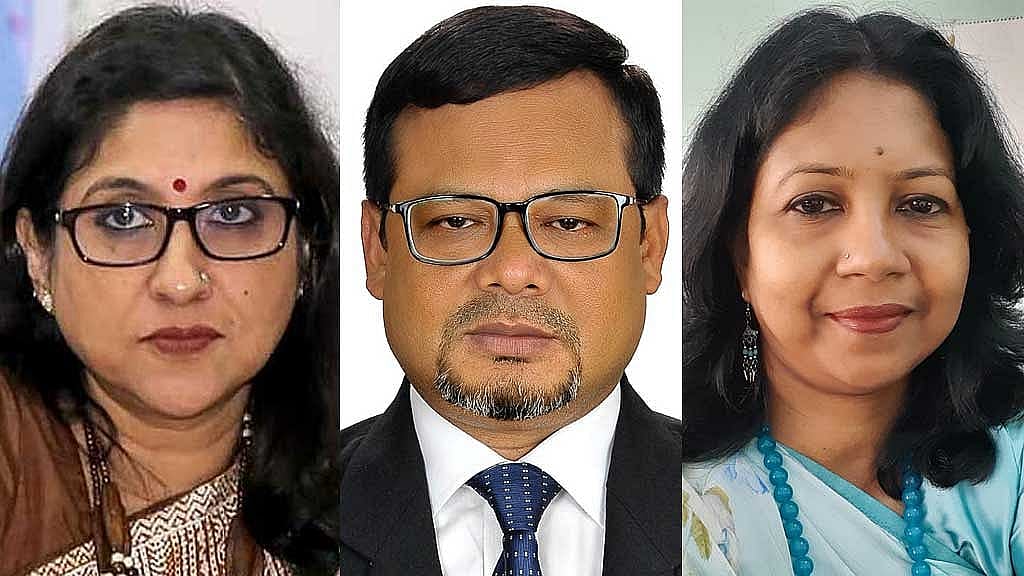
The recent suspension of several prominent faculty members at the University of Dhaka, including Prof Sadeka Halim and Prof Abdul Muhit, has sent a chill through the academic community. On July28, the university administration cited grounds of “moral turpitude” and conduct “contrary to the spirit of the July Uprising” as the reasons for their suspensions. On the surface, these actions appear to be a righteous exercise in administrative accountability. Being a professor does not prevent anybody from being punished for wrongdoings. However, a closer examination of the facts, the legal framework governing our autonomous universities, and the opaque nature of these proceedings reveals a deeply troubling reality: behind the rhetoric of moral refinement lies a dangerous operation of political reprisal.
The central problem facing higher education in Bangladesh today is not a conflict between accountability and impunity, but the substitution of due process with political expediency. When an autonomous institution relies on broad, subjective categories - such as actions “contrary to the spirit” of a political movement without publishing specific factual findings or clear statutory references, it ceases to function as a legal and intellectual enterprise. It transforms into an instrument of executive retribution.
A university is fundamentally distinct from social media or political rallies, where broad allegations can instantly construct public guilt. A university is an institution defined by statutory rules, evidence, and rigorous procedural safeguards. Under the University of Dhaka Order, 1973, academic staff are endowed with specific rights and protections designed precisely to insulate the faculty from political winds and administrative high-handedness.
To understand why these recent actions are so troubling, one must ask: What constitutes legitimate institutional accountability? It requires specific factual allegations, a clear evidentiary standard, statutory grounding, and a right to defence. When these questions remain unanswered, public scepticism is inevitable. The concern raised across academic circles is not a defence of partisan loyalty, but a demand for fundamental fairness.
Consider the cases of Prof Sadeka, who held the position of vice-chancellor at Jagannath University or Prof Muhit, a member of the Dhaka University proctorial team during the volatile protests of 2024. During that period of intense unrest, administrative posts like these were charged with the difficult task of maintaining campus safety and mediating conflicts. Muhit himself sustained physical injuries while actively attempting to shield students from violence. Yet, under the sweeping actions of Jul 28, he finds himself sanctioned and suspended. Rather than evaluating his actions based on documented individual conduct and administrative duty, he has been treated for holding of an administrative post under the previous regime as evidence of culpability.
This approach creates a severe, long-term governance crisis. If administrative service under one regime leads to professional ruin under the next, the most qualified scholars will refuse to accept administrative assignments, leaving these roles to political opportunists. By equating an administrative position with political complicity, the university penalises scholars for fulfilling their job responsibilities. Unless an administrator personally committed illegal acts, ordered violence, or engaged in corruption-claims that must be proven through transparent investigation-holding an official post does not constitute a crime.
Furthermore, we cannot ignore the legal hypocrisy of the current purge. The University of Dhaka Order, 1973, was promulgated in the aftermath of the Liberation War to grant our premier public universities unprecedented autonomy from direct executive control. A core principle embedded within this order is the recognition of political rights. Unlike civil servants, university faculty possess the statutory right to hold, express, and act upon political convictions. For example, the current vice-chancellor of the University of Dhaka is an open affiliate of the ruling Bangladesh Nationalist Party. His right to hold those political convictions is protected under the 1973 Order. This legal reality highlights a clear contradiction. If a BNP-aligned academic can hold the highest executive position without their political affiliation being deemed “conduct unbecoming”, then an Awami League-aligned academic cannot be suspended solely on account of their political beliefs. Even if we consider the government directive to ban the Awami League, it has to be reminded that they were part of the party when it was legitimate!
The issue is not whether one agrees with the Awami League or the BNP. The issue is whether rules apply equally to all academics, regardless of who holds state power. When political alignment with the ruling party grants institutional protection while alignment with the former government results in suspension, the rule of law is replaced by political power.
This is actually part of a broader, troubling trend: the growing bureaucratisation and state encroachment upon public higher education. We see this in the recent appointment of a career civil servant as treasurer of a newly established public university. These positions are traditionally filled by senior professors who understand research and academic culture. Inserting administrative bureaucrats into senior posts makes universities under direct state control, undermining the autonomy envisioned by the 1973 Order.
If the University of Dhaka is to recover its standing and preserve its academic integrity, it must break the cycle of political retribution. We must commit to fundamental reforms: mandatory due process with detailed charge sheets and independent inquiries; the formal separation of administrative duty from political liability; a stop to the appointment of civil servants to executive academic roles; and the consistent protection of political rights for all faculty members, regardless of which party is in power.
The suspensions of Jul 28 serve as a critical test for the future of public higher education in Bangladesh. When universities replace statutory evidence with political assumptions, the damage extends far beyond the individuals targeted. It erodes the credibility of university degrees, discourages scholars from leadership roles, suppresses critical inquiry, and degrades our academic reputation. If Bangladesh is to build a modern, democratic, and intellectually vibrant society, its premier public institutions must lead by example. Justice must not only be done; it must be seen to be done through clear procedures and the equal application of the law. Only by recommitting to due process and defending academic independence can we preserve our universities as centres of free, critical, and rigorous inquiry.
[AKM Khademul Haque is a professor in the Department of Islamic History & Culture at the University of Dhaka]