Published : 10 Jun 2015, 12:12 AM
Updated : 19 Oct 2022, 06:48 PM


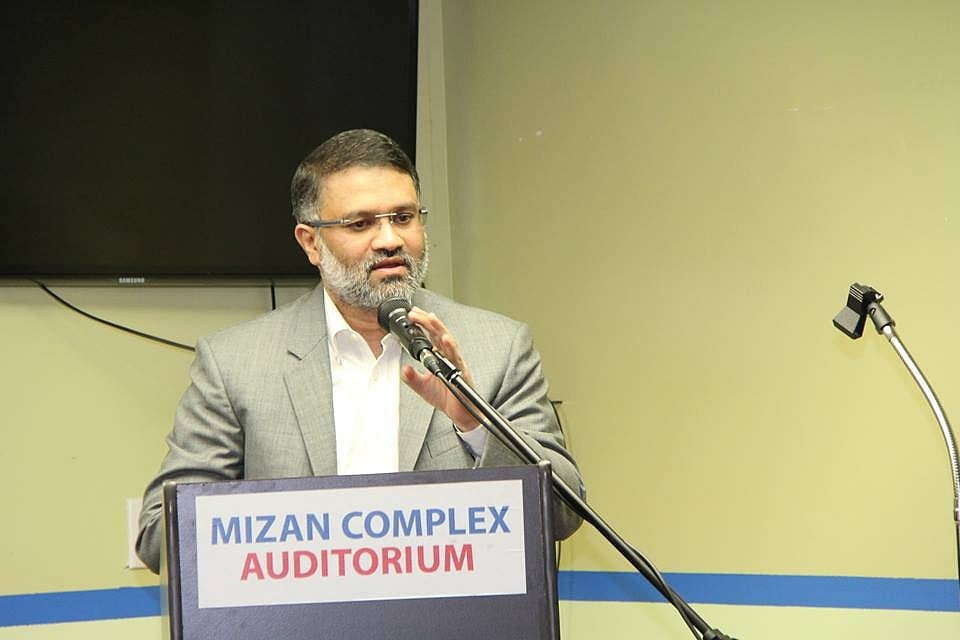
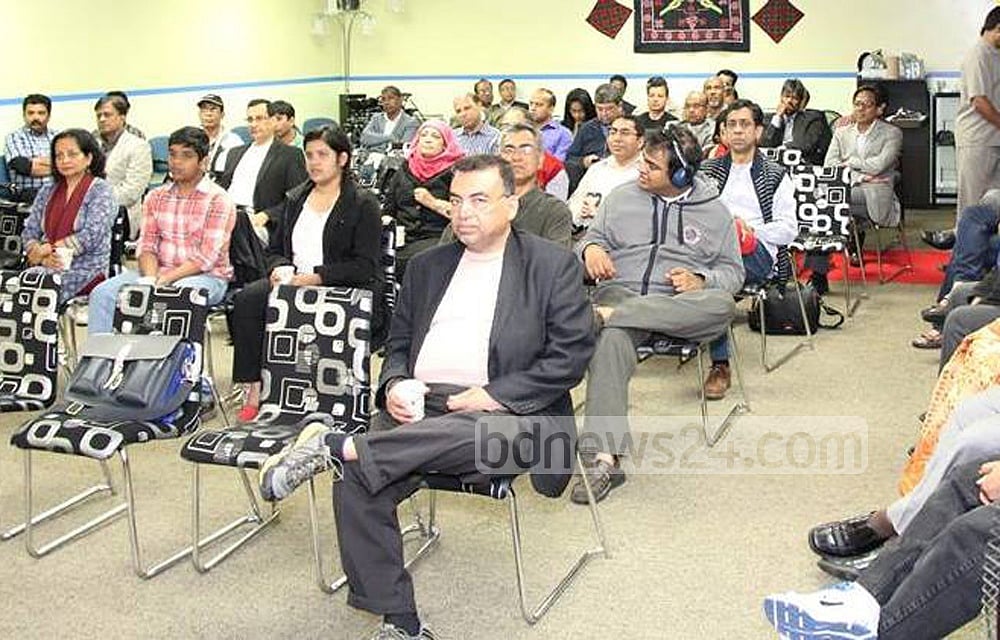
“No. We are not at all neutral. We do take side. We are biased towards readers,” the internet newspaper’s Editor-in-Chief Toufique Imrose Khalidi said in reply to a reader’s question.
“If you talk about corporate culture, then our inclination is towards the consumers. We have another avowed partiality. That is towards the Liberation War of 1971.”
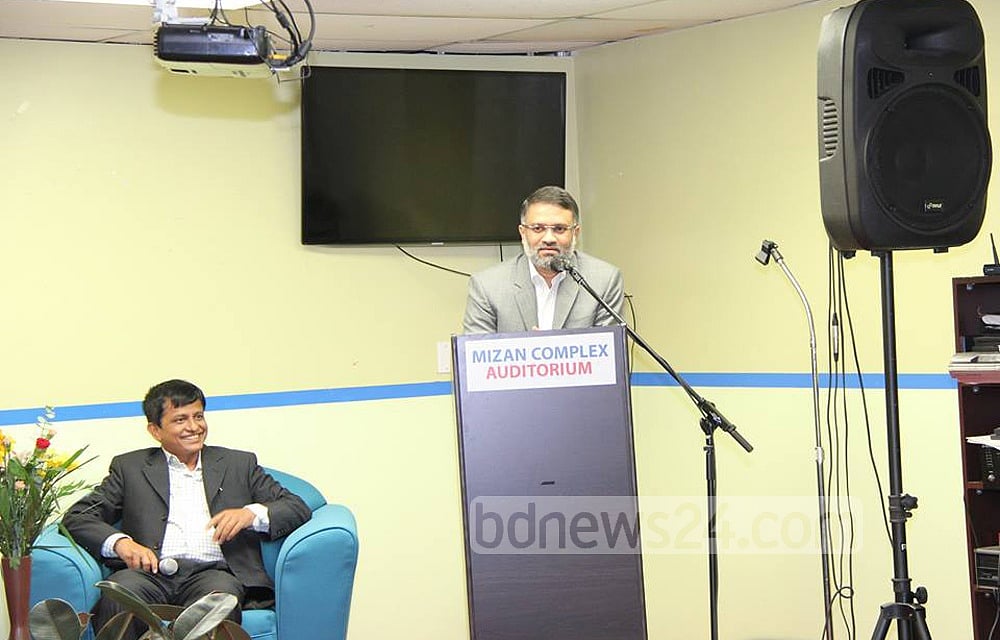
He was interacting with the Bangladeshi diaspora at the Mizan Complex Auditorium in Toronto’s Danforth on Sunday evening.
“Our stand is very clear. We publish news objectively without any prejudice,” he asserted.
Chief Editor of ‘Notun Desh’ Shaugat Ali Sagor moderated the programme, which was, by and large, a question-answer session.
The participants asked Khalidi on subjects ranging from the Bangladesh media, role of bdnews24.com, future prospects of Bangladesh, and the role media in identifying the killers of journalist couple Sagar-Runi.
The barrage of questions turned the programme into “Editor in readers’ court” of sorts.
Welcome addresses were delivered by chief of a local Bangla television channel Sajjad Ali, writer Akhtar Hossain, writer-researcher Iqbal Karim Hasnu, former student leader Mahabub Alam and freedom fighter Md Ilias Mia.
Vote of thanks was given by former student leader Minara Begum.
When asked how much freedom the media enjoyed in Bangladesh, the bdnews24.com chief editor said, “Many are vague and ignorant about media freedom.”
“Freedom of the press belongs to the people. It lies in the media’s success to reflect the views of the people.”
“In Bangladesh, media freedom is misconstrued as a combination of freedom of owners of media houses, their interests, political interests and many other such compulsions.”
“In a country like Bangladesh, it at times, becomes difficult to explain the real meaning of freedom of the media.”
“Freedom of the media depends on professionalism, interests of owners and commitment towards the readers,” he said.
“ bdnews24.com was the only media organisation that did not publish those reports. During the two years of the military-controlled caretaker government rule, never for once did Bdnews pay heed to any ‘order’ of those people in uniform,” he pointed out.
While stating that, in Bangladesh, many fabricated news were being published with attribution to anonymous sources, he highlighted bdnews24.com’s news publication guidelines.
“Breaking away from the common practice, bdnews24.com adopts ‘true source theory’. Bdnews rarely publishes report quoting anonymous sources. The source is mentioned in every report,” he said.
“If at any time a news is published without naming the source, it is done after gathering evidence to establish its veracity,” he added.
In response to the allegations that the media failed to play a proper role in identifying the killers of Sagar Sarowar and Meherun Runi, Toufique Imrose Khalidi said before blaming the media, one should first consider the jurisdiction of the media’s functions and its powers.
“Criminal investigation is the only way to probe any murder. The media neither has that power nor the capacity.
“Even the law of the country does not allow that. This is purely the prerogative of the law-enforcing agencies,” he said.
“Media can only highlight the lapses in their (law-enforcing agencies) functioning. In the Sagar-Runi murder case, too, media played that role.”
While mentioning his personal relationship with journalist Sagar Sarowar, he said, “The failure to solve the brutal murder case only makes us apprehensive about our own security.
“Not only the Sagar-Runi case, there are many other murder cases in Bangladesh that remain unresolved. Questions need to be raised about them too.”
A reader pointed out that in many Western countries, help was taken from media reports in investigating a crime, but that did not appear to happen in Bangladesh.
Taking a cue from this observation, the chief editor said, “The logistics support that the media and media persons get in Western countries is not available in Bangladesh.”
When asked about what roles TV channels were playing in the growth of the media, he said, in most of the cases, TV licences were given to unprofessional and incompetent people.
“Politicians want to see the media as a weak institution and that is why they give licences to incompetent people. But, ultimately, that does not help politicians.
“During the Khaleda Zia regime, licences were given to incompetent people on political considerations. But those media houses did not serve her political interest. Same thing is happening during the Awami League regime.”
Asked to give his take on the recent struggle for control of the National Press Club, Khalidi said it had nothing to do with democracy or the lack of it.
He further said that many leaders of the Press Club had not written any report, article or even commentary in last ten years.
On the standard of the media in Bangladesh, he said, “Bangladesh’s media ecosystem changing. People try to get news even walking, running. Eighty percent of the people access news on their smart phones. So, the style of reporting is also changing.”
“If professional skills of people working in the media are not enhanced, it will be hard to survive this wind of change.”