Published : 31 Jul 2024, 08:17 AM
Updated : 28 Aug 2026, 01:11 AM


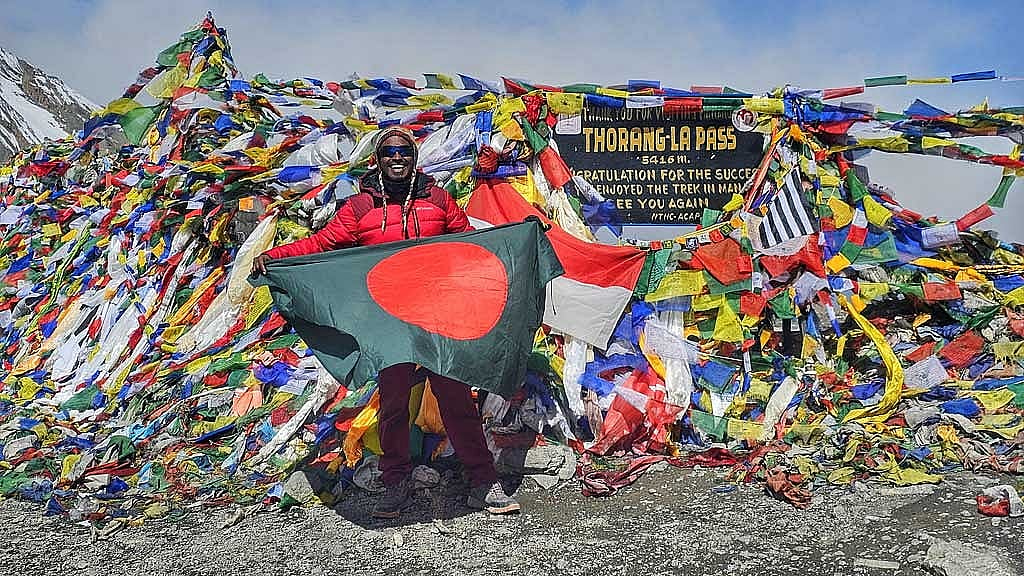
Vlogger Shahadat Hossain, who creates and posts travel-related videos on his page and channel, has seen his activities come to a halt due to slow internet and the ongoing shutdown of social media platforms after deaths in recent quota reform protests.
The travel vlogger’s income from video content has also dried up.
With his Facebook page 'Backpacker Shahadat' boasting 115,000 followers and his YouTube channel having 5,000 subscribers, Shahadat began vlogging in 2019 after working as a tour guide since 2016.
He has created content from various locations, including Bandarban, Rangamati, and Khagrachhari, as well as international destinations in India, the Maldives, Nepal, Bhutan, Sri Lanka, Vietnam, and Malaysia.
Not only does he earn from new content, but sharing old content on social media boosts his income.
He has been unable to share any content in recent days, resulting in a loss of income.
With the internet shutdown, he has faced a significant financial setback.
“I used to earn about $100 per month from views. Recently, some of my videos had gone viral, but the internet and social media shutdown prevented me from sharing content,” said Shahadat.
“I’ve lost $150 during these days.”
He explained that a 10-minute video with one million views typically earns about $100, while shorter videos earn $30-$35. If views drop, earnings can decrease to just $2-$3.
Shahadat said if the internet and social media platforms fully resume, engagement with content might improve within a month.
“However, a month’s worth of content, time, and money have all been wasted."
In the past two years, Shahadat has travelled to Nepal with mountaineers, creating video content at various locations, including the Everest and Annapurna Base Camp.
Recently, he visited Malaysia and returned to the country amid the curfew imposed due to the quota reform movement.
Shahadat said he could not access online banking or SIM roaming, adding, “If I had relied on online services, I wouldn’t have been able to get back home.”
On Jul 17, mobile internet services were suspended nationwide after the platform of the quota reform movement, the Anti-Discrimination Student Movement, called for a 'complete shutdown' programme, leading to widespread clashes and violence.
As the situation worsened, broadband internet services were also suspended.
According to Zunaid Ahmed Palak, state minister for ICT, the nationwide internet shutdown occurred because cables belonging to various internet service providers on the road were damaged when a fire broke out at the Disaster Management Building in Mohakhali.
Several data centres were also affected.
With both mobile and broadband internet services suspended, customers faced severe difficulties with mobile financial transactions and recharging prepaid electricity and gas cards.
In some areas, ATM booths also shut down.
E-commerce, the apparel sector, and port operations also came to a standstill.

Internet-based news services were paralysed as well.
Broadband internet was restored on the night of Jul 23, and mobile internet was reopened on Jul 30, but Facebook, WhatsApp, and TikTok remain unavailable.
This ongoing issue continues to affect vloggers who are unable to update their YouTube channels due to slow internet speeds.
Shihab Uddin Riyad, a travel vlogger and freelancer, faces similar challenges.
He runs a YouTube channel called 'Shihab Gahin' with 94,000 subscribers. His content has accumulated nearly 2.5 million views.
He started the channel about five years ago and also creates content for various firms.
He said the internet shutdown, slow speed, and Facebook outage have affected his income, and he anticipates further losses in the future.
Content creators are struggling as they are unable to follow the rules for regularly posting content to increase their reach on YouTube, Facebook, and Instagram.
Mohammad Mehedi Masud, team leader of the Digital Advertising Operations at SEBPO, said: “If a successful trafficker cannot view content or read blogs, the page’s brand endorsement will suffer. “

“With a lack of traffic and viewers for a long time, the page’s ‘driven sales’ will also drop to zero.”
“When a visitor successfully navigates the page and completes all the steps to obtain information or services, it counts as successful traffic.”
“In the current situation, any money spent on payments, boosts, or SEO will result in a total loss,” he added.
Masud also noted that due to the lack of reach, investments in the page's campaigns or offers will be wasted, and the loss will remain the same due to the absence of affiliate marketing.
Losses from page advertisements will not decrease significantly. Even if ads from other companies run, he will not receive the payment.
However, if international advertising is done, the page owner will still have to pay for it, he added.
RECOMMENDED ACTIONS
Mohammad Omar Faruk, co-founder of DevsCaravan and SEO strategist, advises that posting contemporary or high-quality content is essential for regaining reach once social media services are restored.
He explained, “Optimising the page’s SEO can offer some benefits. SEO can improve the page’s Google ranking to some extent.”
“Besides, page feedback or four-star reviews can be utilised.”
“Currently, even with the internet restored, it is operating very slowly. Social media is still down, resulting in no page impressions.”
“This lack of reach leads to no engagement,” he added.
Faruk said content creators focusing on local audience face greater losses.
“International content are viewed in various countries and receive some views.”
To improve the situation within one to two months, he recommended posting two to three contents per week following algorithms.
Maintaining SEO involves understanding user locations, search types, and needs, as well as crafting content with relevant keywords and appropriate title formatting.
He also suggested monitoring factors such as peak view times, content length, A/B testing, minimising boosts, and paid marketing to enhance SEO performance.