Published : 22 Oct 2023, 03:03 AM
Updated : 22 Oct 2023, 03:58 AM


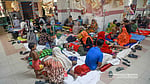
Bangladesh has been grappling with the worst dengue outbreak in its history for several months, but experts see possibilities of improvement towards the end of this year, from November in particular.
They have also warned against loose efforts to control the mosquito-borne disease, saying that taking the guards off will potentially make matters worse.
The dengue caseload this year stood at 252,990 with the death toll rising to 1,246 on Saturday. With over two months still left this year, the figures have broken all annual records of the country after highest cases and deaths in September.
The previous highest annual record of cases was more than 100,000 in 2019, while the highest fatalities were 281 in 2022.
Local Government Minister Tajul Islam last week said the World Health Organization counts 700,000 deaths from dengue each year globally. The disease was first detected in Bangladesh in 1954.
“It is unfortunate that the caseload and fatalities this year have broken all previous records,” he said.
Data from the Directorate General of Health Services show that the dengue outbreak gradually surged from June this year.
As many as 43,000 patients were hospitalised in July, 71,000 patients in August and more than 79,000 in September.
An analysis of the health directorate’s data of five weeks revealed that the hospitalisation rate is declining.
In the week between Sept 3 and Sept 9, as many as 17,641 patients were hospitalised across the country.
The hospitalisation rate increased in the following two weeks with 19,227 and then 20,155, respectively.
But from Sept 24-Sept 30, as many as 18,689 people went into hospital care before another 17,416 people were hospitalised from Oct 1-Oct 7. From Oct 8-Oct 14, a total of 16,429 people were hospitalised with dengue.
Health directorate data also indicated that the caseload in Dhaka was mostly going down.

In the first week of September, 36.69 percent of the hospitalisations were in Dhaka and recently it went as far down as 24 percent.
A total of 90 deaths were recorded from Sept 3-Sept 9 across the country, 88 deaths from Sept 10-Sept 16, 89 deaths from Sept 17-Sept 23, 96 deaths from Sept 24-Sept 30, 90 deaths from Oct 1-Oct 7 and another 79 deaths from Oct 8-Oct 14.
Professor Kabirul Bashar, an entomologist at Jahangirnagar University’s zoology department, said: “The dengue cases peaked in September. But it’s not that October will see much less cases. So there’s no scope to relax.”
YEAR-ROUND OUTBREAK
Dr Ahmedul Kabir, additional director general (planning and development) of the health directorate, said: “Recently we had some heavy rainfall. More rains are likely at this time as well before decreasing at the start of November. As the temperature goes down then, the number of mosquitoes will lower and so will dengue cases.”
Monsoon is the period favourable for mosquitoes to breed and spread dengue, but Kabir stressed it is no longer the case.
“There’s no such thing as peak season in Bangladesh now. The whole year will see dengue patients more or less. Our advice is that all precautionary methods, including mosquito control, should continue and it needs to be carried out throughout the year.”
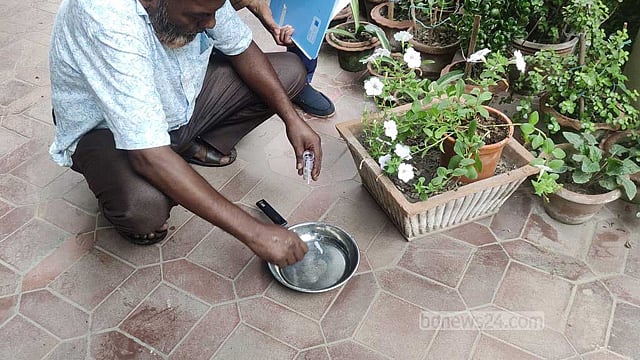
Data showed 566 cases in January this year, 1,036 in May, 5,956 in June and as many as 43,876 cases the following month amid a prolonged monsoon.
The death toll was in single digit in each month from January-May before gradually rising from the end of June and reaching 396 fatalities in September alone.
Prof Bashar seconded Kabir’s words, saying dengue was now a year-round disease. He added that Aedes aegypti mosquitoes have now spread outside Dhaka to villages as well.
He said a long-term plan was required to control Aedes mosquitoes and dengue, with the effectiveness of the current methods called into question.
Health Minister Zahid Maleque said government steps to curb dengue by killing Aedes mosquitoes were “not sufficient”.
“Dengue outbreak will not be diminished by only talking about it. Effective steps have to be taken for it. The steps we’ve witnessed are not sufficient, that’s true.”
However, Maleque claimed that the treatment of dengue patients was not lacking at all.
He said doctors and nurses were trained to treat dengue patients while steps were taken to supply sufficient fluids or saline everywhere in the country through imports.
“To curb dengue we have to control the mosquitoes. For mosquito control, a long-term year-round plan needs to be put in place by municipalities and city mayors.”
The city corporations and municipalities under the Ministry of Local Government supervise eradication of mosquitoes around the country.
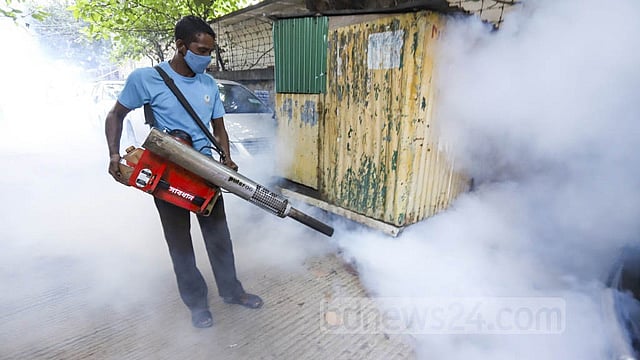
On whether the local government ministry’s actions are on the correct path, Tajul on Tuesday said: “The local government organisations are taking all the steps necessary to prevent dengue. The city corporations are regularly spraying insecticides. The Local Government Division is also broadcasting awareness TVC regularly.”
Tajul highlighted “awareness” as the key to controlling Aedes mosquitoes.
“Aedes mosquitoes carrying dengue virus aren’t born in lakes, canals, forests or drains. It is born inside the house. So it is crucial that people become aware of this. We’re also trying to make people aware of it.”
[Writing in English by Syed Mahmud Onindo; editing by Osham-ul-Sufian Talukder]