


Published : 11 Mar 2015, 10:45 AM
Updated : 19 Oct 2022, 06:38 PM


Also Read:
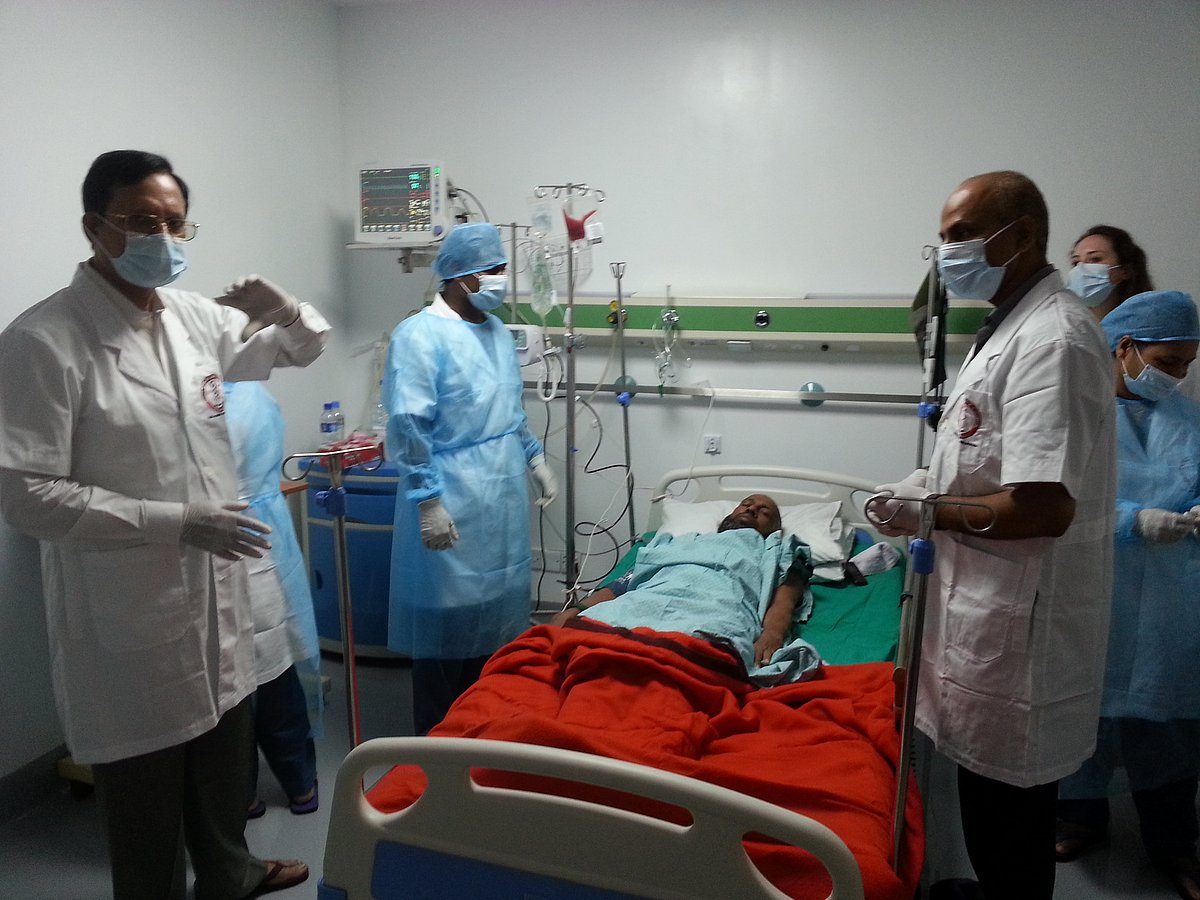
DMCH bone marrow transplant to startAlso Read:
Bangladesh begins bone-marrow transplantAlso Read:
‘Second stem cell transplant successful’Even a year back, a patient had to go abroad for bone marrow transplant.
But on Wednesday, doctors will celebrate the one year of this sophisticated treatment in Bangladesh by announcing the “successful” bone marrow transplants done on 13 patients.
“This is rare for a developing country,” Prof MA Khan, Programme Director of the Bone Marrow Transplant Programme told bdnews24.com. “All the cases were successful”.
The breakthrough came after the government tied up with Boston’s Massachusetts General Hospital (MGH) to establish a bone marrow transplant unit at the Dhaka Medical College Hospital.
Fifty-two-year-old banker Omar Ali was the first to undergo the transplant on Mar 10 last year. He has been suffering from a kind of blood cancer.
Ali was released from hospital about a month later and told bdnews24.com from his Rangpur residence a few months afterwards that he was “doing fine”.
Incredible, but true
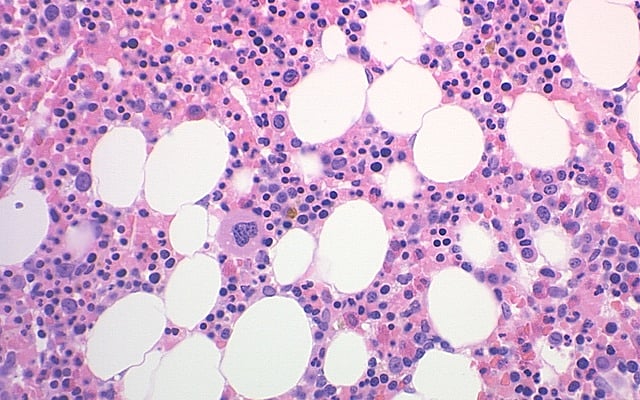
Doctors say this transplant replaces damaged or destroyed bone marrow with healthy bone marrow stem cells.
Bone marrow is the soft and spongy tissue that lies inside bones. Stem cells are immature cells within the marrow that creates all of the body’s blood cells.
This treatment is needed to treat different types of blood cancer, certain genetic blood and immunity disorders like thalassemia, and severe aplastic anaemia.
It is not a new procedure in the world. Even India had begun it way back in 1984.
“We read about the procedure in our books but did not have the opportunity to see it being performed in the course of our medical studies,” Dr Abdullah Al Mamun, currently a surgeon, told bdnews24.com.
“This is incredible, but true now. It is a regular treatment technique at present,” he said.
Celebration, way forward
Doctors, nurses and technicians will celebrate on Wednesday, the first anniversary of this procedure in Bangladesh.
They will hold a rally and campaign for bone marrow donor registration through the day.
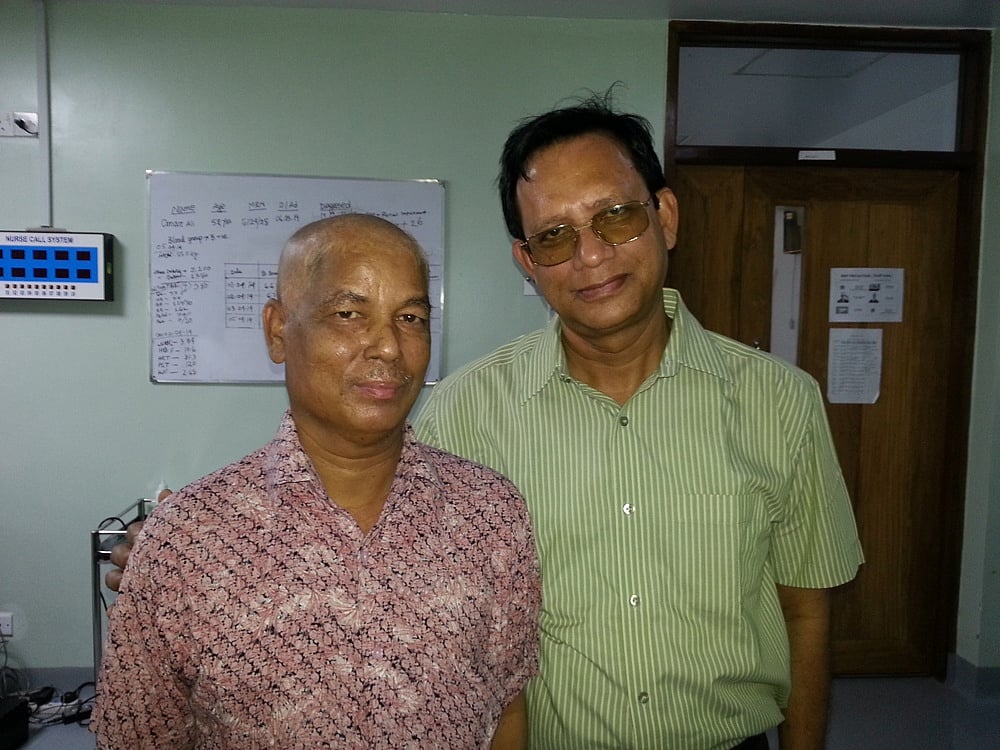
Omar Ali (L) with Prof MA Khan was the first patient
“We want to go for advanced transplant procedure shortly,” Prof Khan said.
All cases handled by the hospital in the first year were with the ‘autologous’ procedure that uses one’s own bone marrow.
The other procedure is ‘allogeneic’ in which marrow of siblings or donors is used after proper matching that demand greater expertise.
“The collaboration (with MGH) is now helping to develop the capacity for allogeneic transplantation,” Prof Khan said.
Challenges remain
So far, the unit has conducted those procedures in close collaboration with the MGH.
Before the first transplantation on Mar 10 last year, a specialist from the Vellore Christian Medical College and Hospital, in India, visited the centre and reported back to the MGH.
The MGH doctors analysed the report before giving the go-ahead signal.
They have trained doctors as well as nurses even on their Boston campus.
Later, they said this training was not enough. To offer this high tech procedure, they would need continuous training at home and in the US.
But the government has not prepared any guidelines for this yet.
There is no guarantee at present that a government doctor or a nurse, trained in this delicate procedure, will not be transferred to a place without a bone marrow transplant unit, given the current transfer-and-posting policy in the medical sector.












