Published : 21 May 2026, 08:04 AM
Updated : 21 Aug 2026, 03:45 PM


Crisis in the Cradle: Fatal Gaps
Infant vulnerability: Nearly half of all analysed measles fatalities occurred in infants under 9 months old
Erased immunity: Disrupted vaccine drives and falling herd immunity have eroded Bangladesh’s once-robust 95 percent population protection barrier
Maternal defences: Experts fear widespread maternal malnutrition may be weakening the transfer of protective antibodies to infants
Fatal delays: Over a third of the victims died within 48 hours of hospital admission as fast-moving complications triggered pneumonia
Drastic response: An emergency vaccination campaign has slashed the eligibility age to 6 months to rescue unprotected, high-risk babies
Bangladesh’s worsening measles outbreak is exposing a dangerous vulnerability: children who are not yet old enough to receive their first measles vaccine are dying in growing numbers.
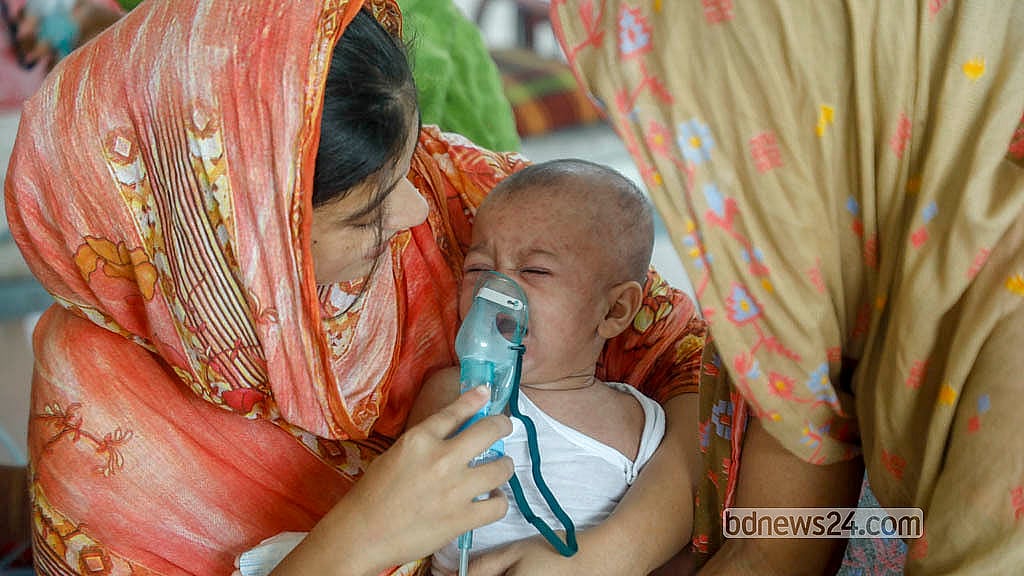
Of the 60 confirmed child measles deaths analysed by the Directorate General of Health Services (DGHS), 29 were infants younger than nine months -- children who, under Bangladesh’s routine immunisation schedule, were not yet eligible for the first measles-rubella (MR) vaccine dose.
The deaths have alarmed epidemiologists, vaccine specialists and paediatricians, who say the outbreak may be exposing deeper weaknesses in the country’s immunisation shield -- from disrupted vaccination drives and malnutrition to fading maternal antibodies and declining herd immunity.
For decades, the Expanded Programme on Immunization (EPI) stood as one of the country’s proudest public health successes. But health experts now warn that the shield is weakening.
Under the current EPI schedule, children receive the first MR vaccine dose at 9 months and the second at 15 months. Before that, newborns are expected to remain protected by antibodies transferred from their mothers during pregnancy and early breastfeeding.
Maternal antibodies are generally expected to protect infants for roughly the first 6 months.
So why are so many infants becoming infected -- and dying -- before reaching vaccination age?
That question has ignited intense debate across public health circles and social media alike.
What Health Data Shows
Government figures say 481 children have died nationwide since Mar 15 after contracting measles or showing symptoms consistent with the disease. Of them, 80 deaths have been confirmed as measles-related.
A detailed health directorate analysis of 60 child deaths paints a grim picture.
Among the dead were:
• Four infants aged 3 months
• Five aged 4 months
• Two aged 5 months
• Four aged 6 months
• Seven aged 7 months
• Seven aged 8 months
Three children aged 9 months died, along with:
• Eight aged 10 months
• Four aged 11 months
• Two aged 12 months
• Two aged 13 months
• Two aged 15 months
• One aged 16 months
The list also included:
• One child aged 2 years
• Two aged 27 months
• One aged 30 months
• Two aged three years
• One aged 42 months
• One aged 51 months
• One aged nine years
Of the 60 deaths analysed, 48 occurred in Dhaka and 12 outside the capital, with 31 of them boys and 29 girls.
The data reveals that 29 children died before reaching 9 months -- before becoming eligible for routine MR vaccination.
Another 21 children who died were between 9 and 15 months old, meaning they should already have received one or both MR doses under the national schedule.
That has raised another troubling question: were many of these children never vaccinated at all?
A Fragile Shield
Public health experts say several years of disruptions to immunisation programmes may now be exacting a devastating toll.
The COVID-19 pandemic severely affected routine vaccination activities in 2020. Routine immunisation initiatives were disrupted again in 2024.
Sardar Sakhawat Husain Bakul recently said measles vaccination campaigns and Vitamin A drives were also halted during the interim administration last year.
Dr Tajul Islam A Bari, a vaccine and public health specialist, said vaccine effectiveness varies significantly depending on age and immunity.
“For children aged 6 to 9 months, the measles vaccine works around 50 percent of the time,” he told bdnews24.com.
“For children aged 9 to 12 months, effectiveness rises to around 85 percent. Between 12 and 15 months, it can be effective in up to 97 percent of children.”
“Even after two doses, some children can still contract measles. It depends on their immune system.”
But the outbreak is also reviving concern over something else: the collapse of herd immunity.
“We previously had a strong herd immunity barrier protecting around 95 percent of the population,” said Dr Asif Haidar, a medical officer at the DNCC dedicated measles hospital in Mohakhali.
“That barrier has broken down. That is why the outbreak has become so severe.”
The Antibody Debate
At the centre of the debate lies a critical biological question: are mothers still passing sufficient antibodies to their infants?
Antibodies form the backbone of the body’s immune defence. Infants receive them from their mothers during pregnancy, while their own immune systems gradually develop after birth.
But experts warn that widespread malnutrition among mothers and children may be weakening that protection.
“Children mainly receive antibodies from their mothers,” Dr Asif said.
“But many mothers today suffer from malnutrition, and children are also becoming malnourished for different reasons. That increases vulnerability to measles.”
Prof Mahmudur Rahman, chairperson of the National Verification Committee for Measles and Rubella Elimination, said Bangladesh lacks sufficient research on why infants may be failing to develop adequate antibodies.
“If mothers themselves lack measles antibodies or were never vaccinated, infants may not receive adequate protection,” he said.
“There may also be other factors affecting antibody development. We do not yet have enough local studies.”
Former disease control director Prof Be-Nazir Ahmed said no evidence has yet emerged of a mutated measles strain driving the outbreak.
Instead, he believes the focus should remain on infant immunity.
“We need to examine whether children are receiving proper antibodies from their mothers,” he said.
He also pointed to rising caesarean deliveries and disruptions to early breastfeeding as possible contributors to weaker infant immunity.
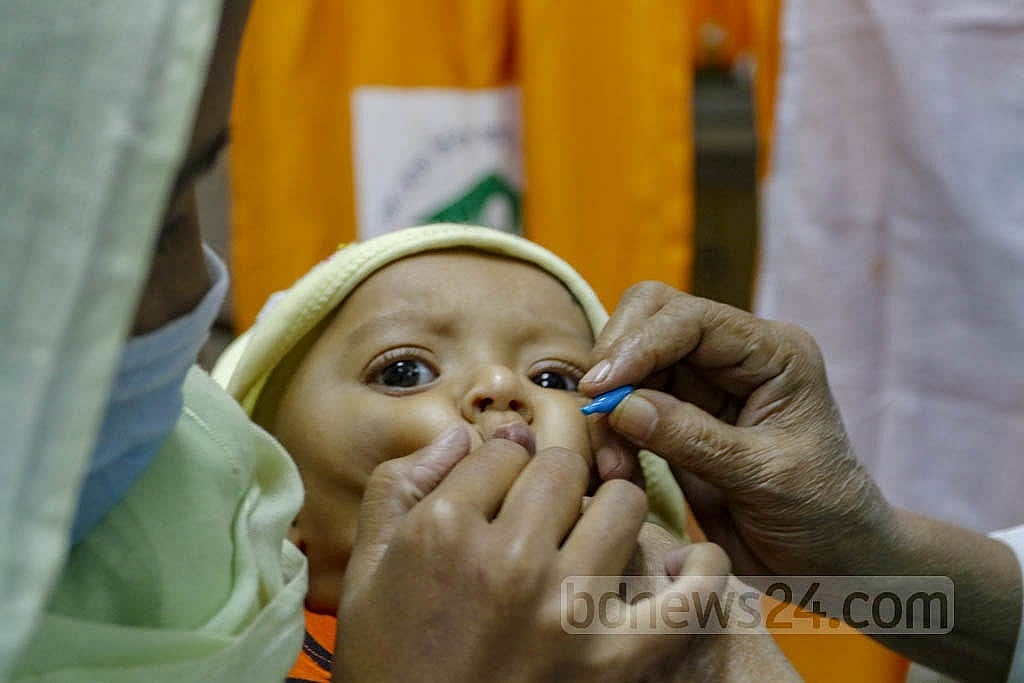
A Crisis Unfolding Inside Hospitals
The DGHS mortality data also reveals how quickly many children deteriorated.
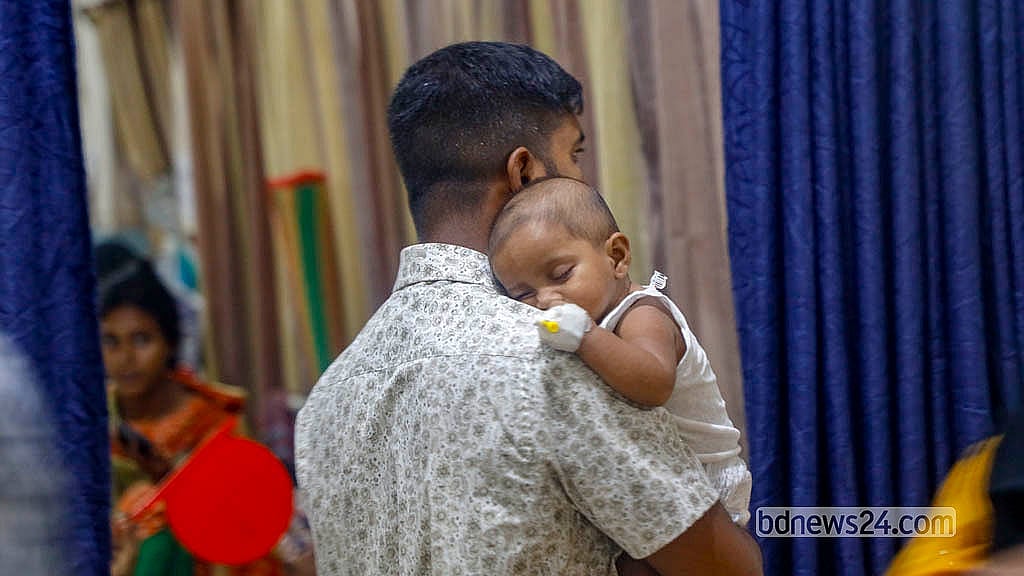
Five children died on the very day they were admitted to hospital. Nine died within one day of admission, and another nine within two days.
In total, 24 children died within the first 48 hours after hospitalisation.
Yet many crucial details are missing from official records.
The DGHS data does not consistently mention vaccination histories, ICU admissions or whether children had other underlying complications.
Public health expert Mushtuq Husain said proper mortality reviews are essential.
“Patient deaths must be analysed carefully,” he told bdnews24.com.
“We need detailed information on admissions, physical condition and complications so that treatment strategies can improve.”
DGHS Director General Prof Prabhat Chandra Biswas acknowledged that conducting detailed mortality reviews was difficult.
“However, we are preserving different data and records,” he said.
He added that icddr,b was conducting detailed research into whether any changes in the virus itself may be contributing to the unusually severe outbreak.
Vaccination Gaps Widen
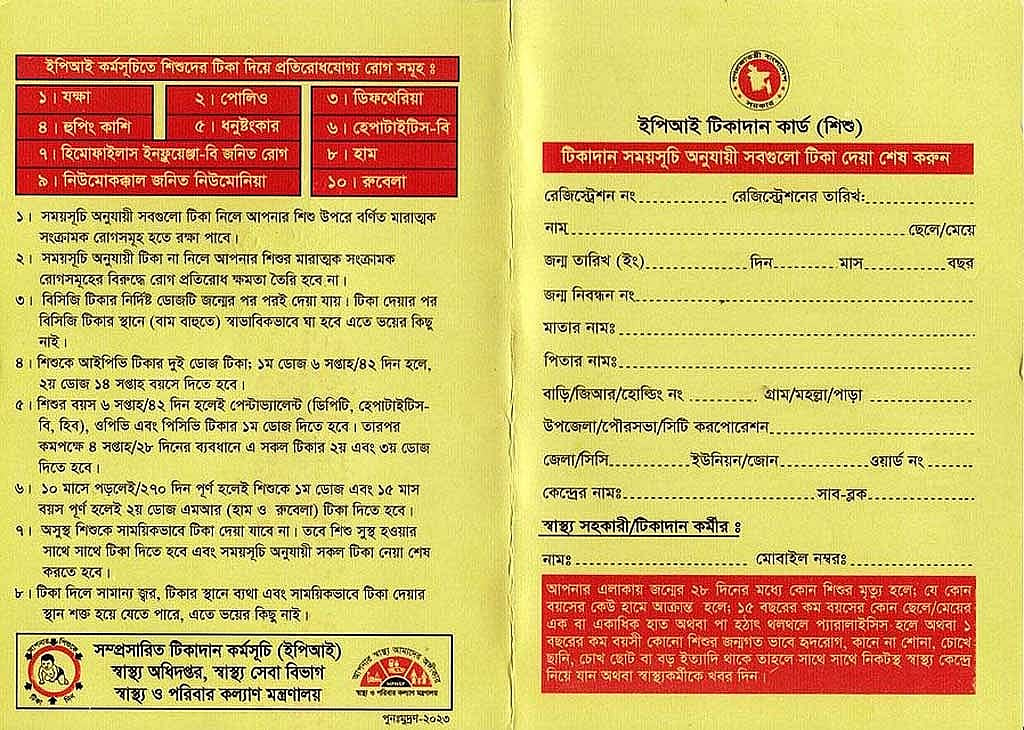
Vaccination data emerging from the outbreak has deepened concern among health experts. At a UNICEF-Prothom Alo roundtable on May 11, UNICEF Health Manager Riad Mahmud said:
• 85 percent of infected children were under 5
• 65 percent had never received any vaccine
• 21 percent were only partially vaccinated
Experts believe the number of “missed children” -- children left outside routine immunisation -- has quietly grown for years.
An official from the National Nutrition Institute, speaking anonymously, said multiple planned Vitamin A campaigns in 2025 never took place, worsening nutritional vulnerabilities among children.
Lowering the Vaccine Age
As the outbreak intensified, Bangladesh’s top vaccine advisory body, the National Immunization Technical Advisory Group (NITAG), took an extraordinary step.
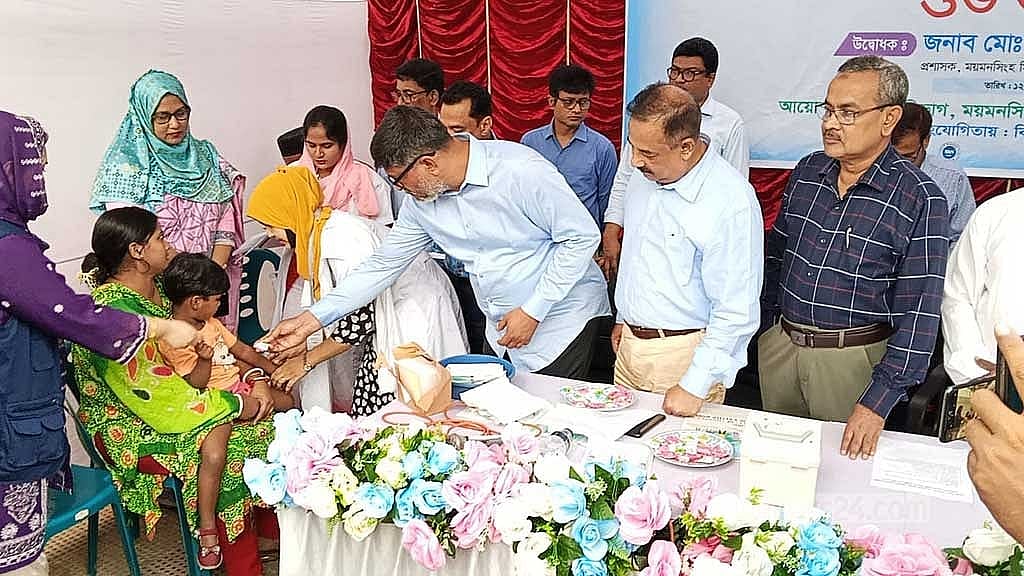
For the first time, authorities decided to vaccinate children as young as 6 months during the emergency campaign.
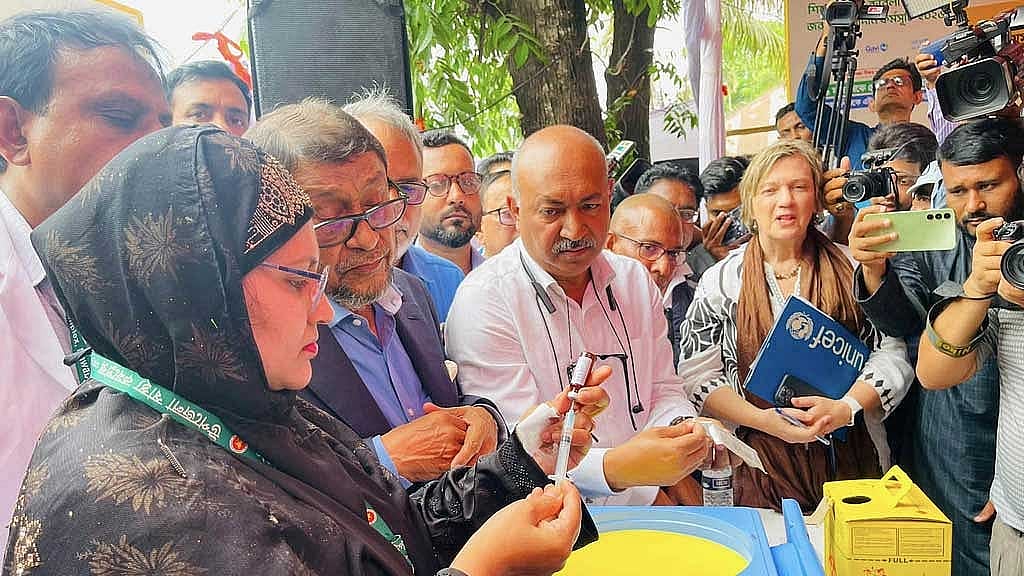
The month-long nationwide campaign, launched Apr 20 and ending Wednesday, targeted children aged 6 months to 5 years.
Prof Mahmudur said the decision followed years of evidence showing children were increasingly becoming infected before 9 months.
“Based on studies and discussions involving UNICEF, Gavi and our experts, the campaign age was reduced to 6 months,” he said.
However, he noted that routine vaccination schedules still officially begin at 9 months.
Prof Be-Nazir said lowering the age was primarily a crisis-response measure.
“At this age, the vaccine does not work as strongly,” he said.
“But even 50 percent effectiveness can save many children during an outbreak.”
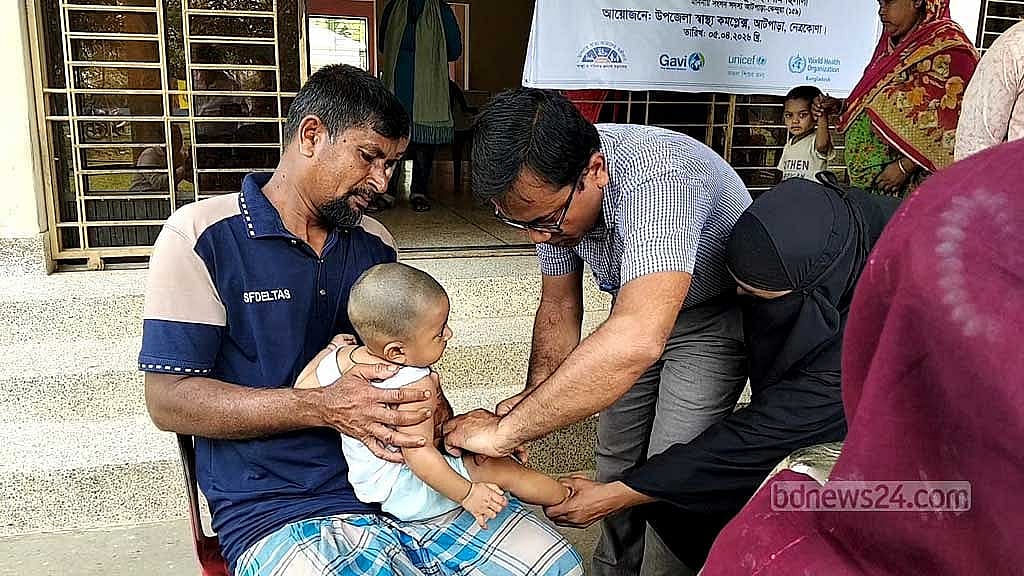
Will the Deaths Slow?
On Wednesday, the DGHS said suspected measles cases had climbed to 57,856 since Mar 15, with 8,067 confirmed infections.
Another 138 infections were identified in just 24 hours.
Experts say Bangladesh now urgently needs a coordinated emergency measles response team similar to the COVID-19 emergency framework established during the pandemic.
Prof Mahbubul Hoque, director of Bangladesh Shishu Hospital and Institute, warned that measles complications often become deadly.
“There is no antiviral drug for measles,” he said.
“When measles leads to pneumonia and other complications, treatment becomes extremely difficult.”
“Children are often brought to hospital after severe complications develop. Even life support sometimes cannot save them.”
Still, health officials insist the vaccination campaign is beginning to show results.
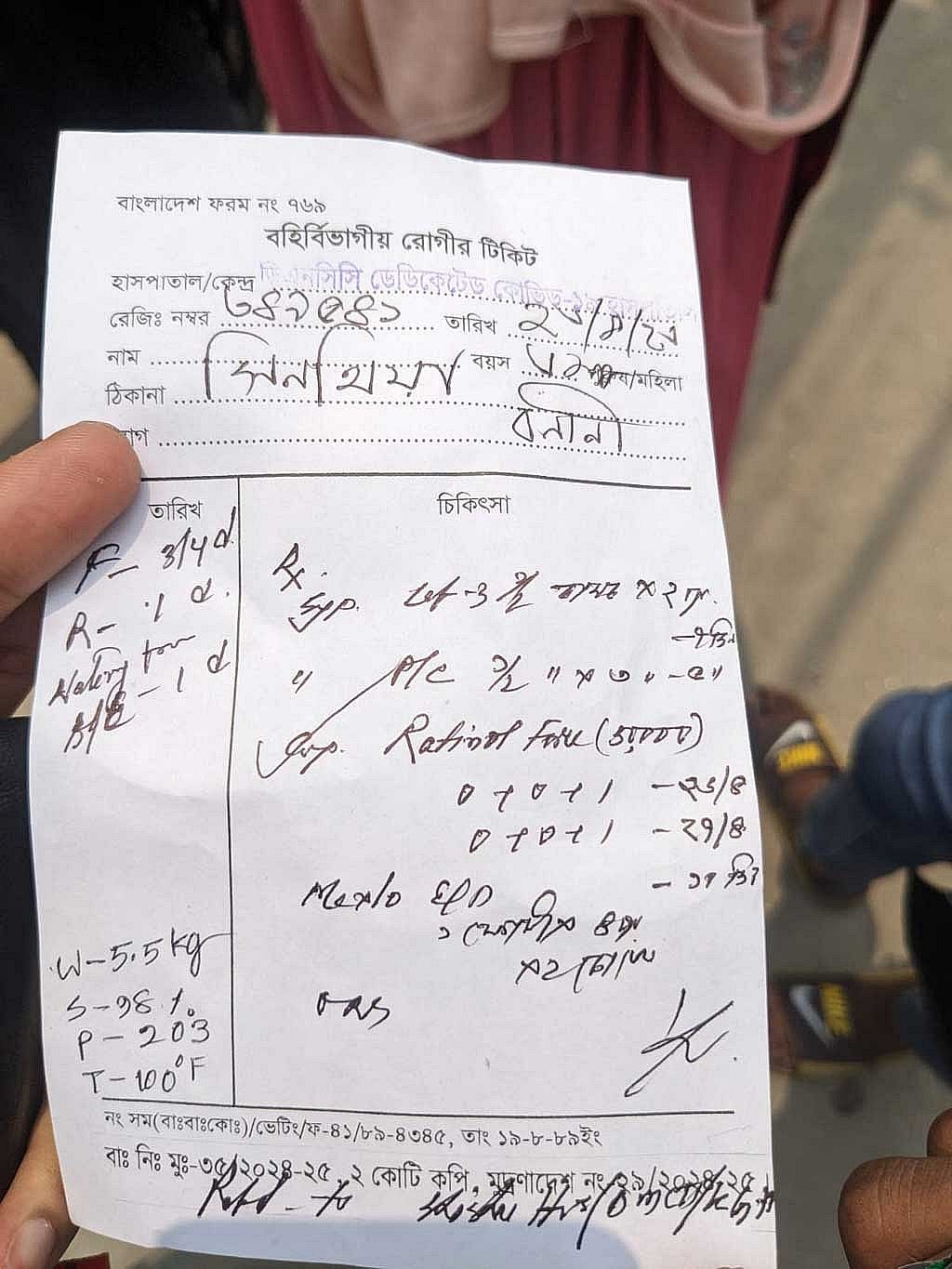
“We initially started vaccinations in high-risk areas from Apr 5,” DGHS chief Prabhat Chandra Biswas said.
“In those areas, measles infections are now very low.”
He said immunity takes roughly three weeks to build after vaccination, adding that infections should visibly decline by late June.
“Children who still missed vaccination can receive it at any centre,” he said.
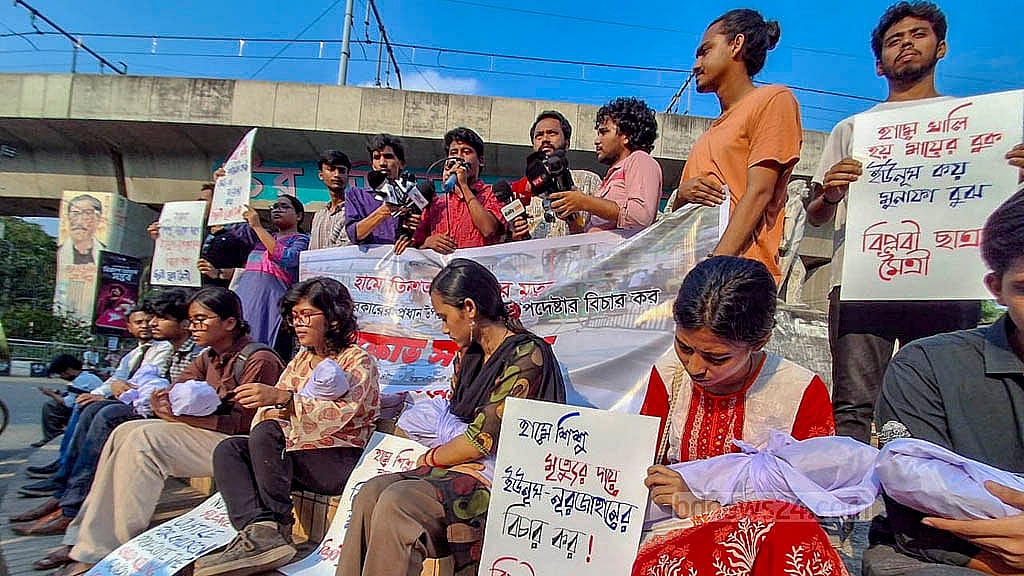
“Considering the trends in the high-risk areas, we expect the outbreak to decline significantly by the end of June.”