


Published : 23 May 2014, 06:20 PM
Updated : 19 Oct 2022, 07:30 PM


Also Read:
WHO praises Bangladesh’s community clinicsAlso Read:
Putul for 'holistic autism approach'Also Read:
Autism plea pressed at WHOAlso Read:
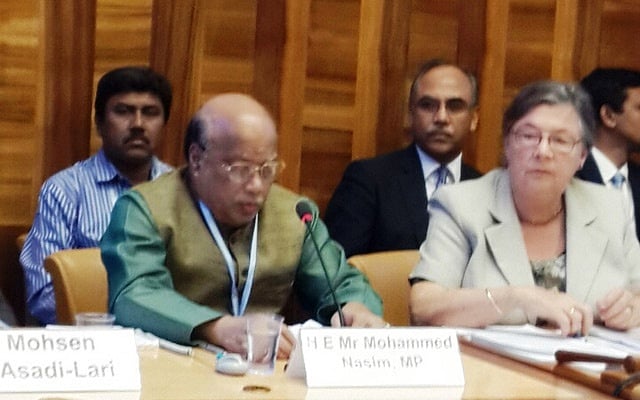
Climate concern stressed at WHOMohammed Nasim said on Friday that Bangladesh’s healthcare workers had been going door-to-door since the 80s, but a permanent set up “very close to home” was absent.
“It was thus necessary to have a clinic in every small community, to function as a nucleus of health improvement”.
The minister was delivering a speech on ‘community health care – bringing healthcare at your door’ in a sideline event.
“People’s confidence has been considerably increased,” after those clinics started functioning, he said.
“As of now, some 13,000 community clinics are running satisfactorily”.
The minister told his counterparts that community healthcare can be considered “a crucial component of integrated, people-centric high-quality health services anywhere in the world”.
He said those clinics were “unique models” of public-private partnership “to ensure sense of community ownership and mobilise proactive community participation”.
People donated their land to build those structures, while the government built the building, provided manpower, and was supplying medicines and logistics regularly.
He said the local community-driven committee, led by elected members of local government body oversaw those clinics.
“We believe this to be critical to sustainability,” he said.
He said WHO also recognised the role of the community clinics in serving rural people.
After assuming power in 2009, the ruling Awami League started revitalising community clinics that they set up during their regime in 1996-2001, but the BNP-led government wound them up.
The clinics were built with an aim to provide basic healthcare to the rural people.











