Published : 24 Feb 2023, 04:26 AM
Updated : 24 Feb 2023, 09:47 AM


Hospitals and diagnostic centres in Bangladesh are facing a crisis of reagents needed for tests to determine the blood group or diagnose a disease. The suppliers have blamed difficulties in importing the substances due to the dollar crisis.
Before transfusion, a donor undergoes blood tests for hepatitis B, hepatitis C, HIV, malaria, and syphilis.
The Directorate General of Health Services supplies the reagents needed to run the tests to the Sheikh Hasina National Institute of Burn and Plastic Surgery.
“We received only blood bags this time and nothing else. Sometimes we hear the importers couldn’t import [reagents], or they can’t sell it at the price they quoted in the tender earlier,” Ashraful Islam, an assistant professor at the institute.
Rakibul Islam, head of the Blood Transfusion Medicine Department at Bangabandhu Sheikh Mujib Medical University, said they were experiencing a shortage of reagents needed to run the blood grouping test as the supply needed to be smoother.

“We’re managing somehow. Also, there’s a crisis of high-quality reagents,” Rakibul said.
Dr Ashraful of the burn institute also expressed concern over the import of sub-standard reagents.
“We bought 20 pieces of reagents to do blood grouping from the BMA Bhaban last week. All those were spoiled, and we identified the problem while using them in the lab. A weak monitoring system will end in the wrong blood group result,” he said.
Square Hospital needs almost 900 types of reagents to run more than 700 types of medical tests, said its Chief Executive Officer Yousuf Siddique. It imports some of the reagents and buys the rest from other importers.
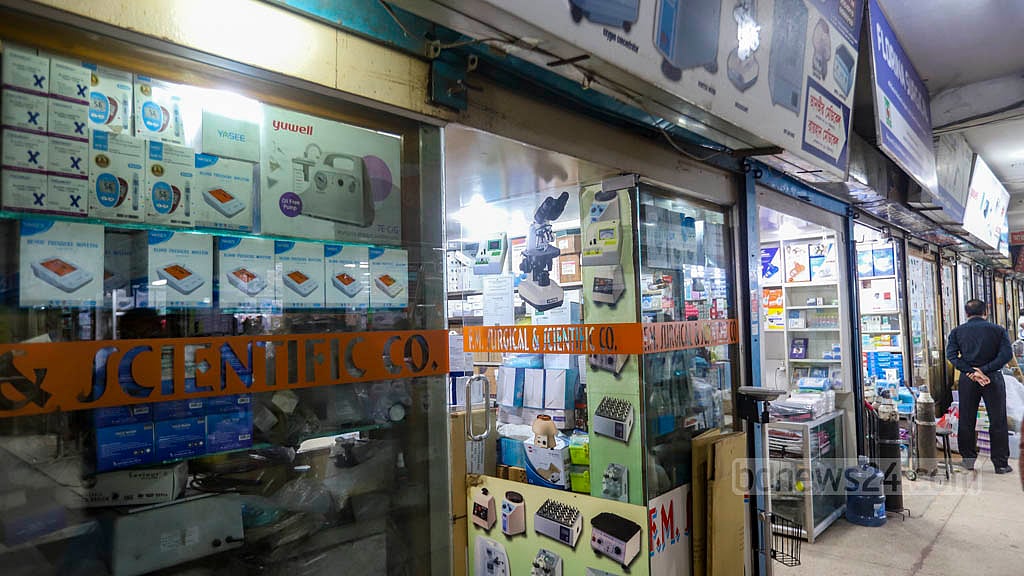
“This crisis has started recently. Large importers can supply some reagents, but smaller importers cannot. This has led to the halt on some tests,” Yusuf said.
“Coordination is required for pathological tests. If you need three reagents for a test, you can’t run it without a single one.”
Yusuf said the hospital was also facing a shortage of equipment to run tests and parts to maintain the machines.
“This is how the health service sector is severely affected directly and indirectly.”
WHAT’S THE REASON?
A few hundred types of reagents are necessary for pathological tests and other medical services, according to importers and physicians. Almost all the reagents are imported from the US, France, Germany, China, India, Singapore, and other countries.
Around 100 companies in the country import the reagents, and they stated the existing dollar crunch was preventing them from opening enough letters of credit, pushing down imports.
After the Ukraine war broke out, Bangladesh faced a dollar crisis which had an ill impact on imports. The regulators tightened rules for opening LCs to discourage imports.
However, Bangladesh Bank said imports of medicine and medical or life-saving products would be exempted from the rules. The central bank did not set up a margin for opening LCs to import life-saving drugs and medical equipment certified by the DGHS.
The importers should not face any trouble opening LCs according to the BB’s directives, but the importers said the reality is different.
“We can’t open the LC. If I ask the bank to open an LC worth $200,000, they tell me to open it for $50,000 to 70,000 as there are not enough dollars,” said an importer.
“The quantity of products I could import with an LC of $200,000 is now unavailable. Sometimes we open a $50,000 LC and another one after a fortnight. But that delays the shipment.”
He also highlighted the import cost hike as the dollar price increased. “The product we bought at $97 two months ago now costs $113. Other costs also shot up due to the dollar price hike.”
The authorities did not block LC openings, but the amount of LCs has decreased, said Aminul Islam Khan Abu, secretary of the Diagnostic Reagent and Equipment Traders Association of Bangladesh.
“Someone who needs to open a $100,000 LC can open it for $25,000. Anyone who needs to open LCs for four companies can open for one company only. This has a long-term effect,” he said.
“The crisis already exists, and it will intensify in future. Bangladesh Bank claims the forex reserves will be fine. I’m not sure when it’ll be fine or if it’ll ever be fine.”
WHAT’S THE SOLUTION?
Dr Syed Abdul Hamid, director of the Institute of Health Economics at Dhaka University, lamented that Bangladesh is still importing foreign biscuits, savoury titbits, processed food, fruits and different luxury items despite the dollar crunch.
“We should limit the import of luxury items and ensure the supply of life-saving products,” he said.
“It’ll be hard to diagnose diseases if we can’t buy the reagents. The government should be strict in this regard. It must identify which products are important and which aren’t.”
People already tend to travel abroad seeking better medical treatment. The current crisis will be another blow to the health sector in Bangladesh if it continues, said Dr Hamid.
Health Minister Zahid Maleque said there were some restrictions on importing luxury goods, but emergency product supply was not hampered.
“Nobody told me about the reagent crisis. Maybe they haven’t faced a severe crisis yet. We’ll look into the matter,” he said.
[Writing in English by Sabrina Karim Murshed]