Published : 22 Oct 2026, 03:34 PM
Updated : 22 Oct 2026, 03:36 PM


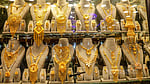
A Bhori of gold now costs more than Tk 225,000, putting the price of a Rati at nearly Tk 2,500. The figures are enough to raise eyebrows.
But looking back just a little further may come as an even bigger shock. Nine months ago, a Bhori of the precious metal was nearly Tk 300,000, with a Rati climbing to Tk 3,000.
Such fluctuations in gold prices in Bangladesh are neither unusual nor sudden. Behind them lies a long history shaped by global economics, politics and market dynamics.
Put simply, there is a historical story behind why gold prices rise and fall and how those movements take place. In Bangladesh, that story began with gold costing around Tk 150 a Bhori after independence.
Gold has gone from expensive to extraordinarily expensive over the past 55 years, but the process of setting its price in Bangladesh is still not entirely transparent. One factor is the lack of commercial imports of gold through formal channels.
According to the website of the Dubai Jewellery Group, the largest trade body representing Dubai's gold and jewellery industry, a Bhori of 22-carat gold cost 5,371 dirhams in Dubai, United Arab Emirates, last Wednesday. That works out to Tk 181,056.
Meanwhile, rates published on the website of the India Bullion and Jewellers Association showed that a Bhori of jewellery gold in India cost 164,054 rupees on Wednesday, equivalent to Tk 214,910.
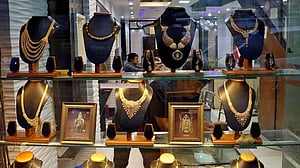
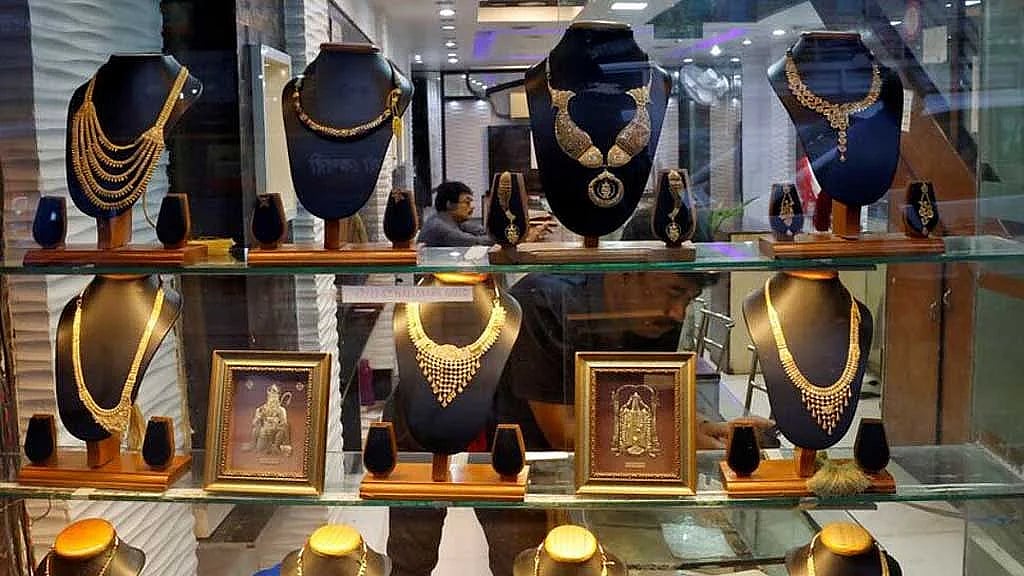
According to the price fixed by the Bangladesh Jewellers Samity (BAJUS), a Bhori of 22-carat gold had been selling for Tk 228,031 in Bangladesh since Oct 13.
That means a Bhori cost Tk 46,975 more in Bangladesh than in Dubai and Tk 13,121 more than in India.
However, following a decline in global gold prices, the price in Bangladesh has fallen by Tk 8,386 per Bhori from Thursday, bringing a Bhori of 22-carat gold down to around Tk 209,000.
Gold prices in the domestic market have been fluctuating for some time.
Most recently, on Oct 13, BAJUS cut the price of the best-quality, or 22-carat, gold by Tk 3,266 per Bhori, bringing it down to Tk 228,031. The precious metal has been selling at the rate for the past week.
A Bhori of 21-carat gold costs Tk 217,767, while 18-carat gold is selling for Tk 187,032 per Bhori and traditional gold for Tk 152,798.
Commercial imports of gold into Bangladesh are virtually non-existent. Much of the gold entering the country comes with passengers returning from abroad.
Under the Passenger (Non-Tourist) Baggage (Import) Rules, 2016, a traveller may bring around 10 Bhori, or 117 grams, of gold from abroad by paying a duty of Tk 5,000 per Bhori.
Even after taking that duty into account, gold remains more expensive in Bangladesh.
Much of the country's gold supply is, however, suspected to enter through illegal channels. Old gold also meets a significant portion of demand.
BAJUS has long been setting gold prices in Bangladesh. When prices rise or fall in the global market, the association's leaders adjust domestic rates accordingly.
But in its formal announcements of price increases or cuts, the association usually says the price of "acid gold", or pure gold, has risen or fallen in the local market, prompting the relevant committee to revise prices.
The same explanation is used when prices are reduced.
For example, explaining the Oct 13 price cut, BAJUS said in a statement that the price of acid gold, or pure gold, had declined in the local market and that new prices had been set after considering the overall situation.
How is the Price Set?
Although the Jewellers Association sets retail gold prices, the benchmark is the wholesale gold price in the Tantibazar market in Old Dhaka.
That rate is determined by the Bangladesh Poddar Samity and largely reflects transactions among traders.
Several jewellers said the Poddar association sets the price of pure gold every day.
In doing so, it takes into account the volume of gold entering the market under baggage rules as well as the supply of old jewellery arriving from across the country. It also checks gold prices in Kolkata before deciding whether to raise or lower the rate.
BAJUS has a committee responsible for adjusting gold prices, called the BAJUS Standing Committee on Pricing and Price Monitoring.
When revising prices, the committee first considers the wholesale rate set by the Poddar association.
For instance, BAJUS cut gold prices on Oct 13. The final price was determined by adding Tk 5,000 as the jewellers' profit margin to the wholesale price per Bhori prevailing that day.
Previously, the BAJUS committee used to multiply the wholesale price of pure gold by 1.25 to determine the retail rate. But the association abandoned that formula as gold prices became increasingly volatile.
"We determine prices every day by taking into account international market rates, the supply of gold in Tantibazar and prices in neighbouring countries," Bangladesh Poddar Samity General Secretary Zainal Abedin told bdnews24.com.
Asked why gold costs more in Bangladesh than in the international market, he said those bringing gold from abroad under baggage rules make a profit. Wholesale traders also have their margins, followed by jewellers.
"The price goes up somewhat through these several stages," he said.
The government formulated the Gold Policy in 2018 in an effort to bring transparency to the country's gold trade.
The Bangladesh Bank then issued commercial gold-import licences to 18 entities, including a bank, in November 2019. Another entity later received a licence.
Initially, several companies imported gold in a number of consignments. But businesses subsequently lost interest in imports because of a shortage of foreign currency, or dollars, delays in securing approval and high VAT.
How Reasonable is the Pricing System?
Many countries have commodity exchanges for trading gold, but Bangladesh does not.
A commodity exchange is a system where goods are traded much like shares. Instead of the physical commodity changing hands immediately, transactions take place through paper or electronic contracts, while the underlying goods are stored in warehouses or other designated facilities. Final settlement or delivery takes place at a specified time.
Jewellers have said on various occasions that if a gold trading system were introduced under the Bangladesh Bank's supervision, they could buy gold at prices closer to international rates. Consumers would then also benefit.
Dewan Aminul Islam Shaheen, chairman of the BAJUS Standing Committee on Pricing and Price Monitoring, said the existing pricing method should be considered reasonable under the current circumstances.
As long as there is no institutional mechanism in Bangladesh to buy gold at global market rates, jewellers cannot sell it at those rates either, he said.
Besides, although gold may appear expensive at first glance, customers can also sell it back based on prevailing prices, according to Shaheen.
Commerce ministry data show Bangladesh's annual gold demand ranges between 20 and 40 tonnes. About 10 percent of that demand is met through old jewellery, while the remainder comes from abroad under baggage rules.
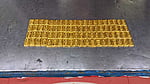
Large quantities of gold also enter the country illegally, as evidenced by the frequent seizure of consignments both large and small. Seized gold is kept in Bangladesh Bank vaults and later sold through auction.
There are also allegations that substantial quantities of gold evade seizure and enter the country illegally. Such gold is believed to meet a major share of domestic demand.
There is no definitive information on exactly when BAJUS began setting gold prices nationwide.
For many years after independence, traders set their own prices. As a result, prices varied by location -- from the capital and divisional cities down to districts and Upazilas.
Historical records show that around the time of Bangladesh's independence, a Bhori of gold -- guinea gold or the commonly traded standard -- cost approximately Tk 154 to Tk 170.
After numerous ups and downs, the price surged to a record Tk 286,001 per Bhori on Jan 29, 2026.
Trading has since continued through nine months of fluctuations, with prices rising at times and falling at others.
Previously, BAJUS usually announced changes in gold prices at night, with the new rates taking effect the following day.
For some time now, however, the association has been announcing price changes at 10am and putting them into effect immediately. On some occasions, prices are also revised in the afternoon.
Record-Breaking Days
An analysis of BAJUS data shows that January 2026 was an exceptionally volatile month for Bangladesh's gold market.
Prices rose rapidly during the month before falling at almost the same pace.
BAJUS adjusted gold prices 20 times in January alone. Prices were raised on 14 occasions and cut six times.
After a series of sharp increases, a Bhori of 22-carat gold climbed to Tk 286,001 on Jan 29 -- the highest price on record.
February began with repeated price cuts. Rates then continued to fluctuate before rising consecutively towards the end of the month.
BAJUS adjusted gold prices 15 times during February's 28 days, raising them eight times and cutting them seven times.
In March, BAJUS revised gold prices 10 times -- seven increases and three cuts.
Prices have continued to move up and down over the following seven months, although the swings have not been as pronounced as those seen in January, February and March.
BAJUS adjusted gold prices 91 times in 2025. Prices rose on 64 occasions and fell on 27. In 2024, prices were revised 62 times.
The price of 22-carat gold in Bangladesh crossed Tk 100,000 per Bhori for the first time in July 2023.
It passed Tk 150,000 in February 2025 and breached the Tk 200,000 mark for the first time on Apr 22 that year.
Global Market Swings Too
After repeatedly setting new records, international gold prices crossed the $5,500-an-ounce milestone towards the end of January this year, reaching as high as $5,602.
It was around the same time that the price of 22-carat gold in Bangladesh came close to Tk 300,000 per Bhori.
Prices subsequently fluctuated. They climbed again amid war in West Asia before turning lower once more.
At 1:30am Bangladesh time on Wednesday, gold was trading at $4,118.28 an ounce in the international market, down $5.48, or 0.13 percent, from the previous day.
Conversions
| 1 Bhori | 11.664 grams |
|---|---|
| 96 Rati | 1 Bhori |
| 1 ounce | 31.10 grams |
| 1 dirham | Tk 33.70 |
| 1 rupee | Tk 33.70 |