Published : 28 Aug 2022, 02:21 AM
Updated : 29 Aug 2022, 09:18 PM


How the number of school days affects the learning process of students has been intensely debated in the UK and the US recently, and now the debate has come to Bangladesh with a two-day weekend starting in schools this week to save power and fuel oil amid an energy crisis.
Except for a handful, most educational institutions in Bangladesh remain open six days a week, bar Friday.
Though the original plan, as announced by Education Minister Dipu Moni in February this year, was to introduce the two-day weekly break from next year as part of major reform in the sector, the plan was brought forward to save energy amid a global economic crisis.
The one-and-a-half-year hiatus of academic activities due to lockdowns at the height of the COVID-19 pandemic took a massive toll on students’ learning process. Parents, guardians, experts and the minister herself - all have been seeking additional school days so that children could cover for the lost times of their education.
In a major turnaround, Dipu Moni, citing government-funded research, earlier this month said the shutdown of schools did not affect the learning process at all, rather it did help create skills of “self-learning” among the students.
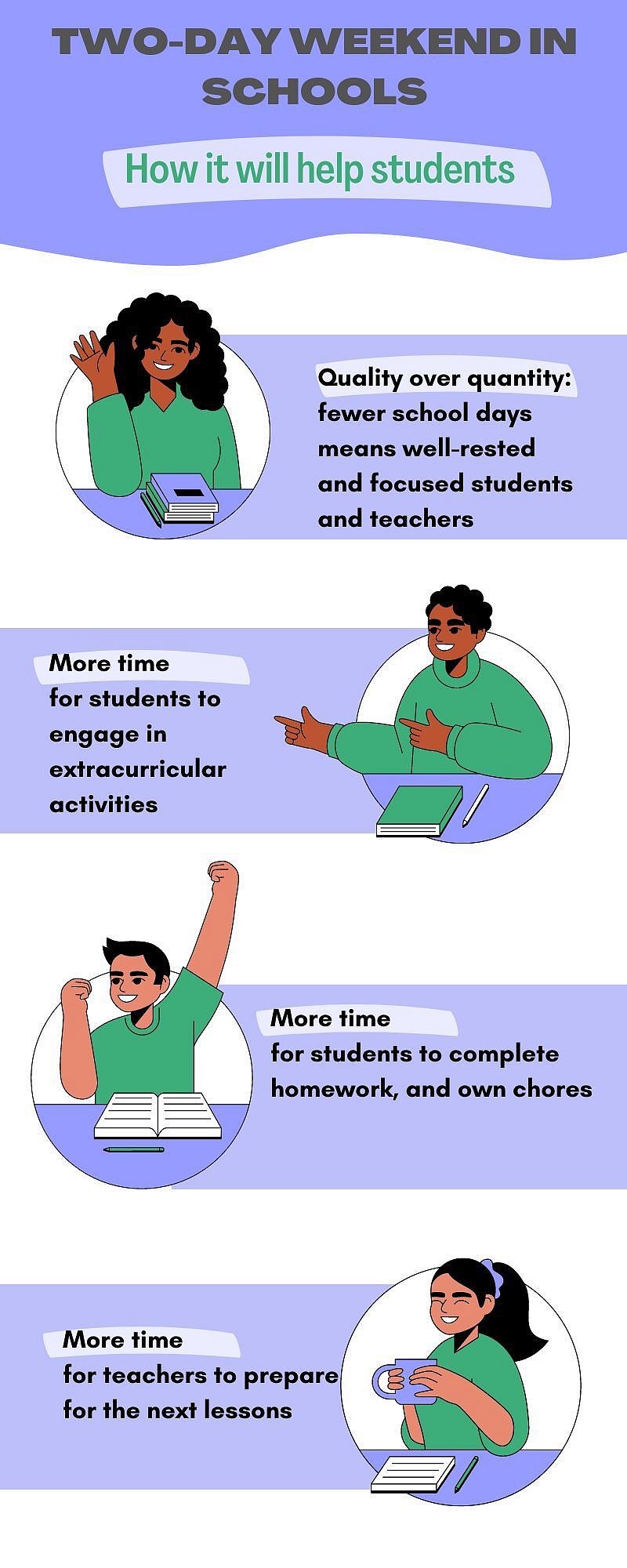
It’s time for us to focus more on quality education rather than quantity of education.Professor Syed Manzoorul Islam

MIXED REACTIONS
While most of the teachers and education experts bdnews24.com had spoken to lauded the move, a minority raised some concerns too.
By appreciating the move, retired Dhaka University Professor Syed Manzoorul Islam posited his “quality over quantity” theory.
“It’s time for us to focus more on quality education rather than quantity of education. Teachers will have more time to prepare for their next lessons if they are allowed one extra day off to prepare for their next lessons,” he said.
Professor Manzoorul also emphasised quality teachers’ training to ensure quality teaching delivery.
One of the top schools in Dhaka, Residential Model School and College, has been maintaining a two-day weekend for a long time.
Asma Begum, the institution’s Senior Vice Principal, endorsed the “quality over quantity” theory, stressing the need for a longer rest and time for her colleagues to wind down after a work week.
Her colleague at the Government Laboratory High School, head teacher Abu Syed Bhuiyan, said teachers have long been demanding the two-day break to prepare themselves better.
“Since saving energy is the goal here, stopping school activities for an extra day will save more energy and help teachers, students and their parents to re-energise themselves, both physically and mentally.
Former chairman of the University Grants Commission Professor Abdul Mannan is one of the prominent naysayers.
If saving energy is the priority now, the government could have come up with innovative ideas like banning the parents from sending their kids to school by private vehicles.Professor Abdul Mannan
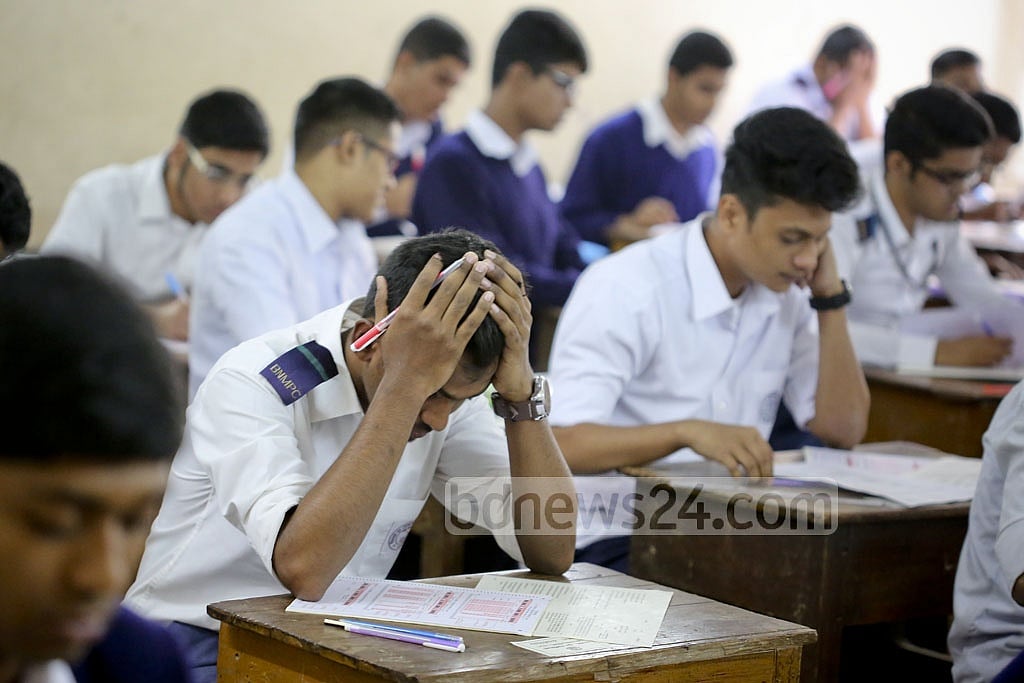
Highlighting the effect of pandemic lockdowns on Bangladesh’s school education, he said he is worried that the two-day weekend will have a more adverse effect on school education.
“If saving energy is the priority now, the government could have come up with innovative ideas like banning the parents from sending their kids to school by private vehicles. No parent in the world does that. Schools have buses, and even children of American presidents use the school buses,” he said.
Professor Mohammad Tariq Ahsan, a teacher at the Institute of Education and Research of Dhaka University, said a two-day weekend will encourage students to engage in extra-curricular activities.
“Proper rest and breaks are necessary for students. Pupils in developed nations even get longer lunch breaks to make the school environment more ‘brain friendly'. The upcoming education curriculum will address all these issues and more to encourage students to engage in activities outside school,” he said.
HOW US, UK ARE WORKING ON IT
In June this year, a petition signed by close to 1,50,000 British school students was debated in the Commons.
The theme of the petition was introducing a “four-day week” for school by including Friday as part of the weekend as well. The usual school weekends in the UK are Saturday and Sunday.
Though the lower House of the British parliament refused to move the petition further, some of the signatory students raised some interesting points in a qualitative survey later conducted by the BBC.
Many students said they were struggling to cope with the five-day school week, while 92 percent of students felt having Friday off school would have a “very positive” or “positive” impact on their mental health.
Several people who took part in the questionnaire suggested that longer school days and online learning could help make up for any days lost if schools did close on Fridays.
These are the same points being argued at the policymaking and experts’ level right now in Bangladesh.
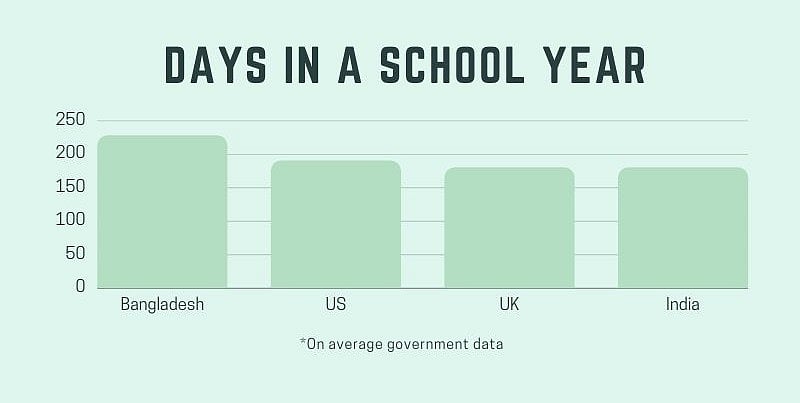
On average, students in the United Kingdom have 190 school days in a calendar year, which begins from September and runs until mid or late July of the following year.
In the US, students have 180 days in a calendar year, beginning from September and running until June of the following year.
Many schools in the US are considering a four-day week now due to a teacher shortage.
Bangladesh’s school calendar year begins from the first week of January and runs until mid-December. With a one-day weekend, school days in a calendar year in Bangladesh is on average 228 days, which is considerably more than the other major nations.
With the introduction of a two-day weekend, the school year will come down to 176 days, almost close to the US and the UK.
[Writing and content developed in English by Adil Mahmood]