


Published : 07 Jan 2016, 12:15 AM
Updated : 11 Apr 2022, 09:33 PM


Neither will have to pay for their travel to Saudi Arabia -- the company employing the workers will pay for their air travel.
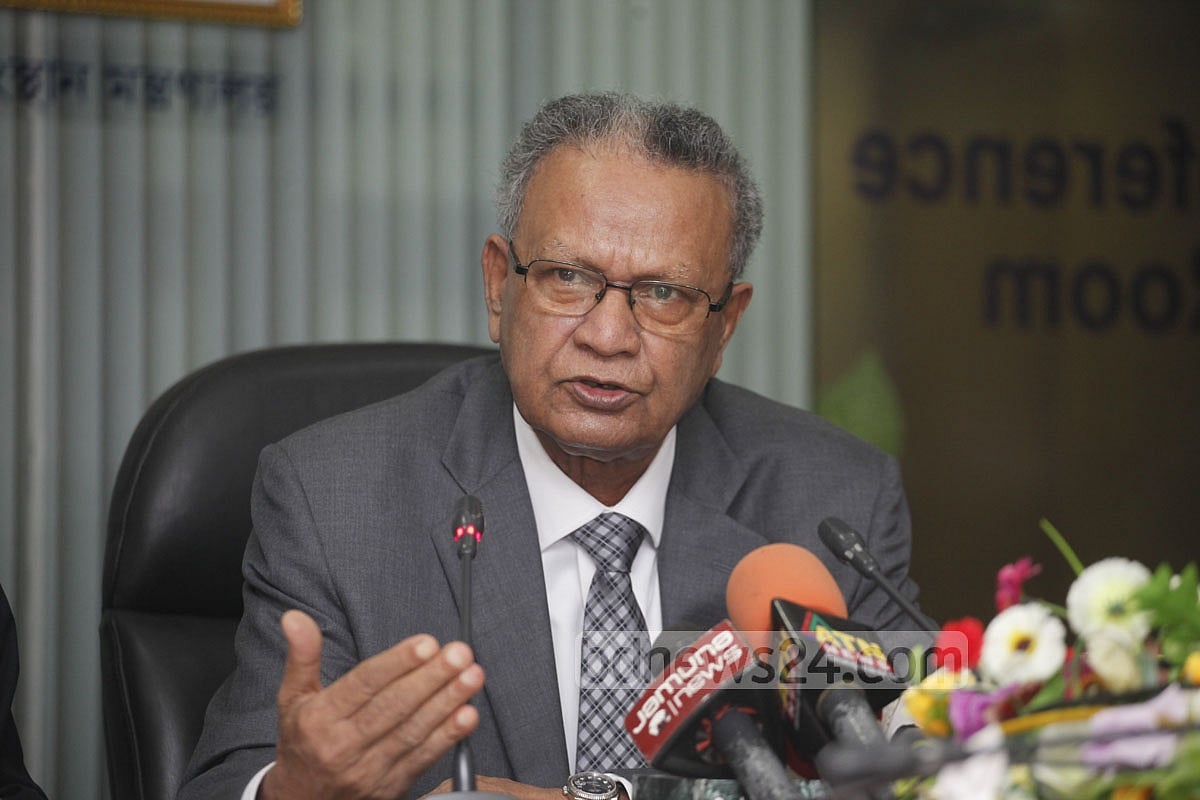
Expatriates' Welfare and Overseas Employment Minister Nurul Islam BSc said this decision was taken by Riyadh after they had withdrawn objections to taking male workers from Bangladesh.
He said the Saudis want to recruit 200,000 female workers, mostly housemaids, from Bangladesh.
"I told them that they will be willing to take up these jobs if a male relative can accompany them. The Saudis have agreed," he said while briefing the media about his recent visit to that country.
He said every female worker can now be accompanied by a male from Bangladesh.
"The men will get work as driver, gardener, supervisor and security guards. The organisations recruiting them will pay for their travel," the minister said.
The ministry's Secretary Khandker Md Iftekhar Haider said a 'Joint Working Group' of the two relevant ministries of both countries was working on the issue.
"The Joint Working Group will decide from when these workers will start going to Saudi Arabia. And they will also select which workers will go," he said.
The press conference was organised at the Probashi Kalyan Bhaban at Dhaka's Eskaton to brief the media about the condition of Bangladeshis working abroad in 2015.
A total of 555,881 Bangladeshis got jobs abroad in 2015 - 103,707 of them female, said the ministry's Deputy Secretary Kazi Abul Kalam.
He said 425,684 Bangladeshis had gone abroad with jobs in 2014, with 70,007 of them being women, a 36.44 percent jump in the number of women going abroad for work in a year.
Last year, most of the Bangladeshis going for work abroad had moved to Oman, Qatar, Saudi Arabia, Singapore, and Malaysia.
The women have mostly gone to Jordan, the United Arab Emirates, Saudi Arabia, and Lebanon.
Khandker Md Iftekhar Haider said most workers going abroad hailed from Comilla, Chittagong, Tangail and Brahmanbarhia.
He also said the number of skilled workers from Bangladesh have also risen from 34.95 percent of the total workforce going abroad in 2014 to 39 percent in 2015.
Semi-skilled labour accounted for 17 percent of the total workforce going abroad and less skilled 44 percent in 2014.
Minister Nurul Islam said Bangladesh was negotiating labour exports with many countries.
"Labour exports will become easier and more of our citizens will get jobs abroad this year."
But he said the government was trying to send more people from districts from where fewer people have gone abroad for work so far.
"That is because ending regional disparity is the main thrust of our Five-Year Plan," he said.
The Malaysian imbroglio
Nurul Islam blamed Malaysia for the complications that have afflicted labour exports from Bangladesh to that country.
"Malaysia wants to import labour through some select organisation. But that may drive up the costs of travel of those going there," he said.
But the minister said a solution would be found soon.
Foreign work for enclave residents
The minister said they will make special efforts to send dwellers of the erstwhile enclaves abroad with work.
Altogether, 41,000 people from these former enclaves have become citizens of Bangladesh after the recent land boundary deal with India and the swapping of the enclaves.
Secretary Iftekhar Haider said his ministry has decided to set up a centre at Kurhigram to impart skills to the one-time enclave dwellers so that they are 'employable abroad'.
He said the expatriates' welfare and overseas employment ministry was keen to send at least 100 of these people to Jordan.
Ministry officials said the guidelines will change for selecting expatriate Bangladeshis to be declared Commercially Important Persons (CIP).
Ten expatriates who had sent the highest remittances this year were declared as CIP at the press conference.
The officials said altogether 90 expatriates will declared as CIP in three categories.
Fifty of them will be the top remittance senders. Twenty of them who are investing the most in the country's industry sector will be CIPs. The rest 20 will be the expatriates who are the biggest importers of Bangladesh products.













