Published : 28 Aug 2024, 07:44 AM
Updated : 21 Aug 2026, 11:49 AM


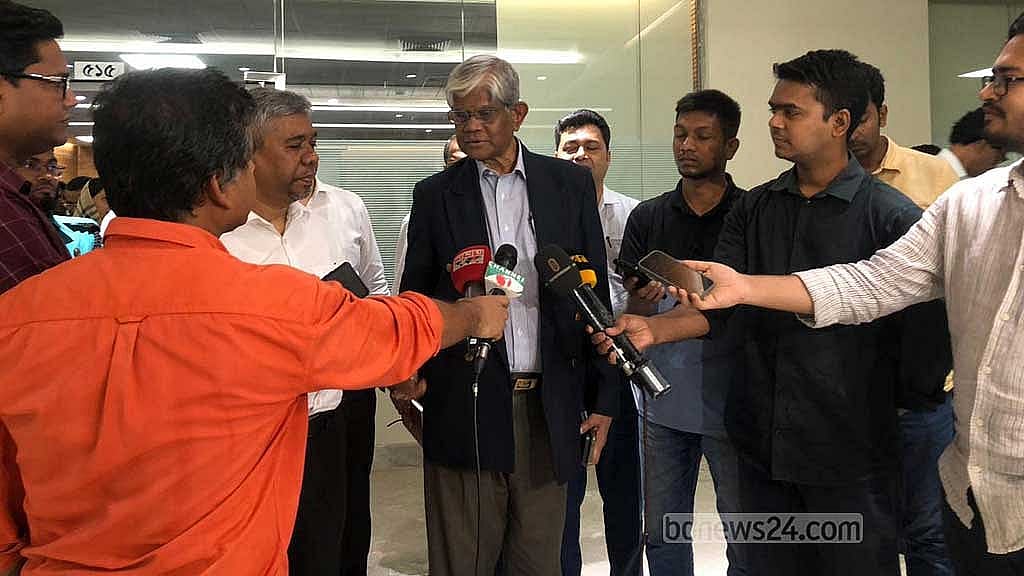
Finance Advisor Salehuddin Ahmed has urged the National Board of Revenue, or NBR, to increase the tax-to-GDP ratio to secure the funds necessary for sustaining Bangladesh’s development and overcoming the economic crisis.
"We can't keep relying on loans all the time,” he told the internal revenue officials on Tuesday.
“I’ve told the officials that we need to raise our tax-to-GDP ratio. We will need a lot of money for our own use. We can’t run on loans all the time,” he told journalists during a briefing.
The former central bank governor visited the Revenue Building in Agargaon, Dhaka for the first time since his appointment as advisor to the interim government.
However, the finance advisor also highlighted the importance of ensuring that efforts to increase tax collection do not cause undue hardship to the public.
Salehuddin said, “Revenue is our most important issue. The National Board of Revenue plays a huge role in the development of Bangladesh’s industry and commerce. Their job is to collect revenue, but it should be maximised in a way that doesn’t cause suffering to the people and is done systematically.”
To ease public suffering and provide relief from the ongoing high inflation, Salehuddin advised NBR to consider reducing and rationalising the duties on imports of sugar, soybean oil, other edible oils, potatoes, fertilisers, and pesticides, according to an official who attended the meeting.
Bangladesh is among the countries with the lowest tax-to-GDP ratio, which currently stands at about 7.6 percent. Experts have long recommended increasing it to 15 percent.
Due to low tax collection, Bangladesh imposes high tariffs and supplementary duties, which economists believe hinder investment.
Officials should ensure they do not create barriers to imports and exports, he said at the briefing.
“The private sector has issues; their goods should be cleared from ports quickly. We need to ensure that they receive their goods promptly.”
He added, “Sometimes businesses come to the port, file their bill of entry, and these tasks must be completed on time. If documents are missing, they will ask for them, but they shouldn’t hold onto them. Importers and exporters should have their goods expedited. If there’s any government obstacle, it should be removed.”
When officials raised concerns about harassment, the finance advisor responded, “Forcing those who pay taxes and letting those who don’t pay off the hook—this won’t work anymore.”
When asked whether the provision for whitening black money would continue, he said, "I won't say anything about it now. It’s not that we haven’t discussed it."
Newly appointed NBR Chairman Md Abdur Rahman Khan was asked how the "sky-high" revenue collection target for the 2024-25 fiscal year would be met amidst the challenges of recent violent and disruptive protests in July and August, which affected business activities and revenue.
He replied, "We will do everything necessary from our side to achieve the target. Our revenue soldiers are very hardworking. They know how to get the job done. We will work together with everyone."
He also emphasised that tax evasion would be closely monitored to prevent it.
“We will ensure that there are no leakages. [The advisor) gave us instructions today. The revenue that is due must be collected in time, which will require hard work from us.”
The NBR chief instructed that taxpayers be provided with "quick service" and that their confidence increased by reducing port clearance times, which in turn would boost tax collection.
He said, “By taking businesses in confidence, we will collect revenue from them. We believe we can achieve our targets.”
Regarding the US Treasury Department's offer of technical assistance to expand the NBR, Advisor Salehuddin said: “We are looking into it. On the other hand, the British high commissioner has also proposed reforms for the foreign exchange market. We will consult with our local experts. If they have the necessary expertise, why should we look outside?”
When it was pointed out that various reforms over the past 15 years have not been effective or holistic, Salehuddin responded, “This time, we will undertake reforms in a holistic approach.”
The presentation sent along with the US Treasury Department’s proposal said that they want to help Bangladesh increase revenue collection by implementing international best practices, amending and enforcing laws, eliminating compliance risks, encouraging fairness in revenue administration, and ensuring transparency.