Published : 21 Jan 2026, 04:42 AM
Updated : 21 Aug 2026, 03:02 PM


Senior BNP leader Amir Khosru Mahmud Chowdhury has said his party would run Bangladesh Bank (BB) with "professional bankers" if voted to power.
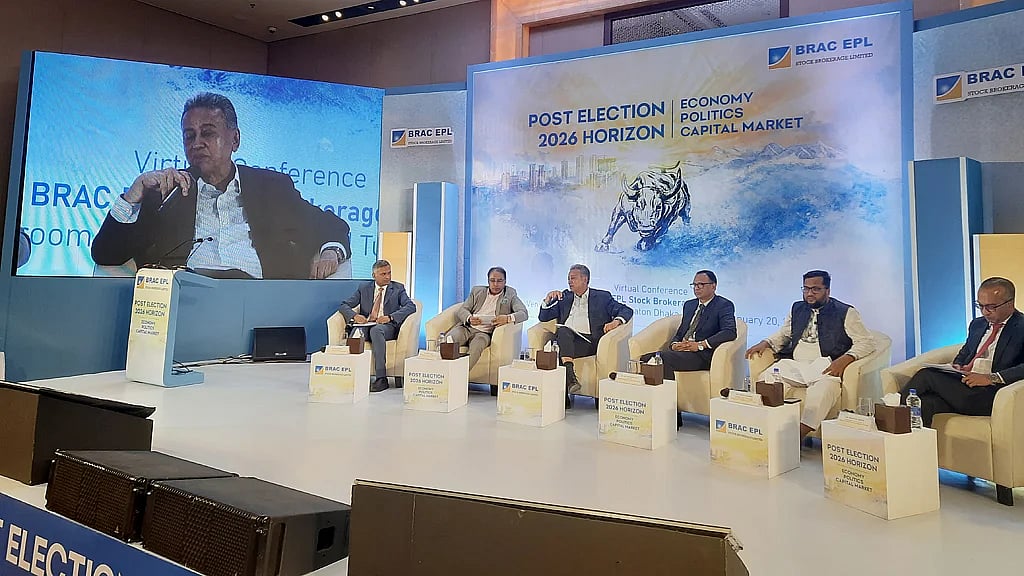
Khosru, a former commerce minister, made the remarks during a discussion at a seminar in Dhaka on Tuesday.
Asked whether the BNP would ensure full autonomy of the central bank if voted to power, Khosru said: “Bangladesh Bank needs autonomy. Bangladesh Bank and the BSEC are specialised regulatory authorities.”
“Only autonomy should not be enough. The central bank is not a regular commercial bank. It needs central, professional bankers. Bankers need to be created separately to run the central bank,” he added.
Khosru said bankers employed at the central bank need to be paid well and held accountable for their actions.
Association of Bankers, Bangladesh Chairman Mashrur Arefin said the failure to adhere to basic banking principles plunged five Shariah-based private banks into financial trouble.
He said the overall banking sector management has improved.
“Not all banks are facing liquidity problems. The non-performing loan ratio of healthy banks is within 5 percent. As a result, there is currently an excess of nearly Tk 3 trillion. These banks will be able to provide loans,” said Mashrur.
The comment comes a day after BB Governor Ahsan H Mansur said the availability of liquidity will force banks to look for good investment opportunities.
Asked how a Shariah-based economy would look if the Jamaat-e-Islami comes to power, senior party leader Atiqur Rahman pledged to establish an interest-free economic system that benefits all.
“Recruitment will be based on merit. Every policy decision will be driven by the urge to ensure welfare. Transparency and accountability will be ensured,” he said.
Highlighting capital market reforms undertaken during the caretaker government, Bangladesh Securities and Exchange Commission (BSEC) Commissioner Md Saifuddin said the government has approved taking investment education programmes to the district level.
“The capital market is not just an economic sector -- it is part of a political economy. Reforms are being implemented with this perspective,” he added.