


Published : 28 Oct 2024, 09:46 PM
Updated : 21 Aug 2026, 12:01 PM


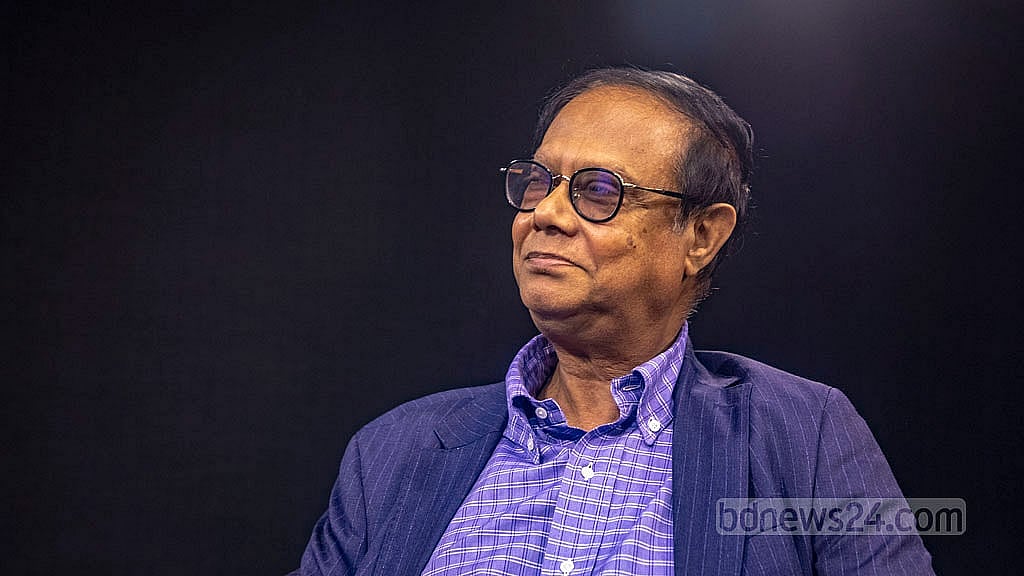
Bangladesh Bank Governor Ahsan H Mansur has accused business tycoons with ties to the ousted Sheikh Hasina regime of colluding with the country's military intelligence agency to siphon $17 billion from the banking sector during her rule.
In an interview with the Financial Times, Mansur -- who became the governor of the central bank after Hasina fled the country in August -- claimed that the Directorate General of Forces Intelligence (DGFI) had facilitated forced takeovers of major banks.
He estimated that around Tk 2 trillion ($16.7 billion) was taken out of Bangladesh following these takeovers, using tactics like issuing loans to new shareholders and inflating import invoices.
“This is the biggest, highest robbing of banks by any international standards,” he told the Financial Times.
“It didn’t happen on that scale anywhere, and it was state-sponsored and it couldn’t have happened without intelligence people putting guns [to former bank CEOs’] heads.”
The governor accused Mohammed Saiful Alam, founder and chairman of the industrial conglomerate S Alam, and his associates of "siphoning off" at least $10 billion from the banking sector, allegedly with the support of the DGFI.
Responding to the allegations, the law firm Quinn Emanuel Urquhart & Sullivan, speaking on behalf of S Alam, told the Financial Times that there was "no truth" to Mansur's claims.
It criticised the interim government for leading a "coordinated campaign" against the S Alam Group and other major businesses in Bangladesh without having any regard for "even basic principles of due process".
"It has already undermined investor confidence and contributed to the deterioration of law and order. Given the Group's record and contributions, we find the accusations by the governor ... surprising and unjustified."
The Financial Times said it was unsuccessful in its attempts to reach the DGFI and the Inter Services Public Relations Directorate, responsible for managing media inquiries for Bangladesh’s armed forces, for comment.
Hasina, who governed Bangladesh for two decades, fled to India in August following a student-led mass uprising against her government. The protests were driven by a series of allegations, including vote rigging, political oppression, and widespread corruption.
The interim government, now led by Nobel Peace Prize winner Muhammad Yunus, has vowed to recover what it claims are misappropriated funds by Hasina’s regime and its affiliates.
Mansur, formerly with the International Monetary Fund, told the Financial Times last month that he had sought assistance from the UK to trace the overseas assets of Hasina’s allies.
He alleged that intelligence officials under Hasina’s rule had forcibly removed bank board members from their homes and pressured them at gunpoint to transfer their shares to “Mr S Alam” and resign from their positions. “At one bank after another they did it,” he told the Financial Times.
Former Islami Bank Bangladesh CEO Mohammad Abdul Mannan revealed to the Financial Times that he faced similar coercion, describing pressure from “people connected to the then-government” as early as 2013.
Mannan said he was encouraged to appoint board members favoured by the prime minister’s office. He also recounted an incident where government-linked individuals conducted a search of a hotel room occupied by a foreign director of the bank.
In January 2017, Mannan said he was intercepted on his way to a board meeting and detained by a senior defence official for an entire day, until he agreed to resign.
Mannan, who was recently appointed chairman of First Security Islami Bank under the central bank's oversight, alleged that resignation letters were drafted on fake bank letterhead. "I had to sign a resignation letter."







