Published : 06 Oct 2014, 11:10 PM
Updated : 19 Oct 2022, 07:40 PM


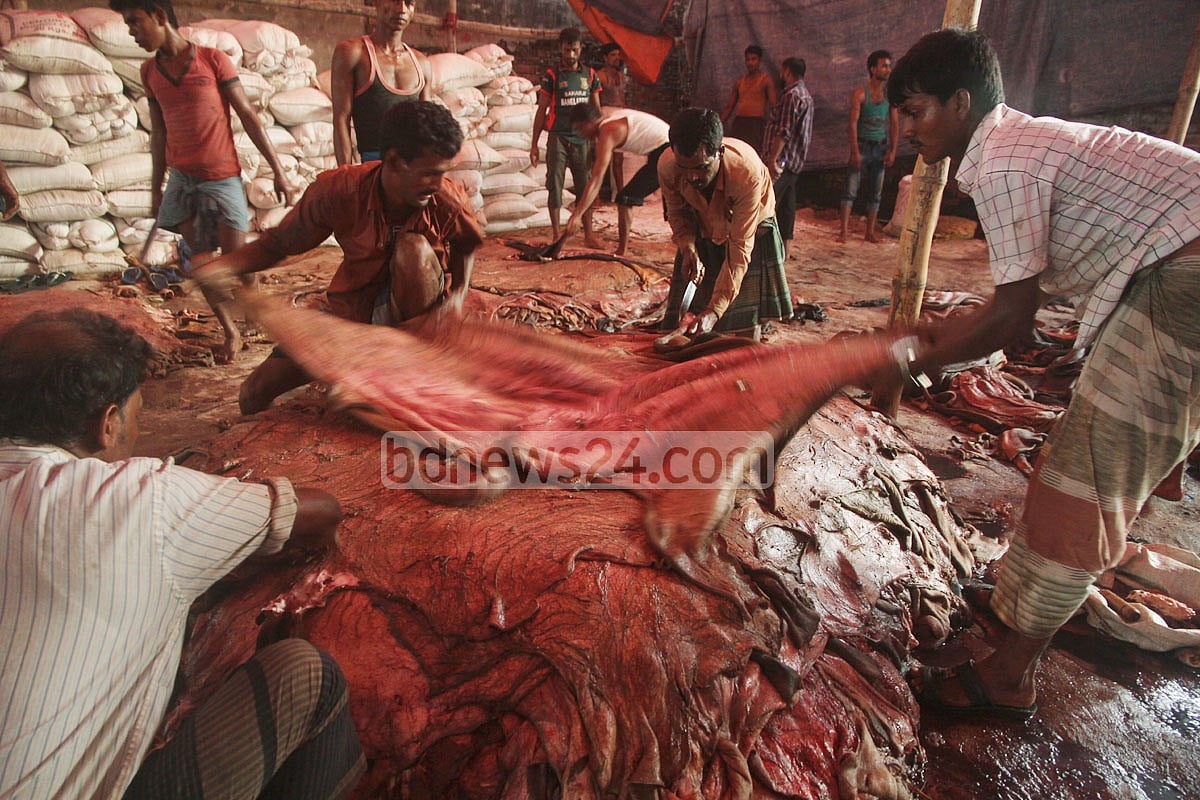
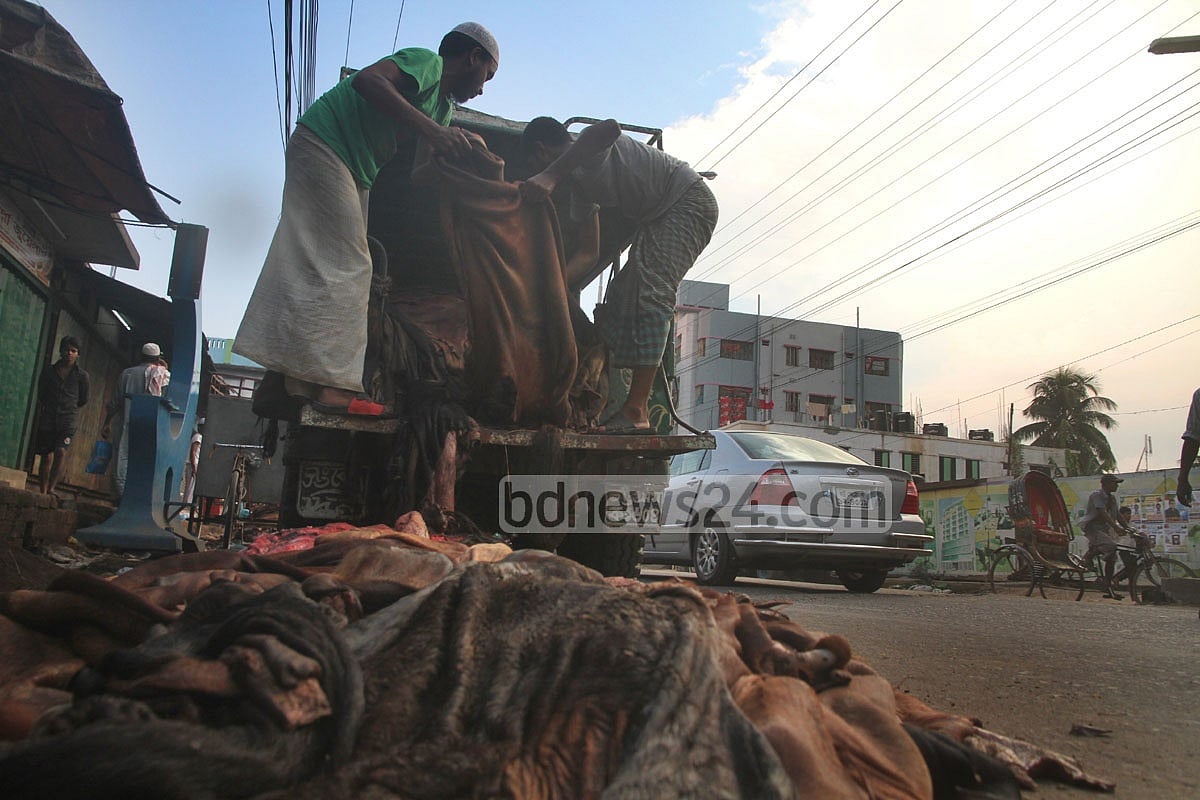
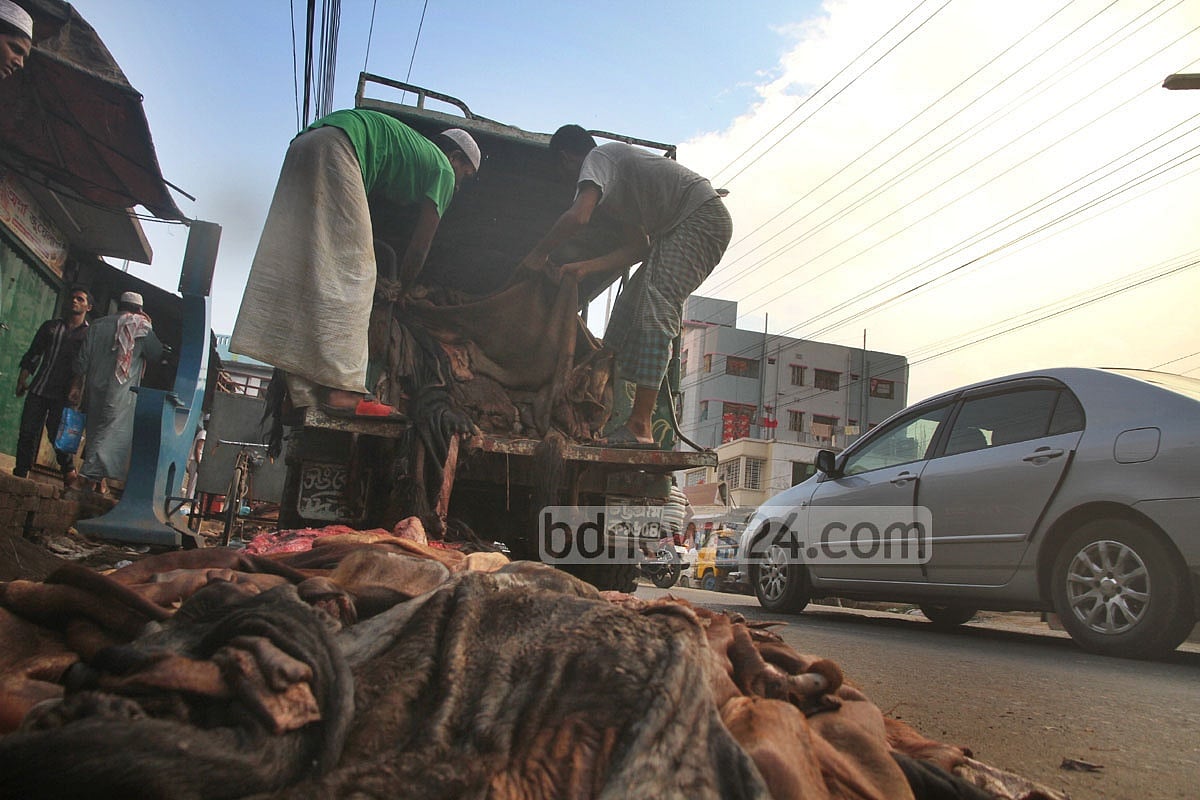
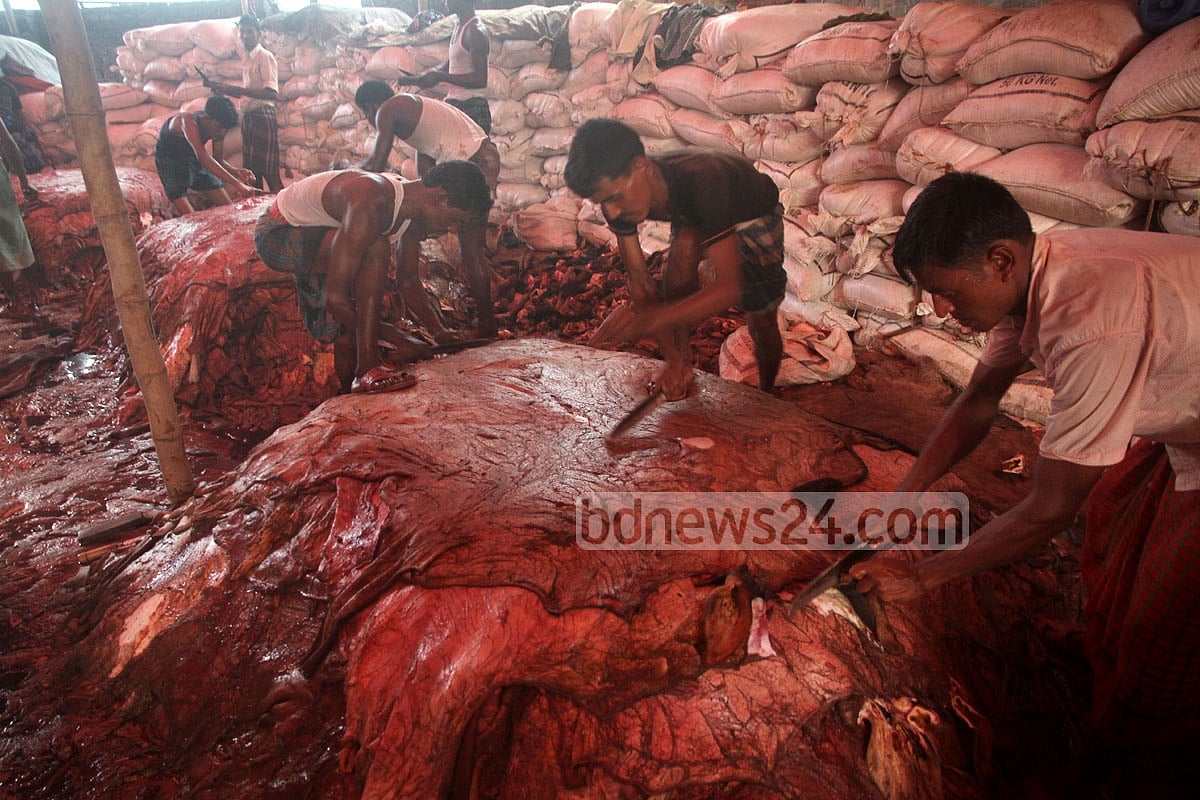
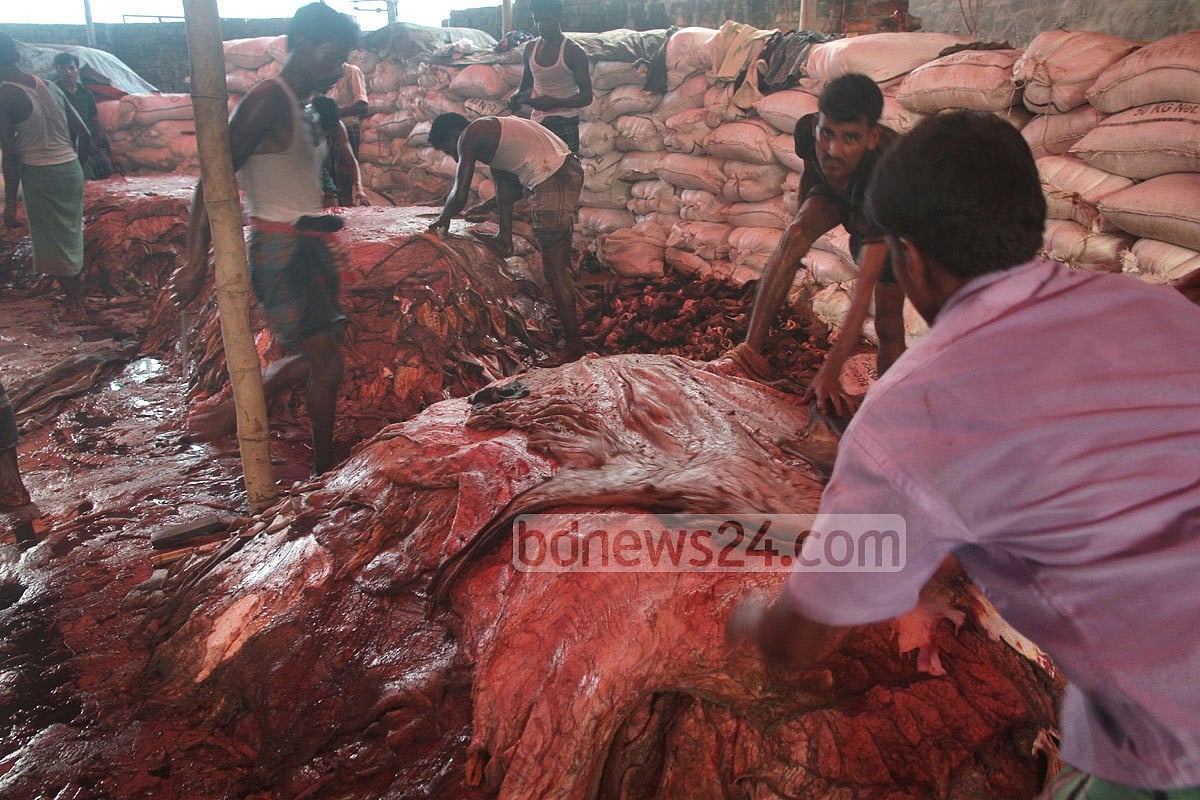
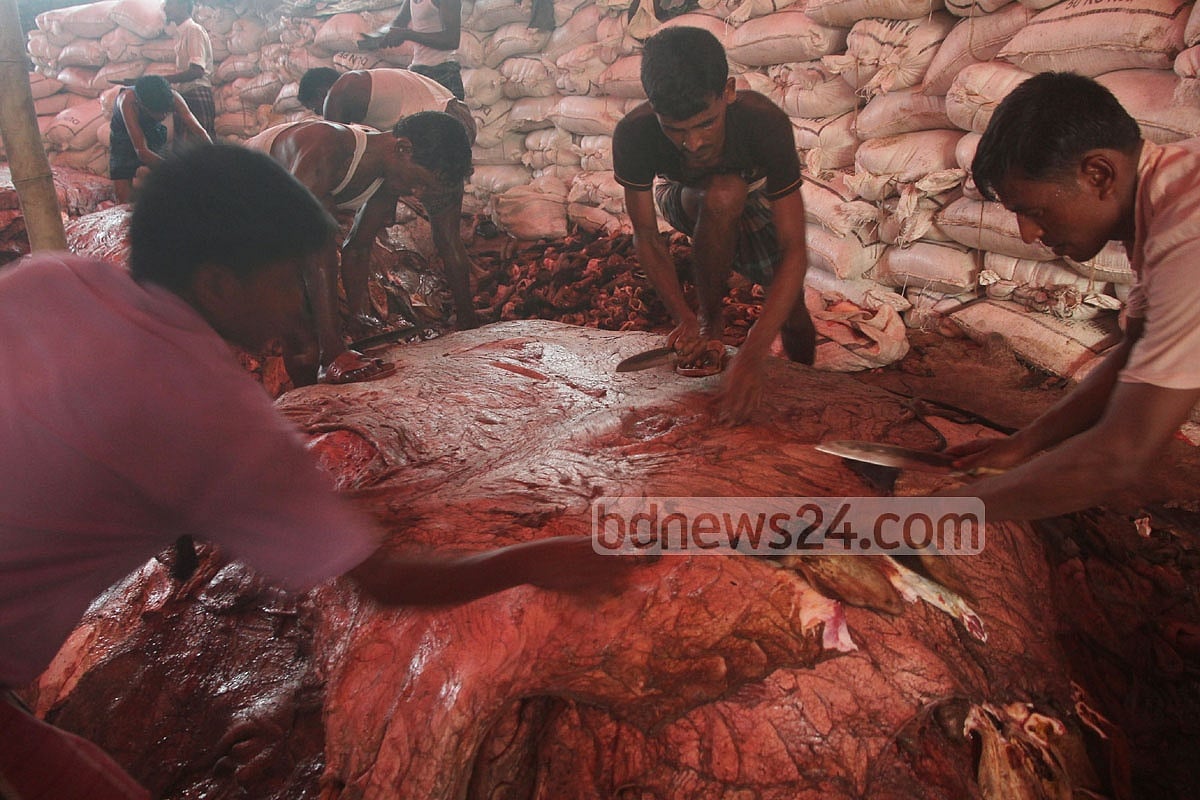
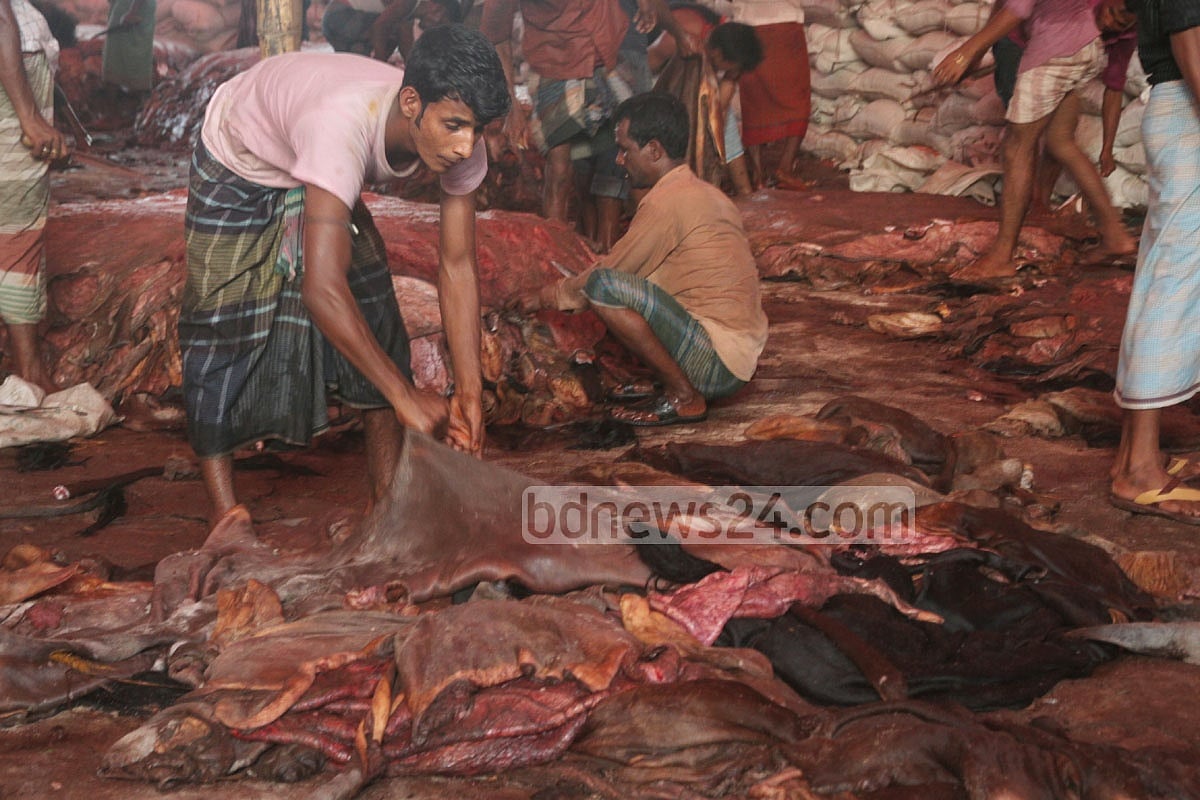
Hides of sacrificial animals reach tanneries through the middlemen and seasonal traders who get engaged in the business during the Eid-ul-Azha every year.
Bangladesh Tanners Association estimates 1.2-1.4 million animals would be slaughtered during the three-day Eid festival in Dhaka City and another 7-7.5 million outside the capital.
Bangladesh Hide and Skin Merchants Association General Secretary Tipu Sultan told bdnews24.com: “Middlemen started purchasing hides in the (Monday) morning from different areas.”
He said there were around 550 middlemen at Posta in the city alone.
The middlemen and small traders sell the hides to big traders at Posta, who salt and preserve them in warehouses and then sell to tanneries.
Some middlemen, however, keep the hides in their own storehouses.
Hides of sacrificial animals meet around 48 percent of the annual demand for raw materials of the tanneries.
Hide traders told a press conference on Thursday that they would purchase salted cow hides at Tk 70-75 per square feet in Dhaka and at Tk 60-65 outside the capital as per the rates fixed by the government.
Salted goat hides would be bought at Tk 30-35 per square feet, they added.
Last year, prices of salted cow hides were Tk 85-90 in Dhaka and Tk 75-80 outside the capital while the rates of goat hides were Tk 50-55 and buffalo hides Tk 40-45.
Four seasonal traders – ‘Rahim’, ‘Abdu’l, ‘Awal’ and ‘Saju’ from Kalindi village – were busy purchasing hides at Keraniganj in Dhaka on Monday. They otherwise deal in land.
Saju told bdnews24.com: “We’ve begun this trade with Tk 1 million. Every year we purchase hides this way and sell them to boss Jewel (middlemen).”
Jewel depends on the seasonal traders as he does not have enough manpower to procure the hides from different areas.
He said small traders began to move in the areas just after the Eid prayers to purchase hides as some traders paid the prices even before the animals were slaughtered.
A seasonal trader, Badruzzaman Badu of Kamrangir Char, was purchasing a cow hide at Tk 2,600 at around 10:30am.
Former President of Bangladesh Hide and Skin Merchants Association Abtab Ahmed told bdnews24.com the highest number of sacrificial animals was slaughtered in Dhaka, which was followed by Chittagong and Sylhet.
Middlemen purchased the hides and sent them to warehouses in Posta, he added.
Ahmed said there were 250 warehouses in Posta, which can accommodate 300,000 raw hides. The warehouses at Aminbazar in Savar have room for a further 100,000 hides, he added.
Ahmed said tannery owners preserved the rest of the hides collected from Dhaka.
According to him, many traders preserve the hides in their areas and then send them to storehouses in Posta.
He urged the small traders to salt the hides for six-seven hours after the animal was slaughtered and then preserve them well.
Ahmed said: “Many hides are ruined due to lack of skills of the seasonal butchers. However, this season our worst fear is the hot weather. The hides may rot due to the weather.”
Meanwhile, Dhaka Metropolitan Police said they took special measures to ensure vehicles carrying hides reach Posta and Hazaribagh tannery area smoothly.