
Published : 21 Dec 2015, 01:25 PM
Updated : 19 Oct 2022, 07:06 PM


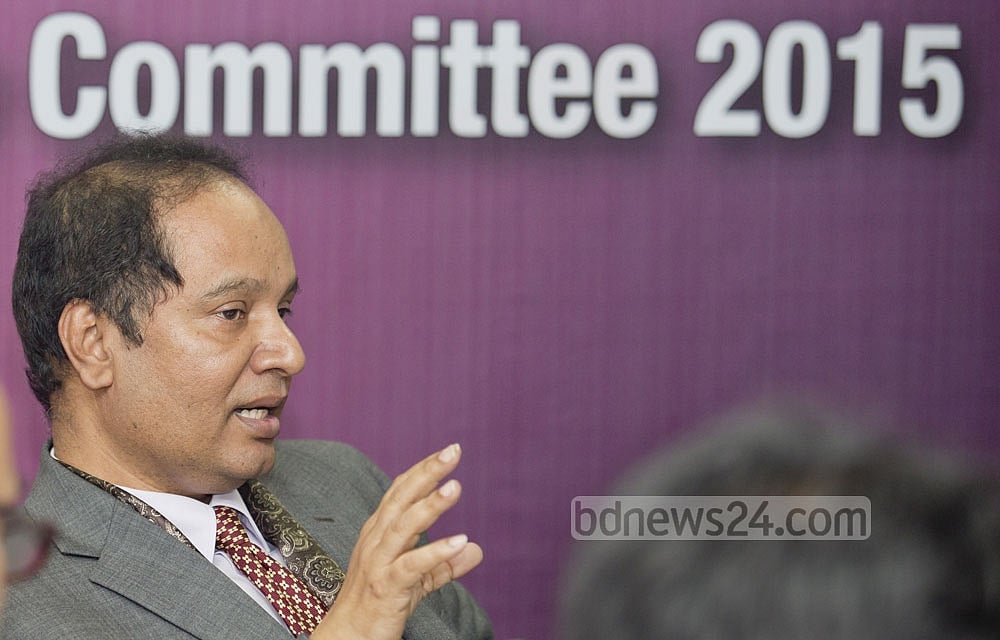
WTO member states agreed on this during the Tenth Ministerial Conference, Commerce Secretary Hedayetullah Al Mamoon has said.
Speaking to bdnews24.com on Sunday, he said that Bangladesh, a coordinator for the WTO, moved on the matter as there are always possibilities of LDC’s (Least Developed Countries) interests to be ‘marginilised’ during such deals.
“We have been able to insert into the declaration that regional treaties should be coherent with the WTO,” said Mamoon.
The WTO ministerial meet kicked-off on Dec 15. It was scheduled to end on Dec 18, but was extended for another day, as the declaration could not be finalised.
Afghanistan and Liberia were included as new members of the forum during the conference at the Kenyan capital of Nairobi.
“We managed to insert a lot of strong issues. One instance is the trade facilities for LDCs,” said the commerce secretary.
The term ‘legally binding where appropriate and commercially meaningful’ in the case of LDCs has also been included in the declaration, added Mamoon.
The Ninth Conference in Indonesia’s Bali in 2013 sealed a deal as WTO members during the previous round in Geneva had failed to reach an agreement.
But the 2013 deals created problems this year in Nairobi, said Mamoon. “The US did not even want to agree on the matters which were adopted in Doha (in 2001).”
The secretary said that the member states had to go through a lot to ‘reach a consensus’.
“Since the ministerial conferences require a 100 percent consensus, it was difficult for everyone to reach to a single word. A concise draft was adopted and, of course, Bangladesh was also a part of it.”
Mamoon said the China Round Table of LDC states in Nairobi, held just before the ministerial meet, adopted a ‘strong resolution’, stipulating the facilities LDCs should be entitled to.
The resolution was one of the key factors in the WTO ministerial meet and, according to the commerce secretary, the resolution created the pressure required to include adequate facilities for LDCs in the declaration.
“The declaration includes reducing 25 percent of the Rule of Origin and prioritising LDCs,“ said Mamoon.
He said that the extension of drug patent exemption under the TRIPS Agreement until 2033 was a major achievement for Bangladesh.
Bangladesh’s Tk 12 billion drug market is dominated by local manufacturers and many of them export, using this privilege under the Trade-Related Aspects of Intellectual Property Rights (TRIPS) Agreement.
But the WTO has not reached an agreement over farm output.
“The issue of agriculture has not been settled. In fact, the arguments that the member states came up with were concrete.
“Take the example of India, with a population of 1.3 billion. They have to ensure food security even if it means disregarding all the global laws. There’s not much to do about it,” said the secretary.
The Nairobi conference adopted quite a few issues raised by African countries.
“It was the first conference in that continent. So, each (African) country had its special interests and they had to go through a lot to make the WTO accept them. A lot of the proposals will go to the general council,” said Mamoon.