Published : 11 May 2023, 12:52 PM
Updated : 11 May 2023, 12:52 PM


Taking advantage of advanced information is often thought of as a wise business strategy. When practised in the stock market, it is considered a crime by authorities and investors.
Global stars, such as All-American household icon and lifestyle guru Martha Stewart, have felt the consequences of such behaviour.
She was tipped off by her broker, who was in cahoots with the bosses of a major US pharmaceutical company, that the company's stocks would plummet following a crucial decision regarding a medicine by the US Food and Drug Administration. Stewart, a media magnate, unloaded her company shares rapidly before the information became public and made millions.
Those who bought those shares and were unaware of the information saw hundreds of thousands of their hard-earned dollars vaporise into thin air.
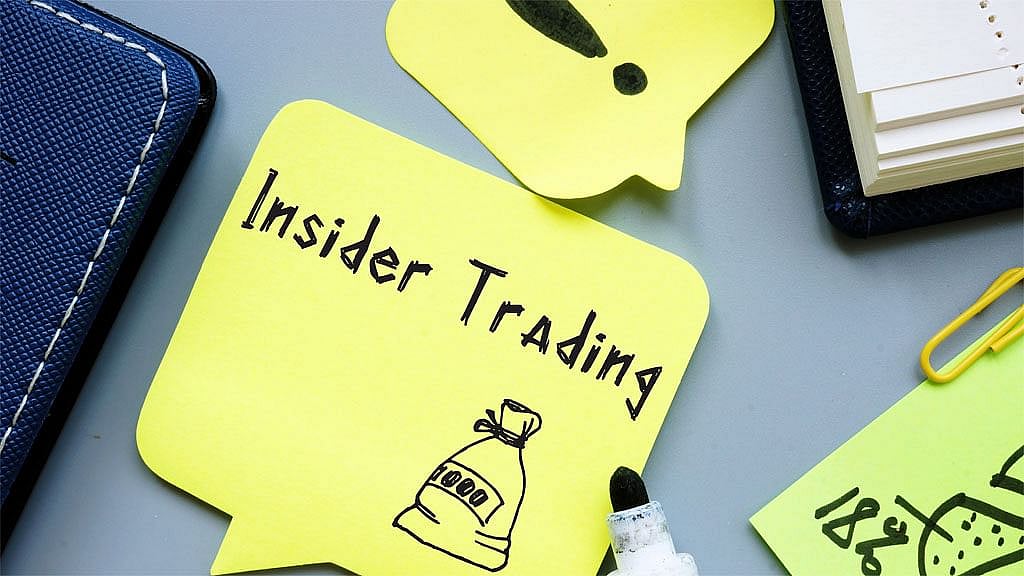
The tactic Stewart applied is called insider trading.
It is a severe concern for investors since it gives an 'insider' with particular knowledge of a company or a market with an unfair advantage.
Investment law in nearly every country, including Bangladesh, prohibits people in the know from profiting from such knowledge by purchasing or selling company shares or passing them on to someone else who can benefit from it.
But in practice, on the two bourses in Bangladesh, no one seems to care.
It is common knowledge in Bangladesh that authorities like the Bangladesh Securities and Exchange Commission and top executives of both the Dhaka and Chattogram bourses are aware of rampant insider trading, but little serious action has been taken to even identify the culprits.
For example, a listed multinational company announced 200 per cent dividends for their shareholders twice in the last five years. On both occasions, the prices of the shares skyrocketed long before the dividends were announced. People who had the information beforehand bought the shares at a low price and sold at a high margin when the announcement was made.
Abu Ahmed, a retired Dhaka University economics professor who has been investing in the Bangladesh stock markets for a long time, believes the Bangladesh market lacks a significant number of long-term investors because of these "corrupt practices".
"Everyone knows about this. However, it has become the new normal," he said.
BSEC Executive Director Mohammad Rezaul Karim said they usually fail to "identify culprits due to lack of evidence”.
Shaifur Rahman Mazumdar, acting managing director of Dhaka Stock Exchange, has a different take.
"You can't regulate everything by enforcing the law. People involved need to have honesty and integrity," he said.
RECENT EXAMPLES OF SUSPECTED INSIDER TRADING
One recent and much-discussed example is HeidelbergCement Bangladesh Ltd.
From Nov 22 last year until Apr 18 this year, the floor price of shares of the multinational cement company was Tk 179.10. At that price, the shares hardly attracted any buyers.
However, from Apr 18, 10 days before the company released its financial report for the first quarter of the year, the prices of shares started to surge as trading spiked in the market.
At one point, the prices reached the so-called "circuit breaker" limit set by the authorities, hitting Tk 247.80, a 38 percent jump in just three days.
On Apr 27, the quarterly report showed the company made a Tk 6.85 profit per share. The prices of the shares reached Tk 349 that day. Later on, the price was readjusted to Tk 300.
Market analysts believe someone or some entity had the information about the first quarter's profit. They started to buy low to sell at a higher margin later on.
A similar playbook was followed recently about the shares of LafargeHolcim Bangladesh.
From Dec 8 to Apr 30 this year, the company's share prices never exceeded the floor price of Tk 64.80.
However, the number of trades began to grow from Apr 25, and by May 2, the prices had jumped 10 percent.
On May 8, the company held its annual general meeting, and the prices jumped to Tk 72.20.
The most interesting case is the manipulation of Emerald Oil Industries Ltd shares. The company's shares reached their historic low of Tk 28 on Dec 22 last year, when stock market authorities lifted the floor price policy of its shares.
Until Apr 2, the share price did not rise above Tk 31.
However, in just 22 working days, Emerald Oil shares jumped more than 100 percent, even reaching Tk 75 at one point.
It wasn't until May 9, the day the company released its price-sensitive information, that people learnt why the price kept leapfrogging.
According to the release, the company was about to go into 24-hour production for its rice bran oil. Its production capacity would more than double, from 30 tonnes daily to 70 tonnes.
COMPANIES DODGE QUESTIONS
bdnews24.com reached the representatives of all three companies for comment on the subject via text messages and email.
HeidelbergCement's Company Secretary, Md Emdadul Haque, replied to the text message with one sentence: "I don't have enough information to comment on this matter.”
Kazi Mizanur Rahman, the company secretary at LafargeHolcim Bangladesh, referred the matter to Tuhidul Islam, the company's senior communications manager.
Tuhidul, on behalf of the company, wrote: "The company [LafargeHolcim] maintains utmost confidentiality in respect of any price-sensitive information. From time to time, the company discloses price-sensitive information through concerned authorities and advertisements in newspapers as per the provisions of law."
"As per the company's policy, we do not comment on the increase or decrease in share prices in the capital market."
bdnews24.com could not reach Afzal Hossain, the managing director of Emerald Oil, as he neither replied to texts nor picked up any calls.
COMPANY DIRECTORS LEAK INFORMATION
Capital market analyst and retired Dhaka University professor Abu Ahmed says it is an "open secret" in Bangladesh that the company directors are behind the leaked formation.
"Some people tell me that without top management's go-ahead, no one can leak any information. A so-called gang of people, who are not investors, dictates everything from the shadows," he said.
"No one cares as the authorities do not care. Some brokerage houses say if authorities take a strong stance against insider trading, the trading will slip down to dangerous levels, below Tk 2 billion," he said.
'LACK OF EVIDENCE A MAJOR HURDLE'
BSEC's Rezaul Karim conceded the regulators' shortcomings in investigating insider trading.
"We look at the price graph before and after the declaration. We try to locate whether those who bought shares at that time have any relationship with the company. We can't take action if there's no formal relationship, can we?" he said.
"Moreover, people involved in insider trading are sharp as a tack. You can't find a trace of any relations in the BO account information of the traders. People's names, phone numbers, and addresses do not match either."
When asked whether the authorities could do anything, Reazul replied: "We try to get information outside the database of BO setup with the help of the database that we have. For example, I have asked the stock exchange authorities to investigate what happened in the case of Emerald Oil. Action will be taken when their investigation report comes."
DSE's Saifur focused on individual integrity.
"Many people are involved in the financial accounting of a company. It is not easy to keep track of them all. Awareness, devotion and honesty are key here. It is also difficult to check the honesty level of so many people. Still, we are working with companies to ensure that they make their staff aware of the legal ramification of insider trading," he said.
[Written in English by Adil Mahmood]